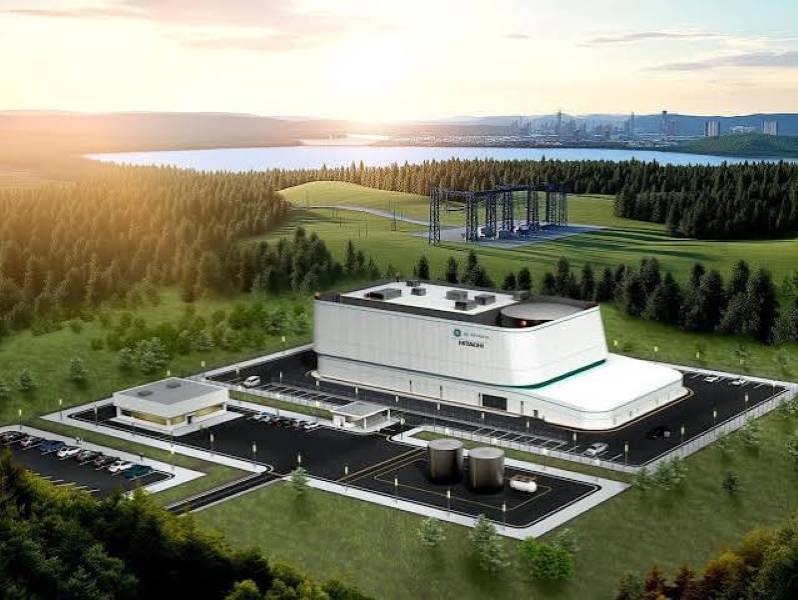
The United Kingdom’s drive to expand its nuclear generating capacity has received another significant boost after Polish billionaire Michal Solowow unveiled plans to invest up to £35 billion (US$48 billion) for the development of 14 small modular reactors (SMR) across three UK sites through linked company SGE.
The privately financed proposal was announced by European SMR developer SGE. It is also among the largest privately-led nuclear investment plans ever proposed in Britain. The proposal also comes as the UK government accelerates deployment of advanced nuclear technologies to support energy security. Industrial decarbonization and the rapidly growing electricity demands of AI data centers also factor in the need for increased power generation.
The project is expected to use GE Vernova Hitachi BWRX-300 reactor design. The 14 small modular reactors (SMRs) projects by SGE across three UK sites are targeting first electricity generation from 2034. This is however subject to regulatory approvals and government support mechanisms.
Application submitted
Michal Solowow-linked SGE has submitted an application under the UK’s Advanced Nuclear Framework (ANF). This is a government initiative aimed at accelerating deployment of new nuclear technologies through government-assisted project development and financing structures.
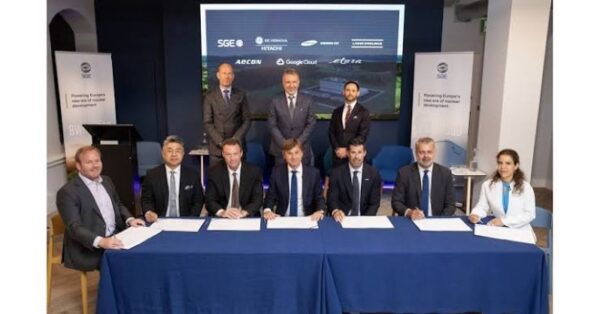
Preferred sites for the UK SMR deployment
One of the preferred locations is Oldbury-on-Severn in Gloucestershire. This is a former nuclear site that the UK government identified earlier this year as suitable for future SMR deployment. The remaining sites have not yet been publicly disclosed, although reports indicate that two are privately owned.
Why SGE’s £35 billion SMR investment in the UK matters
Michal Solowow’s announcement comes just weeks after the UK selected Rolls-Royce SMR as the preferred technology for the country’s first government-backed small modular reactor program. Other partnerships involved in the scheme include the Balfour Beatty-Holtec UK SMR collaboration.
Additionally, rather than competing through direct public funding, SGE is proposing a privately financed alternative. This would complement Britain’s broader nuclear expansion strategy.
SGE’s fourteen 300 MW BWRX-300 reactors in the UK are expected to generate approximately 4.2 GW of clean power. This is enough to generate electricity for almost eight million UK homes over an expected operating life exceeding sixty years. The SMR company also says the investment is Britain’s largest privately funded nuclear development. They also aim to significantly strengthen long-term energy security while helping meet the country’s net-zero objectives.
CfD to feature in the development
Unlike the regulated asset base model being used for Sizewell C, SGE plans to seek a Contracts for Difference (CfD) arrangement similar to that used for Hinkley Point C. In CfD, revenue support only begins once electricity generation starts. CfD’s are known to limit construction risk exposure for consumers while still providing sufficient investment certainty.
SGE 4.2 GW nuclear fleet in the UK: Project financing
SGE estimates each reactor will require between £2.2 billion and £2.5 billion, bringing the total UK nuclear fleet development value to approximately £35 billion.
Financing would combine private equity and project debt. The consortium is also expecting government support. This will be through electricity price stabilization rather than direct construction funding.
Alongside the nuclear program, the consortium has also discussed the possibility of developing up to £4.5 billion worth of AI data center infrastructure in partnership with Google Cloud.
SGE 14 SMR Project in the UK: Overview
Location: 3 sites across the UK, including Oldbury-on-Severn, Gloucestershire
Project Cost: £35 billion (US$48 billion)
Developer: Michal Solowow-linked SGE
Technology: GE Hitachi BWRX-300 Small Modular Reactor (SMR)
Installed Capacity: 4.2 GW
Number of Reactors: 14
Capacity per Reactor: 300 MW
Expected First Operation: 2034
Power Supply: Equivalent to nearly 8 million UK homes
Operational Life: More than 60 years




Leave a Reply