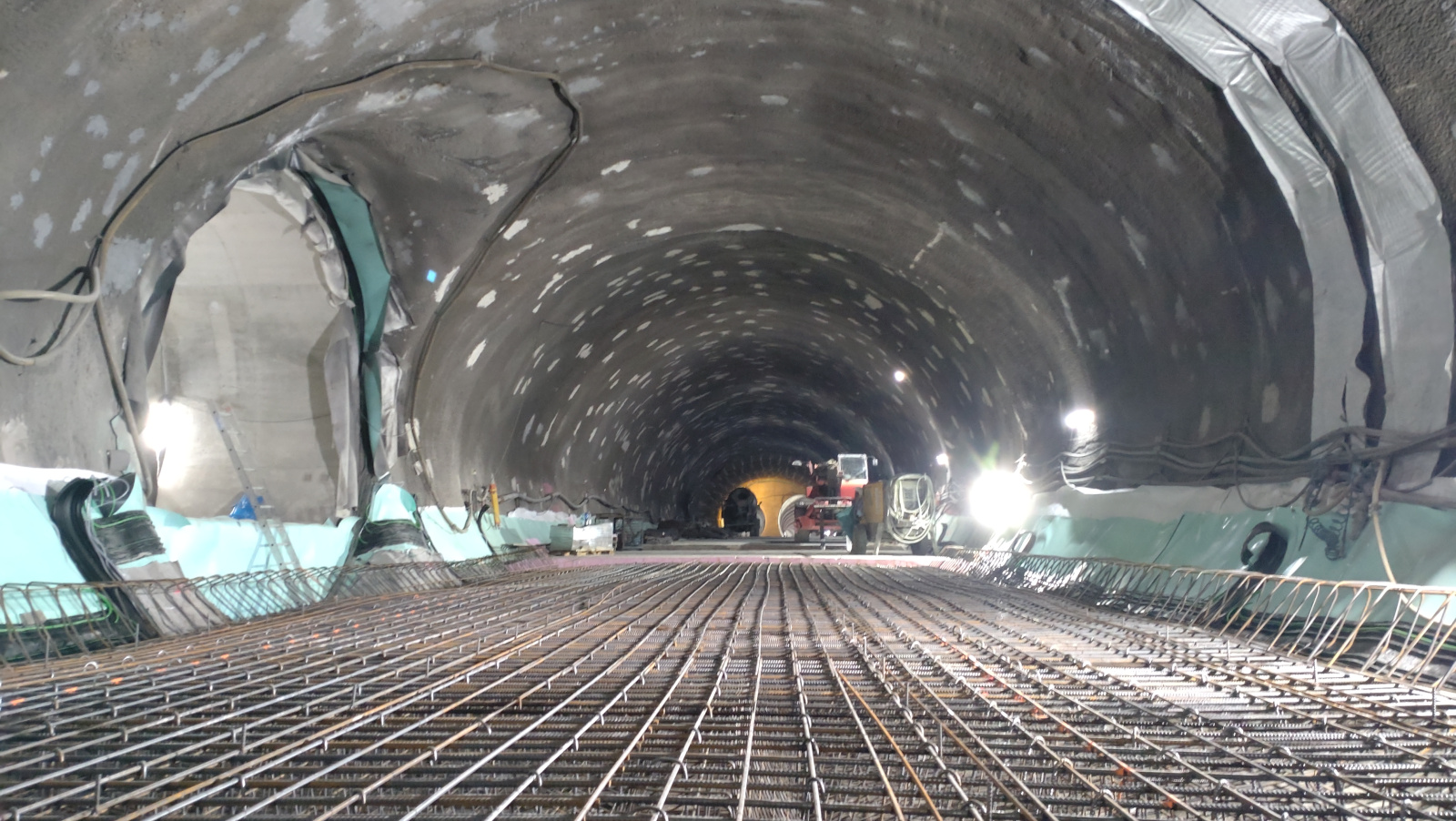
Prague’s public transport operator DPP has signed a contract worth EUR 1.2 billion (CZK 30 billion) with a consortium comprising Subterra, Hochtief CZ, Hochtief Infrastructure, and BeMo Tunnelling for the construction of the Olbrachtova to Nové Dvory section of Prague Metro Line D, covering 6 kilometres of tunnelled line and three underground stations. The contract signing followed a decision by the Competition Authority, which dismissed all objections raised by the Strabag Group, which had called for the tender to be annulled. Works are set to begin in the coming period and are scheduled for completion in 2029, with the Olbrachtova to Nové Dvory section continuing the works already under way on the first section between Pankrác D and Olbrachtova. When the full line enters service, expected in 2032, it will be operated by 100-metre-long trains of five carriages each with a capacity of 525 passengers, running at a maximum speed of 80 km/h, and is projected to carry around 45 million passengers annually. The contract signing, announced on 15 April 2026, ends a prolonged procurement process that was challenged multiple times by rival bidders and twice referred back for re-evaluation by the competition regulator.
Central European Metro Ambitions and the Weight of Prague’s Infrastructure Gap
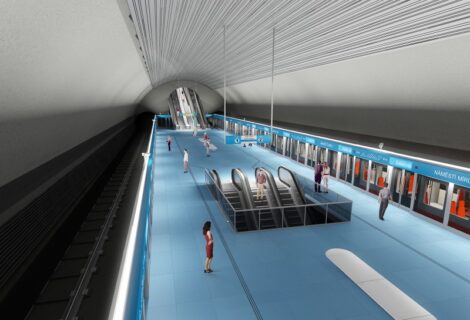
Prague’s metro network is one of Central Europe’s most relied upon systems, but it has not seen a new line open since Line B was extended in the early 2000s, leaving southern and southeastern districts of the city, home to an estimated 150,000 residents, served only by surface bus connections. This infrastructure deficit stands in contrast to peer Central European capitals such as Warsaw, which has been expanding its second metro line since 2015, and Budapest, which is planning extensions to both its M3 and M4 lines under EU cohesion fund frameworks. The full Line D will run from Náměstí Míru on Line A, via Pankrác on Line C, to Písnice in the south of Prague, making it a true cross-city connector rather than simply an extension. What makes Line D especially significant from a transit planning perspective is its fully automated design: the new Line D will deploy a CBTC system while remaining compatible with the rest of the metro network on certain sections, making it Prague’s first driverless metro line and positioning the city alongside Vienna, Copenhagen, and Nuremberg as a Central European leader in automated urban rail.
This urban transit evolution is being matched at the national level by a comprehensive rail modernization strategy, as evidenced by the announcement that construction has begun on the Kojetín–Přerov section of the Brno–Přerov high-speed line. This 17 km, CZK 13.4 billion (EUR 547.5 million) project is a critical link in the Prague–Brno–Ostrava corridor, designed to double-track the route, remove 14 level crossings, and increase train speeds from 100 km/h to 200 km/h by late 2028. The prolonged legal disputes that delayed the Olbrachtova to Nové Dvory metro contract by over two years are not merely a footnote; they reflect a broader pattern of competitive procurement tension in Central European infrastructure that has delayed several major projects across the region, including sections of Poland’s CPK rail programme and Vienna’s U-Bahn extensions. The lesson for Prague, and for the national rail network, is that delivery confidence now hinges on construction execution, not further procurement risk.
Project Fact Sheet
Project name: Prague Metro Line D, Section Olbrachtova to Nové Dvory (Section D1b)
Location: Prague, Czech Republic
Client: DPP (Dopravní podnik hlavního města Prahy) — Prague Public Transport Company
Contract value (this section): EUR 1.2 billion (CZK 30 billion)
Total Line D project value: Estimated CZK 97.8 billion (approximately EUR 3.9 billion)
Section length: Approximately 6 km of tunnelled line (3.3 km track alignment)
Stations in this section: Three underground stations, including Nádraží Krč and Nemocnice Krč
Tunnelling method: New Austrian Tunnelling Method (NATM)
Construction start: Imminent (following contract signing, April 2026)
Target completion (this section): 2029
Full Line D completion: 2032
Total Line D length: 10.6 km with 10 stations
Line D phases: Phase 1 — Pankrác to Nové Dvory (4.6 km, 5 stations); Phase 2 — Nové Dvory to Depo Písnice (3.8 km, 3 stations, includes depot); Phase 3 — Pankrác to Náměstí Míru (2.7 km, 2 stations)
Train technology: Fully automated, driverless operation via CBTC signalling system
Rolling stock: 100-metre-long, 5-carriage trains; capacity of 525 passengers per train; maximum speed 80 km/h
Annual ridership projection: Approximately 45 million passengers
Key interchange stations: Náměstí Míru (Line A), Pankrác (Line C)
EIB financing: CZK 22.763 billion (EUR 921 million) approved in June 2022 for the D1 section (Pankrác to Nové Dvory)
Funding sources: City of Prague own resources, commercial loans, European Investment Bank
Project Team
Client
DPP (Dopravní podnik hlavního města Prahy) — Prague Public Transport Company; project owner and contracting authority
Petr Witowski — Chairman of the Board of Directors and CEO, DPP
Zdeněk Hřib — Chairman of the DPP Supervisory Board; Deputy Mayor of Prague for Transport
Construction Consortium (Section D1b: Olbrachtova to Nové Dvory)
Subterra — Consortium leader; Czech tunnelling and civil engineering specialist
Hochtief CZ — Consortium partner; Czech subsidiary of Hochtief AG
Hochtief Infrastructure — Consortium partner; international construction and infrastructure division
BeMo Tunnelling — Consortium partner; Austrian specialist tunnelling contractor
Construction Consortium (Section D1a: Pankrác to Olbrachtova — ongoing)
Subterra, Hochtief CZ, Hochtief Infrastructure, Strabag, Ed. Züblin — Joint venture awarded CZK 13.75 billion (EUR 536.6 million) contract in 2021; works commenced April 2022; projected completion 2029
Regulatory Authority
ÚOHS (Office for the Protection of Competition) — Czech competition authority; resolved multiple procurement challenges, ultimately confirming the Subterra-led consortium’s selection
Financial Partner
European Investment Bank (EIB) — Provided EUR 921 million in financing for the combined D1 section


Leave a Reply