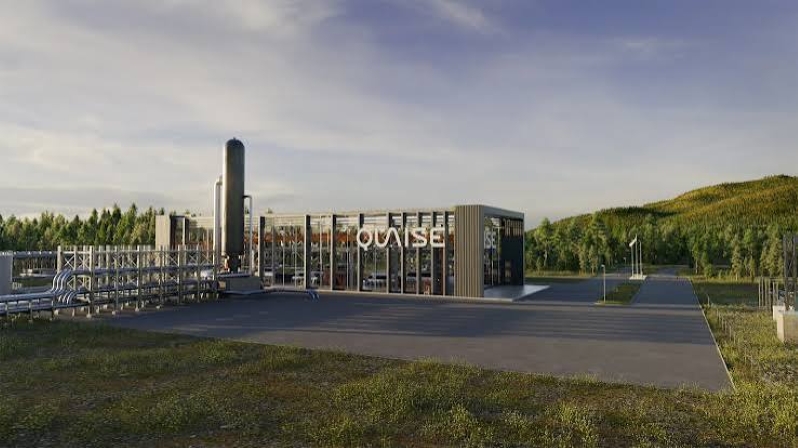
Houston-based geothermal technology developer Quaise Energy has secured US$134 million in the initial close of its Series B financing for the construction of Project Obsidian – the world’s first superhot geothermal power plant.
The funding also marks one of the largest recent funding rounds for next-generation geothermal technology. It will also support further commercialization of the company’s proprietary millimeter-wave drilling technology.
The financing was led by Prelude Ventures with participation from Japan’s largest power producer JERA and integrated energy company Idemitsu Kosan. Existing investor Safar Partners also joined the round. Additional equity and project debt financing is expected to close later this year as Quaise advances toward commercial operations.
How does the superhot geothermal power plant work?
Unlike conventional geothermal projects that depend on naturally accessible heat reservoirs, Quaise aims to use geothermal energy almost anywhere by drilling to depths where rock temperatures reach 300-500 degrees Celsius.
The company’s drilling system combines conventional rotary drilling with high-power millimeter waves. It was originally developed through research at the Massachusetts Institute of Technology (MIT). It allows rock to be vaporized rather than mechanically crushed. The approach is also designed to reach depths exceeding 5 km during the next development phase. It will ultimately target much deeper wells capable of producing superhot geothermal energy at utility scale.
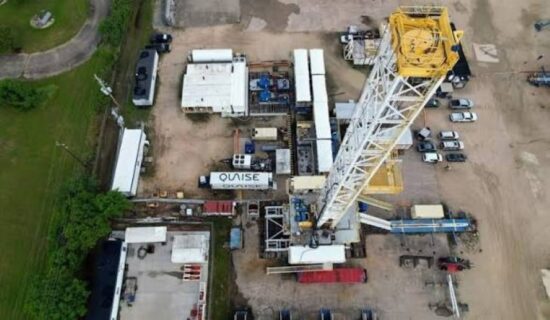
According to the company, its Central Texas field demonstration has already drilled more than 100 meters through granite. It is using the full-scale drilling system and is approaching the one-kilometer milestone. Reaching that depth would represent the deepest penetration ever achieved using millimeter-wave drilling. It will also be the deepest recorded by any non-contact drilling technology, providing a key validation before deployment at Project Obsidian.
Project Obsidian, Oregon: World’s first superhot geothermal power plant
Project Obsidian is being developed on federal geothermal leases within Oregon’s Deschutes National Forest. This is one of the best-studied geothermal regions in the United States. Construction is already underway, with first electricity expected to reach the grid by 2030.
The initial phase targets approximately 50 MW of always-on electricity generation. The site is designed for expansion toward 250 MW as additional production wells are completed.
Quaise believes the project could ultimately support gigawatt-scale development. It also aims to stabilize electricity supplies across the Pacific Northwest amid rapidly growing power demand driven by electrification and AI data centers.
Financing structure
The $134 million Series B represents only the initial equity component of a broader financing package.
The company said it has now raised approximately $230 million since its founding. Besides the Series B equity, Quaise is arranging project-level equity and debt financing that will support construction of Project Obsidian and its commercial rollout.
The company also disclosed that negotiations are progressing with commercial power off-take partners, although customer names have not yet been announced.
Technology development
Quaise’s drilling platform uses gyrotrons. Gyrotrons are high-power microwave devices originally developed for fusion research. The devices generate millimeter waves that vaporize rock deep underground. Conventional drilling equipment is used through softer formations before switching to the millimeter-wave system in hard basement rock.
By accessing temperatures between 300 degrees Celsius and 500 degrees Celsius at depths potentially reaching 20 km in future applications, Quaise Energy believes geothermal resources could become economically viable in most regions of the world rather than being confined to traditional volcanic zones.
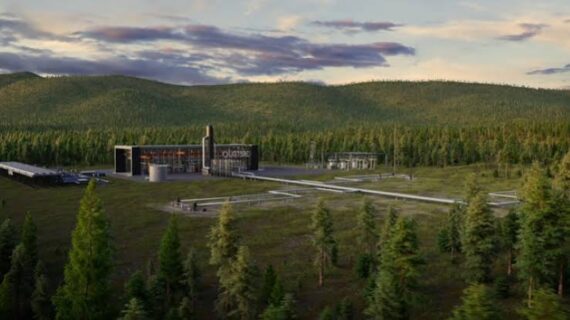
Importance of Project Obsidian Geothermal Plant in Oregon
Interest in enhanced and superhot geothermal technologies has grown significantly as governments and utilities seek firm, carbon-free electricity capable of complementing intermittent renewable generation.
Unlike wind and solar facilities, superhot geothermal plants can operate continuously. They also require comparatively small land footprints. Additionally, one of Quaise’s major strategic advantages is that its technology could eventually enable existing fossil-fuel power stations to be converted into geothermal facilities by replacing combustion with superheated geothermal steam. This will allow reuse of existing turbines and grid infrastructure.
Outlook on Project Obsidian
The successful close of the initial Series B financing marks a significant milestone for Quaise as it looks forward to the delivery of the world’s first superhot geothermal power plant.
The next several years will focus on completing Project Obsidian, scaling its proprietary drilling technology, securing remaining project financing and demonstrating reliable superhot geothermal electricity generation by 2030.
If successful, the technology could reshape global geothermal development by making dispatchable, zero-carbon baseload power available across a much broader geographic footprint than conventional geothermal resources permit. Its development is also mirrored by others such as the Imperial Valley Geothermal Project in California utilizing Enhanced Geothermal System (EGS) technology.
Project Obsidian (World’s First Commercial Superhot Geothermal Power Plant): Fact Sheet
Developer: Quaise Energy
Location: Central Oregon
Technology Use:
- Superhot geothermal energy
- Millimeter-wave drilling
- Conventional rotary drilling hybrid system
Current Milestone:
- US$134 million initial close of Series B financing
Total Capital Raised:
- US$230 million
Lead Investor:
- Prelude Venture
- JERA Co., Inc.
- Idemitsu Kosan
- Safar Partner
Target Commercial Operation: 2030
Initial Capacity: 50 MW
Expansion Potential: 250 MW initially, with long-term gigawatt-scale development potential
Purpose:
- Commercial demonstration of superhot geothermal power generation
- Commercialization of millimeter-wave drilling technology
- Reliable carbon-free baseload electricity generation


Leave a Reply