
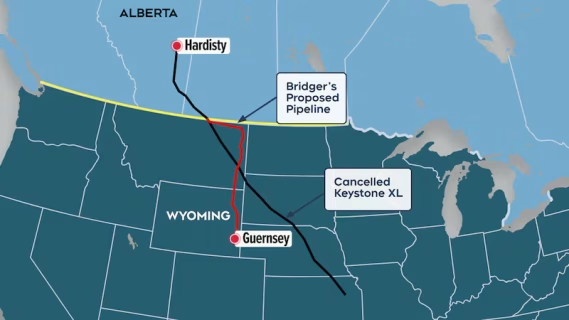
The proposed $2bn US-Canada oil pipeline makes advancements as President Trump signs the project’s approval permit. The order grants cross-border permit to a project that would revive parts of the Keystone XL pipeline to transport Canadian oil. Moreover, it will facilitate transportation from the US-Canada border to Guernsey, Wyoming. It is a proposed project by Canadian pipeline company South Bow and its US partner Bridger Pipeline.
Once complete, it is anticipated to increase Canada’s crude oil exports to the US by more than 12% if it goes ahead. A presidential permit was required for the project to proceed. The new proposal that replaces the Keystone XL pipeline involves various different aspects. For instance, it will use a different route through the U.S. than the previous Keystone XL project.
However, it was cancelled by former President Joe Biden in 2021 after years of indigenous and environmental opposition. “Slightly different than the last administration,” Trump said at a White House event, referring to his administration’s attitude towards crude oil infrastructure. “They wouldn’t sign a pipeline deal, and we have pipelines going up.” With the ongoing oil disruption witnessed across the globe, the US is making oil-related projects fundamental to ensure energy security. However, the Trump administration is adamantly fighting against wind and solar power projects, with aspects such as the new credit termination IRS Notice 2025-42 rules aiming to hamper renewable projects.
Scope of Implementation on the Proposed US-Canada Oil Pipeline
Despite the proposed US-Canada oil pipeline having a new angle, it will still use some of the previously built pipe on the Canadian side. In Canada, the Keystone XL is already fully permitted. South Bow was spun off by former Keystone XL proponent TC Energy in 2024 to take over its oil pipeline business. Approximately 150 km (93 miles) of pipe has been built in Canada and sitting idle since Keystone XL’s cancellation.
Bridger Pipeline has proposed building a 645-mile pipeline to transport heavy Canadian oil through eastern Montana and eastern Wyoming. Ted True, Bridger Pipeline executive partner, hailed the White House authorization. He also noted it brings the cross-border project “one step closer to reality.” On the other hand, South Bow is seeking firm commitments from Canadian oil shippers for 450,000 barrels per day on the pipeline.
A spokesperson noted the project remains in early stages and is subject to commercial and stakeholder discussions, as well as regulatory processes. Analysts say Guernsey is not an end market for oil, so additional links would need to be built to transport oil to refining hubs such as Cushing, Oklahoma, Patoka, Illinois, and the U.S. Gulf Coast. However, state regulatory permits will also be required, and potential court challenges remain a risk, said Matthew Lewis, founder of Plainview Energy Analytics.
Project Overview
- Project Name: US–Canada Cross-Border Oil Pipeline (Keystone XL successor)
- Project Type: Crude oil pipeline
- Value: ~$2 billion
- Capacity Target: ~450,000 barrels/day (proposed)
- Purpose: Transport Canadian crude oil to the U.S.
- Status: Proposed; presidential permit granted
Key Stakeholders
- Developer: South Bow
- Partner: Bridger Pipeline
- Government: United States Federal Government
- Key Figure: Donald Trump
Location
- Route: US–Canada border to Guernsey, Wyoming
- States: Montana, Wyoming
- Country: United States / Canada
Scope
- Construction of ~645-mile pipeline in the U.S.
- Utilization of existing pipeline infrastructure in Canada (~150 km)
- Cross-border crude oil transportation system
Funding / Delivery Model
- Privately developed pipeline project
- Dependent on shipper commitments
- Subject to multi-level regulatory approvals
Status
- Presidential permit issued
- Early-stage development
- Commercial agreements and regulatory approvals pending
Key Risks & Challenges
- Environmental and indigenous opposition
- Regulatory and legal challenges
- Also need for downstream transport connections
Strategic Significance
- Potential to increase Canadian crude exports to the U.S.
- Revives elements of the canceled Keystone XL Pipeline
- Supports North American energy trade integration
Technical & Commercial Notes
- Pipeline to connect to Guernsey hub (not a final market)
- Additional links required to hubs like Cushing and Gulf Coast
- Also project viability depends on long-term shipping commitments

Leave a Reply