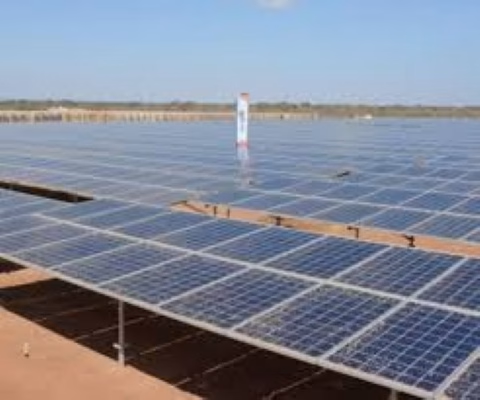
ReNew Energy Global has entered a long-term deal with Google to develop a 150 megawatt (MW) solar power project in Rajasthan, India. The agreement will see Google procure environmental attributes from the renewable energy project. The solar project will be commissioned in 2026, and will produce around 425 GWh of clean electricity annually. This is enough to power about 360,000 households.
Outlook on the Google-ReNew Energy Solar Deal in India
The solar deal between ReNew and Google in India is also an example of the increasing renewable energy procurements by corporate players in emerging markets. India’s renewable build-out also continues to increase as the country pursues a 500 GW non-fossil fuel capacity target by 2030. This will position India among global leaders in decarbonization efforts as it continues to address its own energy security and grid transformation needs.
Additionally, ReNew is one of India’s largest independent renewable developers and this project expands its commercial reach in cleaner energy development. For the California-based tech company, the deal also aligns with its commitment to operate on carbon-free energy across its value chain as it also continues the development of its $6 billion mega-data center in India.
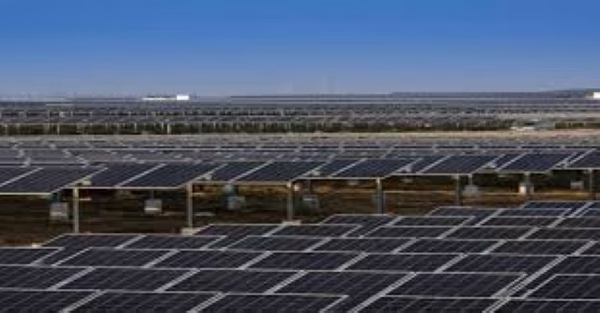
Project Factsheet for 150 MW Rajasthan Solar PV Project
Developer: ReNew Energy Global Plc (RNW)
Offtaker: Google (Alphabet Inc.)
Location: Rajasthan, India
Capacity: 150 MW
Annual Generation: 425 GWh
Commissioning Date: 2026
Solar Deal and Project Timeline
2025 Q4 – Long-term agreement with Google signed.
2026 – Development and construction of the solar plant. Commissioning is also expected.
2027 Onward – Operational phase of the project.
Overview of the Google-ReNew Energy Solar Deal in India
Under the agreement:
- ReNew will develop a 150 MW solar project in Rajasthan, India.
- Google will procure the environmental attributes (EACs/credits) generated by the solar PV plant over its operational life. This is expected to support its net-zero targets and also help with value chain emissions reductions.
- The 150 MW solar farm is expected to generate about 425 GWh annually after coming into operation in 2026.
Leave a Reply