America’s drug manufacturing industry is experiencing a major resurgence. Companies are investing tens of billions of dollars to expand U.S. drug manufacturing capacity, building new facilities across the country—from Virginia and Indiana to Texas, Florida, Wisconsin, Delaware, and Puerto Rico. This wave of investment goes beyond corporate growth; it represents a strategic shift to strengthen domestic production, secure supply chains, and reinforce America’s role as a global leader in advanced medicines.
Eli Lilly Expands U.S. Drug Manufacturing
Eli Lilly is at the forefront of the expansion of U.S. drug manufacturing.. Its investments include:
West Creek, Virginia – $5 billion facility for cancer and autoimmune drug ingredients.
Generation Park, Houston, Texas – $6.5 billion plant focused on active pharmaceutical ingredient (API) production for small molecules.
LEAP District, Indiana – $4.5 billion “Medicine Foundry” integrating small molecules, biologics, and genetic medicines.
Puerto Rico – $1.2 billion investment reviving pharmaceutical manufacturing on the island.
Pleasant Prairie, Wisconsin – multibillion-dollar expansion strengthening domestic production.
$6 billion active pharmaceutical ingredient facility in Huntsville, Alabama
Eli Lilly is committing more than $6 billion to build a cutting-edge manufacturing campus in Huntsville to produce next-generation medicines. Groundbreaking is planned for 2026 with the site expected to be fully operational by 2032; the construction phase will support roughly 3,000 jobs, and when the facility opens it will provide about 450 permanent, highly skilled roles—engineers, scientists, operations staff and laboratory technicians.
These projects create thousands of construction and permanent jobs while producing a broad spectrum of therapies, from traditional drugs to advanced biologics and genetic medicines. Lilly’s approach shows how a company can combine flexibility, innovation, and scale to meet both domestic and global demand.
Major Drug Manufacturers Expand U.S. Production
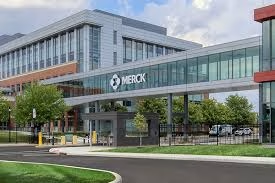
The expansion of U.S. drug manufacturing extends well beyond a single company. AstraZeneca has committed $4.5 billion to a Virginia facility producing weight/metabolic and oncology therapies. Merck is developing two major U.S. sites: a $3 billion pharmaceutical manufacturing plant in Elkton, Virginia, and a $1 billion biotech facility in Wilmington, Delaware. These investments reinforce the U.S. as a hub for both APIs and advanced biologics.
Specialty and contract manufacturers are also reshoring:
Lupin – $250 million facility in Coral Springs, Florida, expanding respiratory drug production.
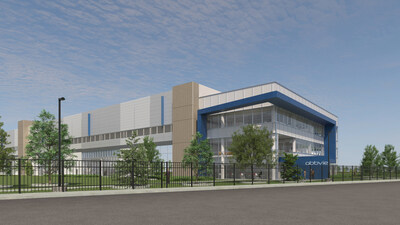
AbbVie – a $70 million expansion of its Worcester Bioresearch Center in Massachusetts; a previously announced $195 million active pharmaceutical ingredient (API) manufacturing facility in North Chicago; and a newly announced $380 million investment (Feb. 23, 2026) to build two additional state-of-the-art API manufacturing facilities at its North Chicago campus. The new facilities will support next-generation neuroscience and obesity medicines, are expected to create approximately 300 jobs, and are part of the company’s broader $100 billion U.S. R&D and capital investment commitment, with operations targeted for 2029.
Johnson & Johnson – The company has announced plans for a $1 billion next-generation cell therapy manufacturing facility in Pennsylvania. This project will expand U.S. capacity for cutting-edge biologics and cell-based medicines, further strengthening domestic drug production infrastructure. The project is expected to create over 4,000 construction jobs and approximately 500 permanent biomanufacturing jobs once operational. This investment is part of Johnson & Johnson’s broader $55 billion U.S. manufacturing, research, and technology commitment through early 2029, which aims to expand domestic capacity for advanced medicines and deepen the company’s U.S. footprint.
Genentech – A $700 million biologics manufacturing facility in Holly Springs, North Carolina, expanding U.S. capacity for large-scale production of complex biologic medicines. The site is expected to create more than 400 permanent jobs and strengthen domestic biomanufacturing infrastructure.
Together, these projects represent a nationwide network of manufacturing capacity, stretching from the East Coast to the Gulf Coast and Puerto Rico. Major pharmaceutical manufacturers are accelerating a nationwide expansion, announcing new U.S. facilities and increasing domestic production capacity for biologics, generics, vaccines, and cell therapies.
Why U.S. Drug Manufacturing Matters
This reshoring trend has broad national significance:
Supply-chain resilience – domestic production reduces dependence on overseas suppliers and protects against future disruptions.
Innovation acceleration – co-locating R&D and manufacturing enables faster development of new therapies.
Economic growth – tens of thousands of construction and permanent jobs flow into local communities, strengthening the U.S. workforce.
Global leadership – investing in advanced manufacturing technologies ensures the U.S. remains a hub for cutting-edge pharmaceuticals, from biologics to novel cancer therapies.
Building America’s Drug Manufacturing Future
Across the United States—from Puerto Rico and Delaware to Texas, Virginia, Wisconsin, and Alabama—these investments are creating jobs, boosting local economies, and ensuring critical medicines are made at home. The expansion of U.S. drug manufacturing is more than an industrial trend; it is a long-term commitment to national resilience, public health security, and economic strength.
By producing medicines on American soil, companies are preparing the country for future health emergencies while reinforcing supply chains and creating high-skill career opportunities. With billions in sustained investment and facilities coming online through the next decade, U.S. drug manufacturing is poised to play a central role in America’s economic and healthcare future.
Leave a Reply