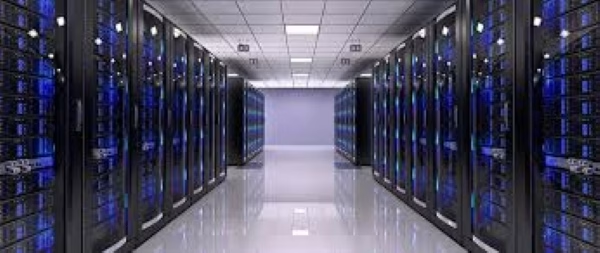
Samsung semiconductor data center program continues to advance across South Korea following its announcement in late 2025, with several components now moving from strategic planning into implementation. The $310 billion investment program remains one of the world’s largest technology infrastructure initiatives, targeting semiconductor manufacturing, and artificial intelligence infrastructure and data center development through multiple phased projects. In 2026, Samsung and the South Korean government have reinforced the program through new regional investment announcements, demonstrating continued progress toward expanding the country’s advanced manufacturing ecosystem while strengthening global semiconductor supply chains.
The program remains central to South Korea’s ambition of becoming a global leader in AI computing, memory semiconductors and digital infrastructure. Moreover, government-backed industrial policies introduced in 2026 continue to support investments in fabrication plants, advanced chip packaging, display manufacturing and battery production. As a result, the wider program continues to evolve through several independent construction projects across the country.
Samsung Semiconductor Data Center program enters implementation phase
Samsung has continued advancing the broader investment program through new construction commitments announced during South Korea’s national AI and semiconductor expansion strategy.
In June 2026, the South Korean government unveiled additional measures supporting AI infrastructure, semiconductor production and advanced manufacturing. The program encourages large-scale private investment while accelerating development of next-generation chip manufacturing capacity throughout the country.
Samsung has subsequently confirmed new investments that expand the scope of the original program. These include advanced semiconductor packaging facilities, OLED display manufacturing plants, battery production facilities and semiconductor materials manufacturing projects extending through 2040. Together, these developments demonstrate that the wider investment strategy is progressing from long-term commitments toward identifiable construction projects.
Although individual projects are being announced separately, they collectively reinforce Samsung’s long-term objective of expanding domestic semiconductor production while supporting growing demand for artificial intelligence computing infrastructure.
Separately, Samsung has also announced the $90 billion Chungcheong Industrial Construction Project, which focuses on new semiconductor packaging, display manufacturing, battery production and advanced materials facilities across South Korea’s central region through 2040.
Samsung Semiconductor Data Center strengthens South Korea’s construction pipeline
The investment program continues to generate one of Asia’s largest pipelines of high-value industrial construction projects.
Several developments remain focused on expanding semiconductor fabrication capacity alongside AI-related manufacturing infrastructure. These facilities require highly specialized cleanrooms, process utilities, advanced electrical systems and precision engineering works. Consequently, contractors specializing in semiconductor construction are expected to benefit throughout successive project phases.
Beyond fabrication plants, the program supports additional investment in AI-ready data centers, advanced display manufacturing and battery production. These complementary projects broaden South Korea’s industrial base while improving resilience across the semiconductor supply chain.
The program also supports national efforts to attract technology investment and maintain competitiveness against other major semiconductor-producing economies. Furthermore, continued investment in advanced manufacturing is expected to encourage innovation, create skilled employment and strengthen regional industrial clusters.
Samsung Semiconductor Data Center outlook remains positive through 2040
Construction activity associated with the program is expected to continue over multiple phases during the coming decade.
As additional projects receive regulatory approvals and detailed investment decisions, more construction packages are likely to enter procurement. These will include civil works, structural construction, mechanical and electrical installations, cleanroom fit-outs and specialist manufacturing infrastructure.
Industry analysts also expect continued demand for AI computing, high-bandwidth memory and advanced semiconductor packaging to support further expansion under the wider investment program. Therefore, Samsung’s long-term strategy continues to provide a strong foundation for sustained industrial construction across South Korea while reinforcing the country’s position within the global technology manufacturing sector.
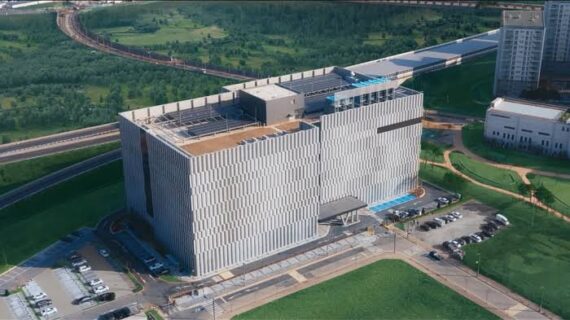
Overview on the $310 Billion AI, Data Center and Semiconductor Investment by Samsung
Total Investment: KRW 450 trillion (US$310 billion) over 5 years.
Key Focus for Samsung: AI data center infrastructure, semiconductors manufacturing, next-generation batteries, OLED.
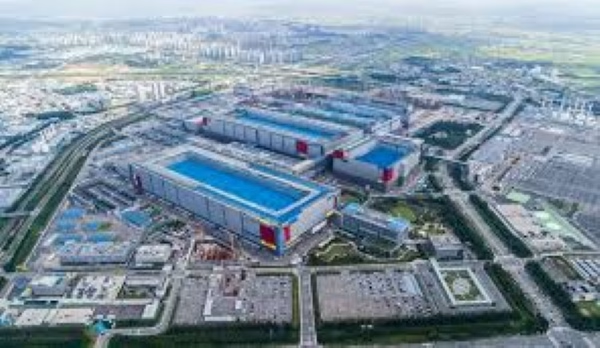
Pyeongtaek Plant 5 Development: New memory-chip line. Operations starting 2028.
AI Data Centers:
- Jeolla with 15,000 GPUs by 2028. Varied use across academia and SMEs.
- Gumi data center for Samsung AI training and as a R&D hub.
Battery Investment: All-solid-state battery production most likely in Ulsan industrial district.
Display Technology Investment: 8.6-generation OLED production at the city of Asan.
Investment Timeline
2025: KRW 450 trillion investment announced. Structural construction begins for Pyeongtaek Plant 5.
2026-2027: AI data centers build-out in Jeolla and Gumi expected. Also in plans is ramp-up of R&D and infrastructure.
2028: Pyeongtaek Plant 5 to begin operations. Jeolla data center to reach 15,000 GPU target.
What the AI, Data Center and Semiconductor Investment by Samsung Means to the Region and Markets
Samsung’s US$310 billion investment in AI, semiconductors and data centers is not just about growth — it is quintessential to the growing AI bubble and tech boom. With rising global demand for memory chips, Samsung’s Pyeongtaek Plant 5 is far from an idle investment, especially as major tech firms continue expanding their digital footprints through large-scale developments such as Amazon’s new US$3 billion data center investment in Mississippi.
It will also strengthen the company’s semiconductor manufacturing at the Pyeongtaek Samsung Electronics P2 facility that has been a host of expansions in recent years.
On a national level, this investment continues to push South Korea up the ladder to become a top 3 AI powerhouse after the U.S. and China. The Jeolla and Gumi data centers also reflect the country’s high-tech infrastructure beyond Seoul, a good pointer to promotion of regional economic development.
Financially, Samsung’s earnings are already on the rise. Its semiconductor division saw a 32.5% jump in operating profit in Q3 2025, driven by AI-related chip demand.
Project Fact Sheet
Project Name: Samsung Semiconductor Data Center Program
Total Investment: $310 billion
Country: South Korea
Sector: Semiconductor, AI and Data Centre Infrastructure
Project Type: National industrial investment program
Current Status (2026): Active implementation through multiple phased projects
Program Duration: Multi-phase, extending toward 2040
Major Components:
- Semiconductor fabrication facilities
- AI semiconductor manufacturing
- High-bandwidth memory (HBM) production
- AI data centers
- Advanced chip packaging
- OLED display manufacturing
- Battery manufacturing
- Semiconductor materials production
Strategic Objective: Expand South Korea’s semiconductor leadership and AI infrastructure while strengthening domestic manufacturing capacity
Key Construction Activities:
- Industrial buildings
- Cleanroom construction
- Manufacturing plants
- Utility infrastructure
- Data center development
- Research and development facilities
Project Team
Project Owner: Samsung Group
Lead Technology Developer: Samsung Electronics
Display Manufacturing: Samsung Display
Battery Manufacturing: Samsung SDI
Electronic Components: Samsung Electro-Mechanics
ICT and Data Infrastructure: Samsung SDS
Government Partner: Government of South Korea
Supporting Authority: Ministry of Trade, Industry and Energy (MOTIE)
Project Locations: Multiple sites across South Korea
Primary Beneficiaries: Semiconductor, AI, cloud computing and advanced manufacturing industries
Construction Delivery: Multiple engineering, procurement and construction contractors to be appointed on a project-by-project basis
Program Delivery Model: Phased implementation through independent regional industrial developments

Leave a Reply