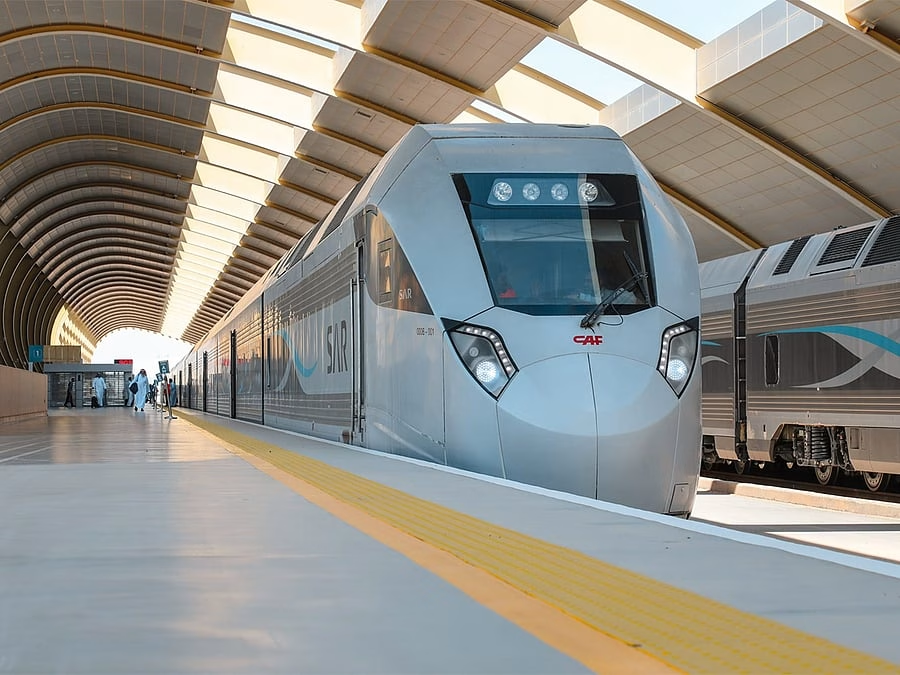
Saudi Arabia and Qatar have inked a formal agreement to launch the establishment of a new high-speed electric rail project that will link Riyadh and Doha. This ambitious Riyadh-Doha High-speed Rail Line is expected to reshape economic and logistical integration across the region. This information was reported by Al Ekhbariya TV.
Additionally, the railway project is deemed as one of the most significant modern infrastructure undertakings between two Gulf nations. Also, it is envisaged as a major artery for high-speed travel.
Riyadh-Doha High-Speed Rail Line Factsheet
Project type: High-speed electric passenger railway.
Route: Connects the capitals of Riyadh (Saudi Arabia) and Doha (Qatar).
Intermediate stops: Expected to include the Saudi cities of Al-Hofuf and Dammam.
Airport connectivity: Links King Salman International Airport (RUH) in Riyadh and Hamad International Airport (DOH) in Doha.
Length: approximately 785 kilometers (488 miles).
Speed: Trains designed to operate at speeds exceeding 300 km/h (186 mph).
Journey time: Expected to reduce travel time between Riyadh and Doha to approximately 2 hours.
Timeline: Scheduled for completion within six years (from the date of the agreement).
Expected capacity: Projected to serve over 10 million passengers per year.
Economic Impact: Expected to generate around SR 115 billion (approx. $30.7 billion USD) to the combined GDP of both nations.
Job creation: Estimated to create more than 30,000 direct and indirect jobs.
Timeline
The Riyadh-Doha high-speed rail is expected to be completed within six years. Furthermore, once the railway becomes operational, it is expected to reduce the journey between the two capitals to roughly two hours. The trains using the railway infrastructure are expected to be travelling at more than 300 kilometres per hour.
Length
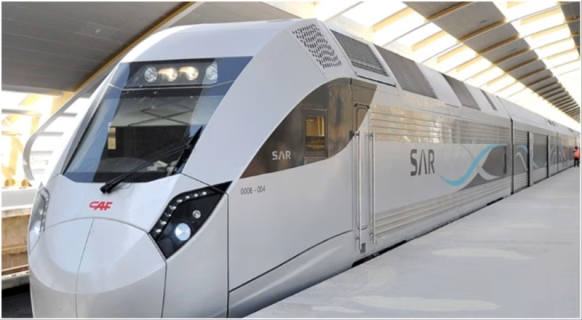
The railway will stretch 785 kilometres. Also, the network is projected to carry more than 10 million passengers in a year. The officials have predicted a profound impact on the movement of people, tourism, and trade.
Other than just connecting Doha and Riyadh directly, the railway line will extend across three key Saudi cities. These cities are: Riyadh, Hofuf and Dammam, strengthening both domestic and cross-border connectivity.
The route will also connect two of the region’s most important airports: King Salman International Airport in Riyadh and Hamad International Airport in Doha. Therefore, this will offer travellers and investors a faster and more flexible access to major business and aviation hubs.
Number of Passenger Stations
The railway network will contain five primary passenger stations that will be constructed along the corridor. Each of the stations will be designed to deliver a modern, seamless travel experience combining comfort, speed and smart-transport technologies.
The high speed rail project will be a turning point in mobility between Saudi Arabia and Qatar, moving beyond conventional transport routes and raising overall quality of life by facilitating smoother movement, supporting tourism, and enabling major sporting and entertainment events.
Job Creation
The Riyadh-Doha high-speed rail project is expected to generate around 30,000 both direct and indirect jobs. These jobs will be in both Saudi Arabia and Qatar throughout the construction and operational phases. Therefore, this will make it one of the region’s most significant labour-market catalysts.
It is also set to boost the transport of light and medium goods, strengthen cross-border supply-chain logistics, and increase bilateral trade by cutting delivery times and reducing operational costs.
In a joint statement, the two governments stressed their commitment to enhancing supply-chain cooperation, particularly in the energy sector, and to expanding and diversifying trade exchanges, aligning closely with the objectives of the new railway initiative.
Similar Projects
Saudi Arabia is gearing up its railway infrastructure with projects such as the Qiddiya High-speed Rail Project. With such projects coming up, the sultanate will emerge as a leading railway transport hub in the Middle East.
Leave a Reply