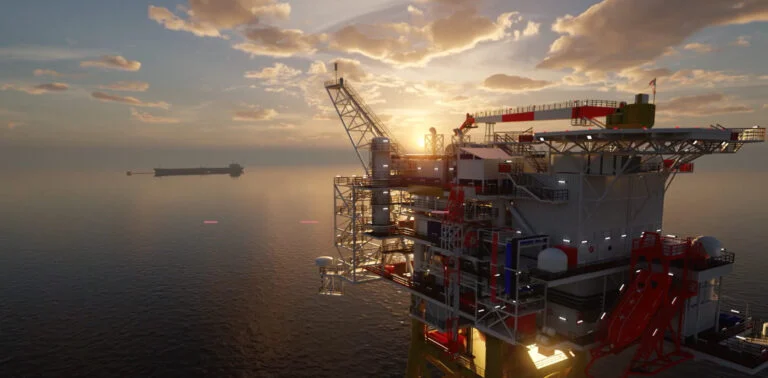
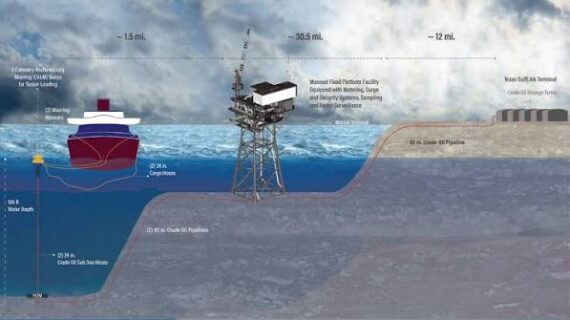
On May 5, 2025, Sentinel Midstream LLC announced the commencement of development activities for the Texas GulfLink Deepwater Port, marking a significant milestone enabled by funding received under the U.S.-Japan Trade Agreement. Sentinel will lead the project’s development, overseeing construction, commercial operations and long-term management of the terminal. Sentinel expects to begin commercial operations of the Texas GulfLink system by the fourth quarter of 2028, with excavation activities to begin soon and long-lead equipment procurement committed immediately. The offshore project is set to be situated about 30 miles off Freeport, Texas, and aims to be able to fully load a supertanker with about 2 million barrels of oil in a day.
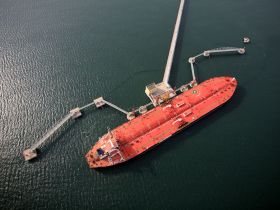
Currently, only one US port — the Louisiana Offshore Oil Port — can fully load supertankers; other facilities can only partially load a supertanker, requiring smaller ships to ferry crude to the larger vessel to fill it, adding to shipping costs. The terminal will handle Very Large Crude Carriers (VLCCs), eliminating the lightering operations that currently constrain the efficiency and cost-competitiveness of US crude exports. The project advances in coordination with the US Department of Commerce and the Government of Japan and reflects the shared commitment to strengthening global energy security and expanding US export infrastructure. Texas GulfLink received its federal licence from the US Maritime Administration in February 2026, a major step in the permitting process that cleared the path for construction commencement.
The Texas GulfLink project is part of a broader trend of investment in U.S. port infrastructure. On the East Coast, the Port of Savannah is carrying out a $1.6 billion modernization of Ocean Terminal that will expand container-handling capacity and support future cargo growth.
When most needed
Construction of the project commenced at a time when the United States has become a net exporter of crude oil for the first time since World War Two, as the war in Iran has increased European and Asian demand for American oil. US exports of oil to Asia touched a record 2.31 million barrels per day in April, overtaking shipments to Europe. That geopolitical context transforms Texas GulfLink from an infrastructure project into a strategic energy asset whose timing could hardly be more consequential.
The VLCC-loading capability at the heart of the terminal’s value proposition is directly relevant to Asian buyers: supertankers are the preferred vessel class for long-haul crude movements from the Gulf to East Asia, and the absence of a fully capable VLCC loading facility on the US Gulf Coast has historically added cost and logistical friction to every tonne of US crude heading to Japan, South Korea, China and India.
The last proposed US deepwater project — Enterprise Products Partners’ Sea Port Oil Terminal (SPOT) — stalled last year as it did not receive enough customer interest, with Enterprise blaming regulatory delays under the Biden administration and a shift in global oil flows after Russia’s invasion of Ukraine, which pushed US vessels more toward Europe instead of Asia. Texas GulfLink is advancing in precisely the opposite market environment: Asian buyers are actively seeking alternative crude supply following the Iran conflict’s disruption of Middle Eastern flows, US export volumes to Asia are at record levels, and the federal government is actively supporting the project’s advancement under the terms of the US-Japan Trade Agreement.
The combination of Japanese investment backing, federal policy support, VLCC-capable design and direct pipeline connectivity to the Permian Basin via Freeport creates a set of structural advantages that SPOT was never able to assemble in the same package. This broader surge in Gulf Coast export infrastructure is also being reinforced by other major midstream investments, including the recently announced ONEOK and MPLX US$1.75 billion Texas City export terminal and pipeline project, highlighting how energy companies are rapidly scaling capacity to meet shifting global crude and NGL demand patterns.
Terminal Design, Throughput Specifications and Connectivity
- Texas GulfLink deepwater crude oil export terminal to be located approximately 30 miles off the coast west of Freeport, Texas, in the Gulf of America
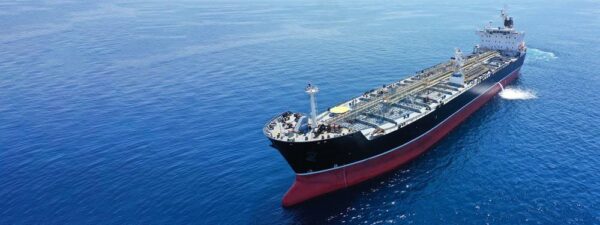
- Vessel class: Very Large Crude Carriers (VLCCs), capable of carrying approximately 2 million barrels of crude oil per vessel
- Loading capability: full VLCC loading in a single operation, eliminating the need for lightering using smaller intermediate vessels
- Loading rate: approximately 2 million barrels per day (full VLCC load in one day)
- Direct-loading capability enhances global competitiveness while significantly reducing emissions associated with traditional export methods
- Pipeline connectivity: integration with Sentinel’s existing crude oil transportation and terminal systems across Texas and Louisiana, connecting US supply to Gulf Coast refineries and global markets
- Commercial operations target: Q4 2028
- Near-term construction activities: excavation commencement; long-lead equipment procurement initiated immediately
- Anticipated impact: once operational, Texas GulfLink is anticipated to support billions of dollars in annual export value, improve the US trade balance, and drive sustained economic growth across the Gulf Coast
- Market access: designed to expand crude oil export reach across Asia and Europe, with immediate relevance to Japanese, South Korean and Indian buyers
Additionally, the Gulf of Mexico continues to see parallel development of large-scale offshore energy infrastructure spanning both upstream production and export logistics. One such upstream project is FSO Chalchi, which is being built to support the Trion deepwater development offshore Mexico. While Texas GulfLink is focused on enabling U.S. crude export capacity, Chalchi represents the production side of the same broader Gulf energy system, highlighting the region’s expanding role in global oil flows.
Project Fact Sheet
- Project Name: Texas GulfLink Deepwater Port
- Developer/Operator: Sentinel Midstream LLC
- Headquarters: Dallas, Texas
- Location: approximately 30 miles off the coast west of Freeport, Texas, in the Gulf of America (Gulf of Mexico)
- Project Value: $2.1 billion
- Project Type: Offshore deepwater crude oil export terminal (VLCC-capable)
- Vessel Class: Very Large Crude Carriers (VLCCs), approximately 2 million barrels per vessel
- Loading Capability: full VLCC loading (no lightering required)
- Daily Loading Capacity: approximately 2 million barrels per day
- Federal Licence: issued by the US Maritime Administration, February 2026
- Construction Commencement: May 5, 2026
- Commercial Operations Target: Q4 2028
- Funding Framework: US-Japan Trade Agreement, pursuant to Executive Order 14345 signed September 4, 2025; Japanese government investment participation confirmed
- Capital Partner: Cresta Fund Management (institutional capital partner to Sentinel)
- Legal Adviser: Jones Day (advising Sentinel in connection with the advancement of Texas GulfLink)
- Comparable Facility: Louisiana Offshore Oil Port (LOOP) — currently the only other US port capable of fully loading VLCCs
- Stalled Competitor: Enterprise Products Partners’ Sea Port Oil Terminal (SPOT) — did not proceed due to insufficient customer interest and regulatory delays
- Market Context: US crude oil exports to Asia reached a record 2.31 million barrels per day in April 2026, overtaking European volumes
Project Team
- Developer and Operator: Sentinel Midstream LLC — a Dallas-based developer and operator of integrated energy infrastructure with capabilities across commercial development, project execution and operations; owns and operates crude oil transportation and terminal systems across Texas and Louisiana connecting US supply to Gulf Coast refineries and global markets
- Chief Executive Officer, Sentinel Midstream: Jeff Ballard — announced the commencement of construction and described Texas GulfLink as creating a direct path from one of the most liquid crude hubs in the world to global markets
- Senior Vice President, Public Affairs, Sentinel Midstream: Bruce Heine — principal media spokesperson; confirmed the Q4 2028 commercial operations target and provided details on near-term construction activities
- Capital Partner: Cresta Fund Management — institutional capital partner providing investment backing alongside Japanese government-facilitated funding under the US-Japan Trade Agreement framework
- Legal Adviser: Jones Day — international law firm advising Sentinel Midstream in connection with all aspects of the Texas GulfLink advancement
- Federal Government (US): Howard Lutnick, United States Secretary of Commerce — characterised the project as delivering American energy and jobs to the Gulf Coast under the terms of the US-Japan Trade Deal
- Japanese Government: Government of Japan — investment participant under the US-Japan Trade Agreement framework, pursuant to Executive Order 14345 signed September 4, 2025
- US Senate (Texas): Senator John Cornyn and Senator Ted Cruz — both publicly endorsed the construction commencement, citing the project’s role in expanding Texas energy infrastructure, creating high-paying jobs in Brazoria County and supporting US crude exports to allied nations
- US House of Representatives: Representative Randy Weber (Texas 14th District) — provided congressional endorsement, citing the project’s economic significance for Southeast Texas and the Gulf Coast labor market



Leave a Reply