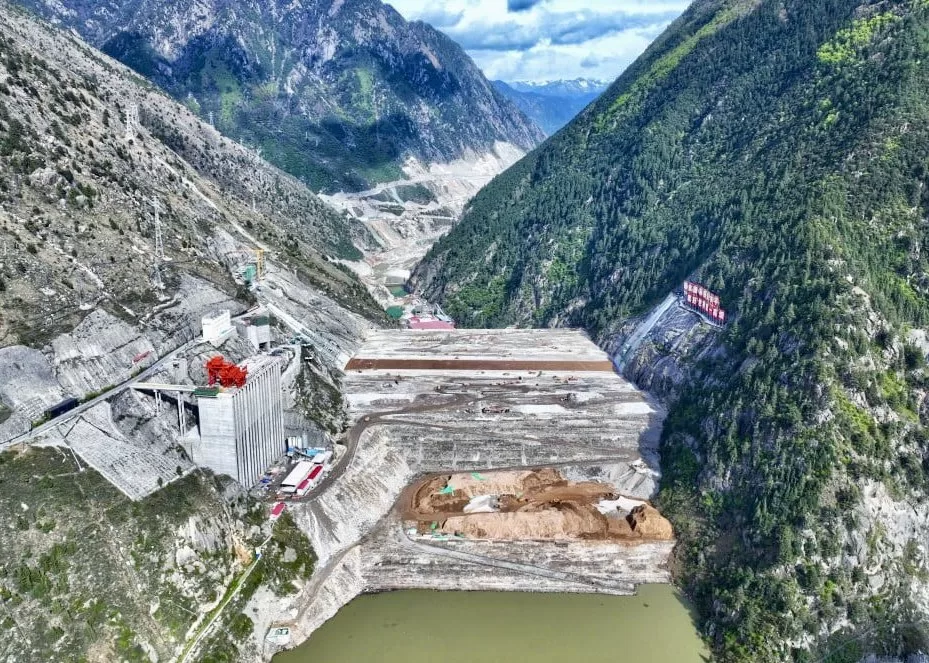
The Shuangjiangkou Hydropower Project in China’s Sichuan Province continues advancing toward full commissioning after entering the reservoir water storage phase in 2025. As of 2026, construction works remain underway on power generation systems, transmission infrastructure, and supporting facilities at the site, which is expected to become home to the world’s tallest dam upon completion. The project forms part of China’s broader strategy to expand renewable energy capacity and strengthen hydropower generation across western regions of the country.
Located along the upper reaches of the Dadu River in the Aba Tibetan and Qiang Autonomous Prefecture, the project has remained under development for more than a decade. Once completed, the dam will rise 315 meters high, surpassing the Jinping-I Dam to become the tallest dam structure globally.
Shuangjiangkou Hydropower Project moves closer to power generation
Authorities began storing water at the reservoir in May 2025 following the completion of major sections of the dam structure and associated hydraulic works. The milestone marked a significant transition from large-scale civil works toward operational preparation and equipment installation.
The project carries an estimated investment of 36 billion yuan, equivalent to approximately $4.9 billion. Developers designed the hydropower station with four 500 MW Francis turbine-generators, giving the facility a combined installed capacity of 2,000 MW.
Once operational, the plant is expected to generate around 7.7 billion kWh of electricity annually. Chinese authorities estimate that the output could supply electricity to more than three million households while reducing reliance on coal-fired power generation.
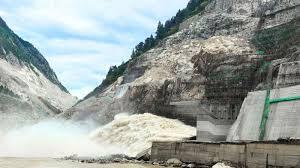
Current construction activities include turbine installation, dam reinforcement works, spillway completion, underground engineering activities, and expansion of high-voltage transmission infrastructure connected to the national grid.
Shuangjiangkou Hydropower Project highlights advanced construction technologies
The mountainous terrain surrounding the project has required extensive engineering innovation throughout construction. Contractors have deployed intelligent monitoring systems, drones, automated inspection technologies, and digital construction management systems to improve safety and efficiency across the site.
State-owned Power Construction Corporation of China (PowerChina) continues leading major engineering and infrastructure works on the project. The company has also overseen tunnel excavation, flood-control systems, and river diversion structures during different phases of development.
Furthermore, the hydropower project supports China’s wider clean energy transition objectives. Officials estimate the station will offset approximately 3 million tonnes of coal consumption annually after commissioning. Carbon dioxide emissions could also decline by more than 7 million tonnes per year due to renewable power generation from the facility.
Shuangjiangkou Hydropower Project reflects China’s wider hydropower expansion strategy
China continues investing heavily in large-scale hydropower developments as part of long-term national energy planning. The Shuangjiangkou project joins several other strategic renewable energy developments currently underway across the country.
The project also complements the recently launched Motuo Project construction on the Yarlung Tsangpo River, a $167 billion hydropower complex planned in Tibet. Together, the developments demonstrate China’s continued focus on mega infrastructure projects designed to increase renewable electricity production and strengthen energy security.
However, environmental and geological concerns continue surrounding large hydropower developments in mountainous areas. Experts continue monitoring slope stability, biodiversity impacts, sediment flow patterns, and long-term hydrological effects associated with the Shuangjiangkou reservoir and surrounding infrastructure.
Despite these concerns, construction progress at the site remains steady as authorities move toward the next commissioning phase.
READ ALSO: Spain backs Africa’s biggest desalination plant in Casablanca with €340 million
Shuangjiangkou hydropower project shows China’s skill, tech and green effort
The construction of the Shuangjiangkou Dam has presented significant engineering challenges due to its high-altitude location, over 2,400 metres above sea level, and complex geological conditions. To address these issues, advanced technologies such as robotics and 5G-enabled systems have been employed. Robotic rollers equipped with sensors collect real-time data to optimise construction performance, while drones monitor environmental risks around the site.
China leads the world in dam construction, having built over 22,000 dams taller than 15 metres since the 1950s, accounting for nearly half of the global total. The completion of the Shuangjiangkou hydropower project will further solidify China’s position as a global leader in hydropower development.
Environmental considerations have been integral to the project’s development. The renewable energy produced by Shuangjiangkou hydropower project is expected to offset approximately 2.96 million tonnes of coal consumption annually, reducing carbon dioxide emissions by about 7.18 million tonnes. This contribution aligns with China’s commitment to achieving carbon neutrality and combating climate change.
Project Fact Sheet
Project name: Shuangjiangkou Hydropower Project
Location: Aba Tibetan and Qiang Autonomous Prefecture, Sichuan Province, China
River: Dadu River
Project type: Hydropower dam and flood-control project
Project cost: 36 billion yuan (approximately US$4.9 billion)
Dam height: 315 meters
Installed capacity: 2,000 MW
Generating units: Four 500 MW Francis turbine-generators
Annual electricity generation: Approximately 7.7 billion kWh
Construction commencement: 2013
Current status: Reservoir water storage phase and ongoing infrastructure works
Expected commissioning: Following completion of final mechanical and electrical works
Developer: Power Construction Corporation of China (PowerChina)
Key objectives: Renewable energy generation, flood control, and grid stabilization
Environmental target: Reduction in coal consumption and carbon emissions
Project Team
Project owner: Government of China
Lead developer: Power Construction Corporation of China (PowerChina)
Project management: Chinese state hydropower authorities
Engineering support: Chinese hydropower engineering institutes
Construction contractors: State-owned Chinese infrastructure and hydropower firms
Technology providers: Intelligent monitoring and automation system contractors
Transmission infrastructure partners: Chinese state grid and transmission companies
Environmental oversight: Chinese environmental and water management agencies
Regional stakeholders: Sichuan provincial authorities and local communities



Leave a Reply