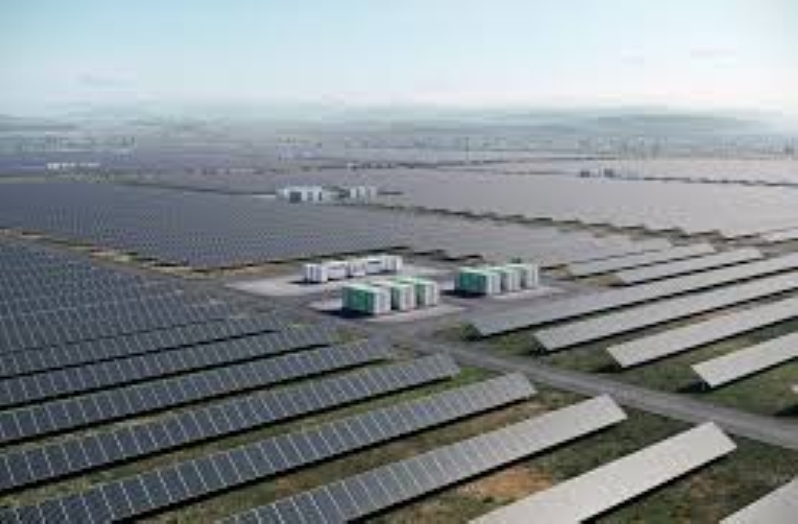
Australian renewables developer Edify Energy has achieved financial close on two of the largest hybrid solar-and-battery projects currently under construction in Australia, the Smoky Creek and Guthrie’s Gap hybrid renewable energy developments in Queensland. Combined, the projects have a 720MWp of solar generation capacity and 600MW/2,400MWh of battery energy storage.
The projects represent one of the most significant renewable infrastructure financing deals completed in Australia in 2026. Edify’s financial close on the projects also comes at an important time for the National Electricity Market (NEM). This is as large-scale battery energy storage systems (BESS) are taking a major role in stabilizing grids amid growing renewable penetration. The development also signals continued lender appetite for utility-scale hybrid assets despite recent volatility in Australian wholesale electricity markets.
Smoky Creek and Guthrie’s Gap Hybrid Renewable Projects
The neighboring Smoky Creek and Guthrie’s Gap projects are located in Central Queensland and will together deliver:
- 720MWp of solar PV generation
- 600MW/2,400MWh of battery storage
- Advanced grid-forming inverter capability
- Large-scale renewable supply for industrial users
- Long-duration storage designed to improve grid stability
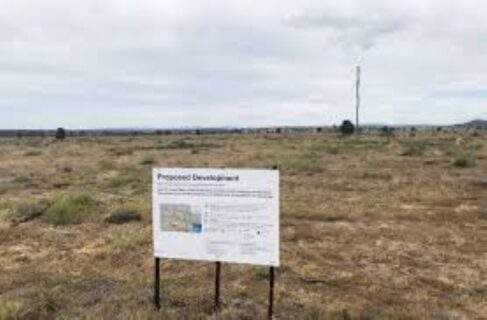
Furthermore, the projects are currently the largest solar-plus-storage hybrid developments under active construction in Australia. This is other mega-projects continue to take shape in Australia including the Western Green Energy Hub, which is the largest planned renewable energy project in the world.
The Role of Battery Energy Storage Systems (BESS)
The battery systems are designed to store excess daytime solar generation and discharge power during evening demand peaks. This will help reduce curtailment and improve renewable energy reliability. Grid-forming inverter technology will also allow the facilities to provide system-strength and frequency-support services. This has been traditionally supplied by thermal generators.
Financing Structure for Smoky Creek and Guthrie’s Gap Solar and Battery Projects
Edify said the Smoky Creek and Guthrie’s Gap projects secured support from 14 domestic and international lenders.
The transaction is also important because it represents one of Edify’s first major financings since the company’s acquisition by Canadian institutional investor La Caisse.
Additionally, the projects are expected to benefit from multiple revenue streams including:
- Long-term energy offtake arrangements
- Capacity and reliability services
- Grid support markets
- Energy arbitrage from large-scale batteries
- Government-backed investment frameworks
Australia’s evolving Capacity Investment Scheme (CIS) has also become particularly important for enabling large hybrid projects to secure financing certainty. Edify’s Smoky Creek project was among the successful bidders under the federal government’s CIS tender process.
Rio Tinto’s Decarbonization Push
Another major driver behind the projects is the decarbonization strategy of Rio Tinto. The mining company recently entered into hybrid services agreements with Edify Energy covering the Queensland developments. The energy generated by the projects is expected to support Rio Tinto’s aluminum operations in Queensland. This includes the Boyne aluminum smelter and associated industrial infrastructure.

Energy-intensive industries and developments including data centers are also increasingly turning toward dedicated renewable-plus-storage agreements. This is with aim to reduce exposure to volatile electricity markets while meeting emissions reduction targets.
Australia’s Energy Transition
The Edify financing comes amid a broader transformation of Australia’s electricity system. South Australia already sources 100% of its electricity demand from renewables during significant portions of the year, and Queensland is rapidly expanding utility-scale renewable capacity.
However, the rapid deployment of solar generation has also exposed structural challenges:
- Negative daytime electricity pricing
- Grid congestion
- Renewable curtailment
- Growing demand for dispatchable storage
Additionally, recent market conditions have even forced some renewable developers to delay or scale back projects due to falling wholesale electricity prices.
Against that backdrop, integrated solar-and-storage projects are still increasingly viewed as the next phase of Australia’s renewable buildout because they provide.
The 2,400MWh storage component attached to the Edify projects is also particularly significant because it demonstrates how large batteries are evolving from short-duration grid support assets into major energy-shifting infrastructure.
Edify’s Growing Storage Portfolio
The Queensland developments build on Edify Energy’s rapidly expanding battery storage portfolio across Australia.
The company previously achieved financial close on the A$400 million Koorangie Energy Storage System (KESS) in Victoria, a 185MW/370MWh battery project developed in partnership with infrastructure investor Sosteneo.
KESS secured long-term agreements with Shell Energy Australia and the Australian Energy Market Operator (AEMO, and has since entered commercial operation.
Edify also says it has now originated, financed and brought into operation 11 large-scale renewable generation and storage assets across Australia’s eastern seaboard.
Construction Scope for Smoky Creek and Guthrie’s Gap Solar and Battery Projects
Edify earlier appointed DT Infrastructure as preferred EPC contractor for the Queensland hybrid developments.
Construction is expected to ramp up through 2026, with the projects anticipated to become major contributors to Queensland’s renewable energy capacity once operational.
Fact Sheet for Smoky Creek Solar Power Station & Guthrie’s Gap Solar Power Station
Developer: Edify Energy
Location: Central Queensland
Project Type: Hybrid solar PV and battery energy storage
Combined Solar Capacity: 720MWp
Battery Storage Capacity: 600MW / 2,400MWh
Latest May 2026 Milestone: Financial close achieved
Construction Stage: Under construction
Financing Support: Consortium of 14 domestic and international lenders
Project Timeline
2024: Hybrid services agreements signed with Rio Tinto
2025: Capacity Investment Scheme tender support confirmed
March 2026: DT Infrastructure appointed preferred EPC contractor
May 2026: Financial close achieved for both projects
2026 onward: Major construction activities expected to proceed
Project Team
Developer: Edify Energy
Industrial Offtaker: Rio Tinto
EPC Contractor: DT Infrastructure
Grid and Market Operator: AEMO


Leave a Reply