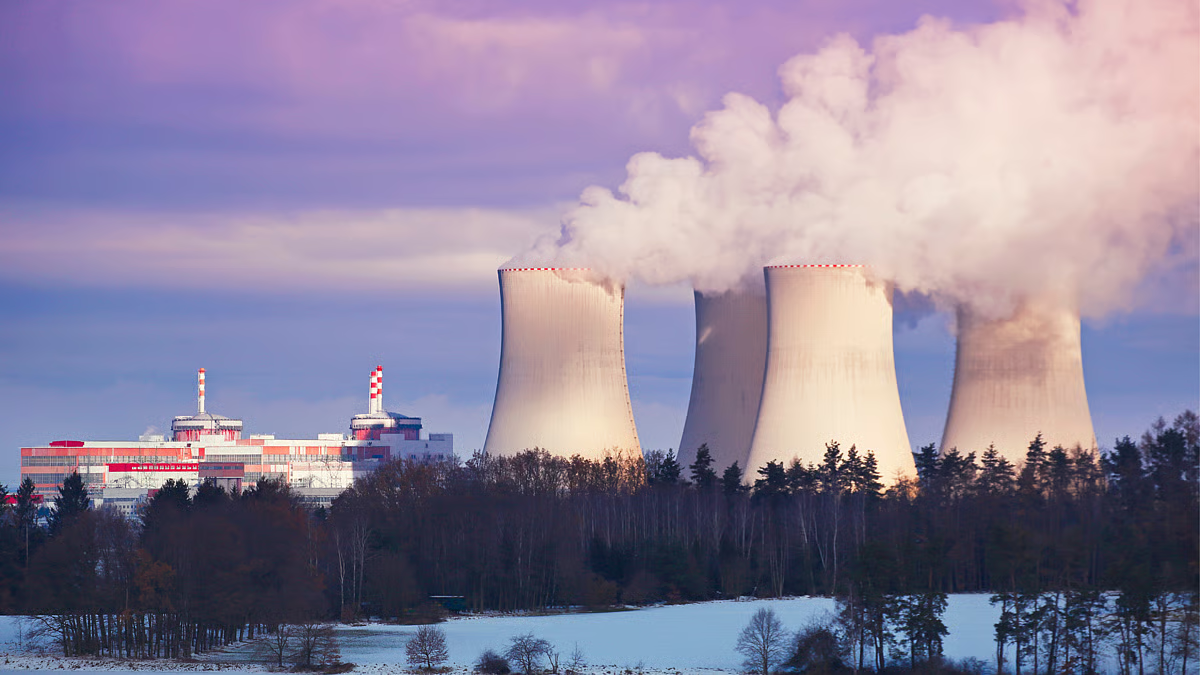
Eskom nuclear expansion project has entered exploratory funding talks with the World Bank and international financiers. The multi-billion-dollar programme targets up to 5,200 megawatts of new nuclear capacity for South Africa. Moreover, Eskom seeks stable baseload power while reducing reliance on coal across the national grid.
Additionally, the utility prepares a request for information covering conventional reactors and small modular reactors. According to Reuters reporting, discussions remain early-stage but signal renewed investor interest in nuclear development.
Eskom nuclear expansion project funding talks with World Bank and partners
Eskom continues exploratory discussions with the World Bank over diversified financing models. Furthermore, the utility engages commercial banks and development finance institutions for support. In addition, the African Development Bank participates in early-stage funding considerations.
However, Eskom cannot finance nuclear build alone due to financial constraints. Therefore, it pursues blended finance structures combining public-private partnerships and vendor financing. Moreover, Nxumalo highlighted openness to multiple funding ideas from global markets. Consequently, Eskom evaluates risk-sharing mechanisms to attract long-term infrastructure investors.
Eskom nuclear expansion project capacity plan and technology mix
Eskom proposes 4,800 MW from conventional pressurized water reactors. Additionally, it targets 400 MW from small modular reactors. Together, the programme could deliver 5,200 MW of baseload capacity.
Moreover, half of SMR capacity supports coal-to-nuclear transition strategy. Consequently, Eskom strengthens grid stability amid ongoing electricity shortages. In contrast, coal still dominates South Africa’s electricity generation mix. However, nuclear power offers reliable always-on energy output.
Nuclear expansion project timeline, risks, and market engagement
Eskom aims to approach the market within the next 12 months. Meanwhile, it evaluates both conventional reactor and SMR procurement pathways. Additionally, vendor financing models similar to international nuclear projects remain under review. For example, Russia’s Rosatom approach at Egypt’s El Dabaa informs discussions. However, environmental groups and communities continue to raise concerns. Therefore, regulatory approvals and stakeholder alignment remain critical milestones. Ultimately, project execution depends on financing closure and policy support.
Eskom positions nuclear expansion as central to long-term energy security planning in South Africa. Moreover, early funding engagement signals renewed international confidence in nuclear infrastructure investment. Additionally, the utility balances climate transition goals with urgent electricity supply constraints.
However, successful delivery depends on regulatory approval, financing closure, and stakeholder alignment. Therefore, the coming 12 months will prove critical for project advancement decisions. Ultimately, Eskom seeks reliable baseload capacity to stabilize national grid performance long term.
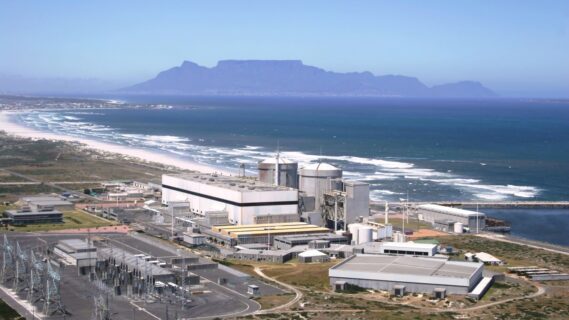
The Eskom nuclear expansion project, targeting up to 5,200MW of new capacity, is closely tied to South Africa’s existing nuclear infrastructure base, particularly the Koeberg nuclear power station, which remains the country’s only operational nuclear facility and a critical reference point for pressurised water reactor technology and grid stability. This expansion builds on the operational experience and regulatory framework established at Koeberg, while scaling up into a broader multi-reactor programme that includes both conventional reactors and small modular reactors.
Project Fact Sheet
Project name: Eskom nuclear expansion project
Location: South Africa, multiple candidate coastal and inland sites
Lead developer: Eskom state-owned power utility
Capacity target: up to 5,200 megawatts nuclear generation
Technology mix: 4,800 MW PWR and 400 MW SMRs
Stage: Early exploratory funding and feasibility planning phase
Financiers under discussion: World Bank and international DFIs
Additional financiers: African Development Bank and commercial lenders
Financing models: PPPs, vendor financing, blended infrastructure finance
Strategic goal: Strengthen baseload supply and reduce coal dependence
Procurement plan: Request for information within 12 months
Policy alignment: South African energy transition and decarbonisation strategy
Project Team
Project sponsor and operator: Eskom, South Africa’s state-owned power utility
Group executive for generation: Bheki Nxumalo, leads nuclear programme engagement
Lead international financier under discussion: World Bank
Additional development financiers: African Development Bank and multilateral institutions
National policy authority: Department of Electricity and Energy, South Africa
Nuclear regulatory body: National Nuclear Regulator of South Africa
Commercial banking partners: regional and global infrastructure lenders under review
Technology providers: prospective nuclear reactor vendors and SMR developers
Funding structure advisors: PPP and vendor financing specialists
Environmental and social stakeholders: civil society groups and community representatives
Leave a Reply