South Africa’s solar sector has shifted from a crisis-driven scramble into a structural pillar of the country’s energy future. What began as an emergency response to chronic load-shedding has matured into a market driven by economics, corporate demand and the looming retirement of the nation’s ageing coal fleet. Jaco Botha, co-founder and chief executive of solar and storage firm Solareff, captured the change: renewable energy in South Africa, he argued, has moved beyond emergency response into a phase defined by long-term financial logic and national impact.
From load-shedding to economics
The rolling blackouts that defined 2022 and 2023 have eased dramatically, with South Africa passing 300 consecutive days without load-shedding in early 2026 on the back of Eskom’s operational recovery plan. Yet analysts are clear this is progress, not a solved problem: coal stations are scheduled to retire between 2027 and 2030, opening a supply gap that new capacity must fill to avoid a return of outages.
Botha describes the market as having moved through distinct phases. During peak load-shedding, the priority was simply continuity of supply; that urgency has since given way to cost efficiency and long-term savings. The economics now make the argument on their own. After Eskom’s roughly 13.7% tariff increase in April 2026 lifted average residential rates to around R3.00/kWh, rooftop solar generates power at roughly R0.95/kWh over its lifetime, compressing payback periods to under five years. “We are at a point now where with solar and battery solutions we can provide power at a much cheaper rate than what clients can buy from Eskom, so it becomes a financial no brainer,” Botha said.
The rooftop revolution
Private rooftop solar is the sector’s defining trend. Installed rooftop capacity surpassed 8.3 GW in 2026 — more than the combined operational solar contracted under the government’s REIPPPP and RMIPPPP programmes, and greater than all of Eskom’s contracted IPP renewable capacity. Commercial and industrial users now lead the boom, blanketing shopping centres, warehouses and office parks in panels.
Solareff’s portfolio illustrates that scale. Founded by Botha and his brother, chief commercial officer De Villiers Botha, in 2010, the firm has delivered more than 500 projects and roughly 190 MW across agriculture, retail, mining and heavy industry, including some of the country’s largest rooftop installations at Eastgate Shopping Centre in Germiston, Boardwalk Inkwazi in Richards Bay, Midlands Mall in Pietermaritzburg and Clearwater Mall in Roodepoort. Botha notes that each installation involves far more than mounting panels — electrical upgrades, structural assessments and roof improvements are routinely required to ensure compliance and long-term performance. Flexible funding models, including power purchase agreements, increasingly let clients adopt these systems without upfront capital.
Utility-scale, municipalities and corporate PPAs
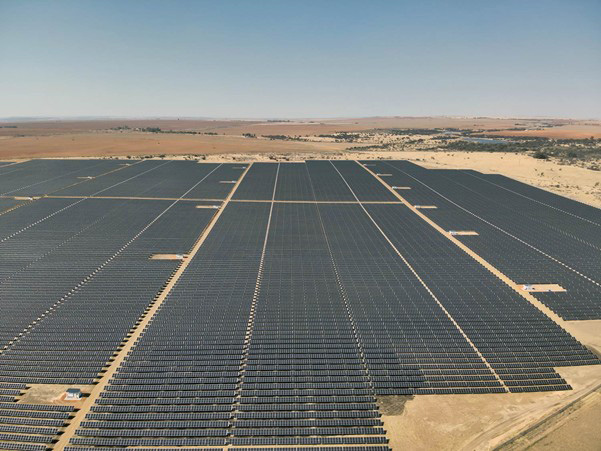
At the utility scale, the REIPPPP continues to drive competitively priced capacity, with Bid Window 7 tariffs averaging around R0.60/kWh, while the Northern Cape’s irradiation above 2,800 kWh/m² keeps it pivotal for large farms. A widening pipeline of corporate PPAs — led by mining houses and data-centre operators, which secured more than 1 GW in a single recent year — is diversifying demand beyond public tenders. Renewables are also reaching critical public infrastructure: Solareff’s Hartenbos Waste Water Treatment Works solar PV plant and microgrid, developed with Mossel Bay Municipality, shows how distributed generation can improve the reliability of essential services while lowering their environmental footprint.
Outlook and headwinds
The trajectory is firmly upward, with total installed solar capacity forecast to rise from near 9.8 GW in 2026 to almost 17 GW by 2031. Botha points to wider system benefits already visible — thousands of megawatts of private capacity easing pressure on supply and reducing reliance on coal and costly diesel. He also frames global volatility as a tailwind: “What is happening globally is bad for everyone, but it creates an opportunity for us to provide clients with a cheaper and more stable alternative.” The main constraints are now the grid itself — transmission bottlenecks, slow connection approvals and storage costs — which is why Botha stresses continued collaboration with government, including on national grid code discussions.
Looking ahead, he sees solar as more than an industry, but a pathway to tackle high energy costs and unemployment. Renewable energy, in his view, is no longer an alternative — it is becoming the foundation of a more secure energy future.

Leave a Reply