OpenAI’s ambitious Stargate UK data center project has effectively been shelved, marking a significant setback for Britain’s aspirations to become a global AI infrastructure hub. Originally announced in 2025 as a partnership between OpenAI, Nvidia and Nscale, the multibillion-pound initiative was expected to establish a major AI computing campus in North East England and strengthen the country’s sovereign compute capabilities. However, OpenAI has paused the project indefinitely, citing soaring electricity costs, regulatory uncertainty and concerns over the long-term viability of large-scale AI infrastructure investments in the UK. The decision comes as the company redirects its focus toward alternative markets offering more competitive energy economics and faster infrastructure deployment pathways including the planned 10GW OpenAI data center in Ohio, U.S. that has the potential to rank among the world’s largest if successfully implemented.
Stargate UK Data Center Project Scrapped Off as OpenAI Laments High Energy Costs
Reported April 9, 2026 – OpenAI has noted it is pausing its Stargate UK data center project owing the pause to high energy costs and regulatory environment. Furthermore, the firm is reining in ambitious spending plans ahead of a highly anticipated public listing. “We see huge potential for the UK’s AI future,” the company said in an emailed statement on Thursday. “AI compute is foundational to that goal — we continue to explore Stargate UK and will move forward when the right conditions such as regulation and the cost of energy enable long-term infrastructure investment.”

The Stargate project is OpenAI’s costly plan to expand global data center capacity to run and train its AI models. In the United States, the project is a $500bn endeavor that is seeing the developments of various projects across various states. Its first campus is in Texas, with similar projects underway in Norway and the United Arab Emirates.
Moreover, it announced Stargate UK in September. The company, which was valued at $852 billion in a financing round last month, has been closing down side projects beyond its core ChatGPT service as the company faces increasing competition from arch-rival Anthropic and Google.
Outlook on the Stargate UK Data Center Project Pullback
The Stargate UK data center project is one that the UK will not take lightly as it harbored hopes to be at par in AI development. OpenAI’s pullback in the UK is a blow to Prime Minister Keir Starmer’s plan to make Britain a hub for AI development. Furthermore, his ruling Labor party has made data centers a pillar of its economic growth plan.
OpenAI’s Stargate project was set to be built in one of the government’s AI Growth Zones, an economic development region. However, the country has one of the highest energy costs in Europe. A spokesperson for the UK’s Department of Science, Innovation and Technology said the nation’s AI sector has attracted more than £100 billion ($134 billion) in private investment since Starmer’s Labor party came to power in 2024.
For instance, Google announced a £5 billion ($6.8 billion) investment over the next two years to expand its UK data centers and AI infrastructure. Central to the plan entailed the opening of the new Waltham Cross data center, near London that was completed last year. It also came alongside upgrades to existing sites to support the growing compute-intensive AI workloads, cloud services, and other operations.
“Our focus is on continuing to create the right conditions for investment in the UK’s AI and data center infrastructure,” the spokesperson said in a statement. “We are continuing to work with OpenAI and other leading AI companies to strengthen UK compute capacity.” The firm had previously said it would work on Stargate UK with British data center developer Nscale and Nvidia Corp. However, a representative for Nscale declined to comment. On the other hand, Nvidia did not immediately respond to requests for comments on Thursday.
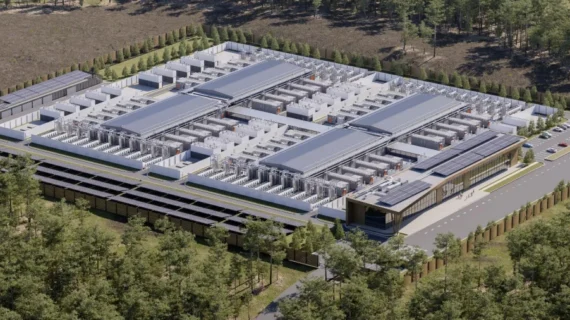
Project Overview
- Project Name: Stargate UK Data Center
- Project Type: AI data center
- Estimated Cost: Not disclosed (part of larger Stargate program)
- Purpose: AI model training and compute
- Status: Paused / Scrapped
Key Stakeholders
- Developer: OpenAI
- Partners: Nscale, Nvidia
- Government: UK Department for Science, Innovation and Technology
- Political Lead: Keir Starmer
Location
- Site: UK (AI Growth Zone – specific site TBD)
- Country: United Kingdom
Scope
- Large-scale AI data center
- Part of global Stargate rollout
- High-performance compute infrastructure
- Intended for model training
Funding / Delivery Model
- Private investment (OpenAI-led)
- Partnership model with industry players
- Dependent on regulatory and energy conditions
Status
- Stage: Paused
- Reason: High energy costs, regulatory concerns
- Next: Conditional revival if environment improves
Key Risks & Challenges
- High electricity costs
- Regulatory environment
- Investment uncertainty
- Competitive pressure (AI sector)
Strategic Significance
- Setback for UK AI ambitions
- Highlights energy cost constraints
- Reflects shift in OpenAI priorities
- Impacts national data center strategy




Leave a Reply