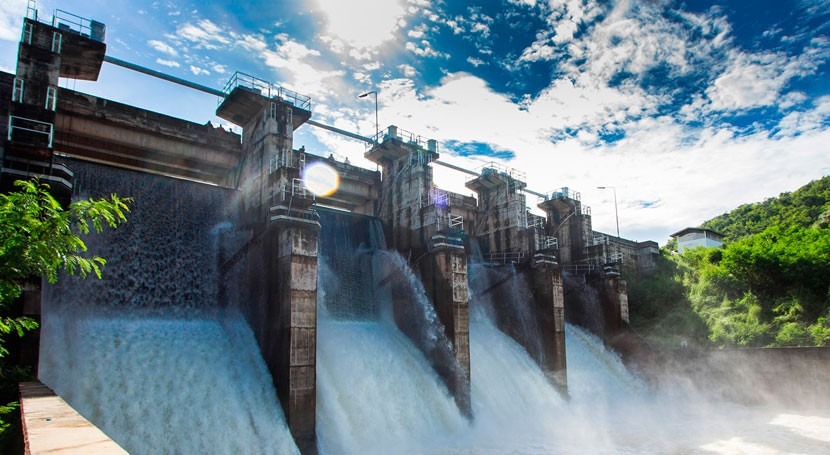
Norwegian state-owned energy group Statkraft is seeking to build a new Mår hydropower plant in Rjukan, in Tinn municipality, Norway, under a licence application to the Norwegian Water Resources and Energy Directorate (NVE). The project would nearly triple the plant’s installed capacity and lift its electricity output by just over 13 percent, making it one of Statkraft’s largest hydropower investments in Norway in the coming years.
The new facility carries an investment framework of NOK 9 billion, with a potential additional NOK 5 billion for a future pumped-storage stage. It forms part of Statkraft’s broader plan — set at around NOK 80 billion over ten years — to upgrade and further develop Norwegian hydropower, much of which is approaching the end of its operational life.
From 1948 plant to a new build deeper in the mountain
The existing Mår power plant was commissioned in 1948 and is nearing the end of its operational lifetime. Rather than simply refurbish it, Statkraft has concluded that the best use of resources would be to build an entirely new plant roughly 1,000 metres further into the mountain, relocating the intake to the Kalhovd reservoir and the outlet to Tinnsjøen. That change increases the height of fall, allowing more electricity to be produced more quickly during periods of peak demand and helping to smooth price spikes.
“Since the 1940s, Mår hydropower plant has supplied electricity to households and businesses,” said Pål Eitrheim, Executive Vice President for the Nordics at Statkraft, noting that some equipment still in service has run for nearly 80 years and “has outlasted 15 Norwegian prime ministers.” With the plant drawing on a large mountain reservoir and discharging into Tinnsjøen, Statkraft says the site has favourable natural conditions to deliver a major capacity increase.
The new plant is designed with nearly three times the installed capacity of the current facility — rising from 180 MW to 520 MW — while annual production would increase from around 1,140 GWh to roughly 1,300 GWh. That lifts the electricity the plant supplies from the equivalent of about 68,750 households to just over 80,000.
A pumped-storage option for the future
The application also includes an option to expand capacity much further in a later phase — up to 1,040 MW, alongside 1,040 MW of pumping capacity. Such a pumped-storage facility would allow water to be pumped from Tinnsjøen back up to the Kalhovd reservoir, storing energy so it can be released as electricity when demand and prices are highest. It is a model Statkraft is pursuing across its fleet as it seeks more flexible capacity to balance growing volumes of intermittent wind and solar power.
Tunnelling, local impact and wild reindeer crossings
Building the new plant would involve excavating around 40 kilometres of new tunnels, generating large volumes of rock that must be transported and deposited. Statkraft says it has begun discussions with Tinn municipality and Telemark county to find beneficial community uses for the excavated material. The company stresses that the project would not expand reservoirs or divert water from new rivers or streams, though it would still affect the local environment.
To address ecological concerns, Statkraft is proposing two new wild reindeer crossings at Graveide and Gøystoset. The large Mårvatn and Kalhovd reservoirs currently act as barriers to reindeer migration, and the new crossings are intended to re-establish historic, year-round migration routes regardless of ice conditions. The project is also expected to create work for local, regional and national contractors during construction.
Part of a wider Norwegian hydropower push
The Mår application is one of a series of major upgrade projects Statkraft is advancing through NVE as it works to modernise ageing assets and add flexible capacity. The company — which produces around a third of Norway’s electricity — has set an ambition to launch at least five major hydropower upgrades by 2030, and has lodged licence applications for new plants at Mauranger, Aura and Nore, among others. Many of its largest plants date back decades, with Nore opening in 1928, Mår in 1948 and Aura in 1953. The Mår project builds directly on the company’s wider plan to invest billions in hydro and wind power across Norway, a programme it has since scaled up to around NOK 80 billion over the coming decade. Among the other schemes in that pipeline is the proposed 257 MW Høyanger K5 and Breidal hydropower development in western Norway, which would likewise replace ageing plants and raise output from an already-regulated watercourse.
Statkraft cautions that a final investment decision at Mår will depend on the project’s profitability. It is ultimately for the authorities to weigh the societal benefits of increased generation against the local and environmental impacts and decide whether to grant a licence. If approved, Statkraft will then choose whether to refurbish the existing plant or build the new, higher-capacity facility the application sets out.
Project Factsheet: New Mår Power Plant
Developer: Statkraft
Location: Rjukan, Tinn municipality, Telemark, Norway
Status: Licence application submitted to NVE (June 2026); under review
Existing plant: Commissioned 1948; 180 MW; ~1,140 GWh/year
New plant — capacity: 520 MW (nearly three times the current plant)
New plant — production: ~1,300 GWh/year (up around 13%)
Households supplied: From about 68,750 to just over 80,000
Key works: New plant ~1,000 m further into the mountain; intake relocated to Kalhovd reservoir, outlet to Tinnsjøen; ~40 km of new tunnels
Investment framework: NOK 9 billion (plus potential NOK 5 billion for future pumped storage)
Future option: Expansion to 1,040 MW with 1,040 MW of pumped-storage pumping capacity
Environmental measures: Two new wild reindeer crossings at Graveide and Gøystoset; no new reservoirs or river diversions
Wider programme: Part of Statkraft’s ~NOK 80 billion, 10-year plan to upgrade Norwegian hydropower
Next steps: NVE licensing decision; final investment decision subject to profitability



Leave a Reply