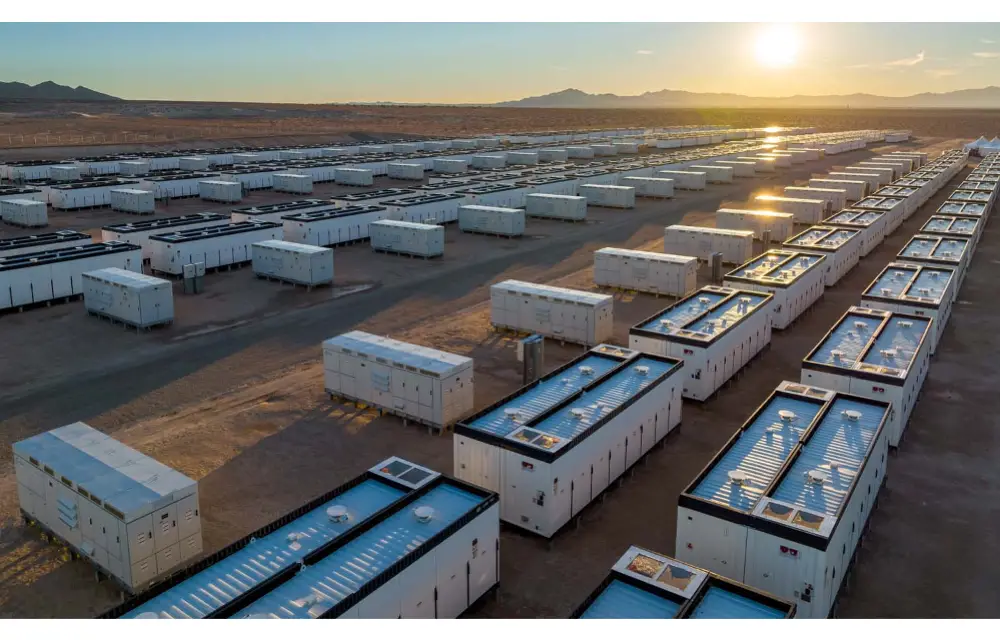
The Summerfield Battery Energy Storage project continues progressing in South Australia, with construction now largely complete and final commissioning activities underway ahead of full operations later in 2026. The project reflects ongoing investment in grid-scale storage infrastructure supporting renewable integration and system reliability.
The development, located near Adelaide, involves a 240 MW / 960 MWh lithium-ion battery system designed to stabilize the electricity grid. It forms part of Australia’s broader transition toward renewable energy, enabling excess wind and solar generation to be stored and dispatched during peak demand.
In parallel, Australia is also advancing large-scale storage through pumped hydro infrastructure, including the Snowy 2.0 Underground Battery project, which demonstrates complementary long-duration storage solutions across the energy mix.
CIP contracted Canadian Solar’s e-storage team to construct the Summerfield Battery Energy Storage System. Located in the beautiful Murraylands region of South Australia, the huge plant will produce 240 megawatts and store 480 megawatt hours of energy.
This dynamic partnership marks a huge improvement in sustainable energy solutions, whereby the Solbank technology of Canadian Solar will power the heart of the battery energy storage system. Next year, CIP expects to make its final investment decision on this cutting-edge project. This is before construction begins in 2025.
Current status of the Summerfield Battery Energy Storage project
Construction of the Summerfield project is materially complete, with energization expected in mid-2026 and commercial operations scheduled for later in the year. Additionally, project ownership is transitioning, as Copenhagen Infrastructure Partners (CIP) has agreed to sell the asset to Palisade Investment Partners through its Intera Renewables platform.
The transaction marks the shift from development to long-term operation, aligning with CIP’s strategy of delivering and de-risking large-scale renewable infrastructure before divestment. Meanwhile, Palisade will oversee the project through completion and into operational phases. Furthermore, the battery system is expected to support South Australia’s grid stability while contributing to the state’s target of achieving 100% net renewable energy by 2027.
Role of the construction project in Australia’s energy transition
The Summerfield Battery Energy Storage project will provide fast-response energy during supply shortages and absorb excess renewable generation during low-demand periods. Therefore, it plays a critical role in balancing intermittency from wind and solar sources. Moreover, the project operates under a long-term agreement with Origin Energy, ensuring stable revenue and integration into the national electricity market.
As a result, the development strengthens grid resilience while reducing reliance on fossil-fuel-based peaking plants. It also highlights the growing importance of battery storage alongside large-scale hydro storage projects across Australia.
Also Read: Melbourne Renewable Energy Hub: Australia’s Largest Battery Project Breaks Ground
Powering Progress: The Summerfield Battery Project By CIP and Canadian Solar
The Summerfield Project (located in Tepko, 60km east of Adelaide) will be a game changer. The site sits alongside the planned 275kV South East transmission line upgrade. Therefore, it will be able to take advantage of new renewables coming out of the South East Renewable Energy Zone.
According to the CEO of CIP Australia, Jørn Hammer, these investments will have a great impact on securing electric power availability in South Australia. Furthermore, it will trigger more investments required to develop the energy potential of the South East Renewable Energy Zone.
The Summerfield battery has a two-hour storage capacity which enhances its reliability and grid stability. Built to store extra energy during times of low demand and inject power back into the grid during times of peak demand. This facility is well-positioned to provide South Australia, Victoria, and the larger national energy system with a dependable and well-priced electricity supply.
The Summerfield battery is a pioneer in a series of major battery projects planned for Australia, according to CIP. CIP’s initiatives include; renewable hydrogen, pumped hydro, offshore, and onshore wind. This will be part of a stunning $100 million development pipeline.
This Scandinavian behemoth is strengthening its footing in Australia. It is well-known for its involvement in pushing renewable energy initiatives in Europe. One of its most notable projects is the Bowen Renewable Energy Hub.
In conclusion, the Summerfield battery is a testament to CIP’s commitment to crafting a sustainable and reliable future in Australia.
Project Fact Sheet
Project Name: Summerfield Battery Energy Storage project
Location: Near Adelaide, South Australia
Project Type: Lithium-ion battery energy storage system (BESS)
Total Capacity: 240 MW
Energy Storage: 960 MWh (4-hour duration)
Technology: Lithium iron phosphate (LFP) battery system
Project Cost: Approximately $330 million (USD estimate)
Construction Start: February 2025
Current Status (2026): Construction largely complete; commissioning phase
Energization: Expected mid-2026
Commercial Operation: Expected late 2026
Grid Connection: Linked to 275 kV transmission infrastructure
Offtake Agreement: 10-year agreement with Origin Energy
Purpose: Grid stabilization, renewable energy storage, peak demand support
Project Team
Original Developer: Copenhagen Infrastructure Partners (CIP)
Current Owner (Post-Transaction): Palisade Investment Partners
Investment Platform: Intera Renewables
Offtaker: Origin Energy
Technology Provider: Canadian Solar (e-Storage / Solbank LFP systems)
Construction Management: Blue Power Partners
Asset Management (Post-Completion): Palisade Integrated Management Services
Advisors and Stakeholders:
- Macquarie Capital (financial advisory)
- King & Wood Mallesons (legal advisory)
- DLA Piper (legal advisory)
- Ekistica (technical advisory)



Leave a Reply