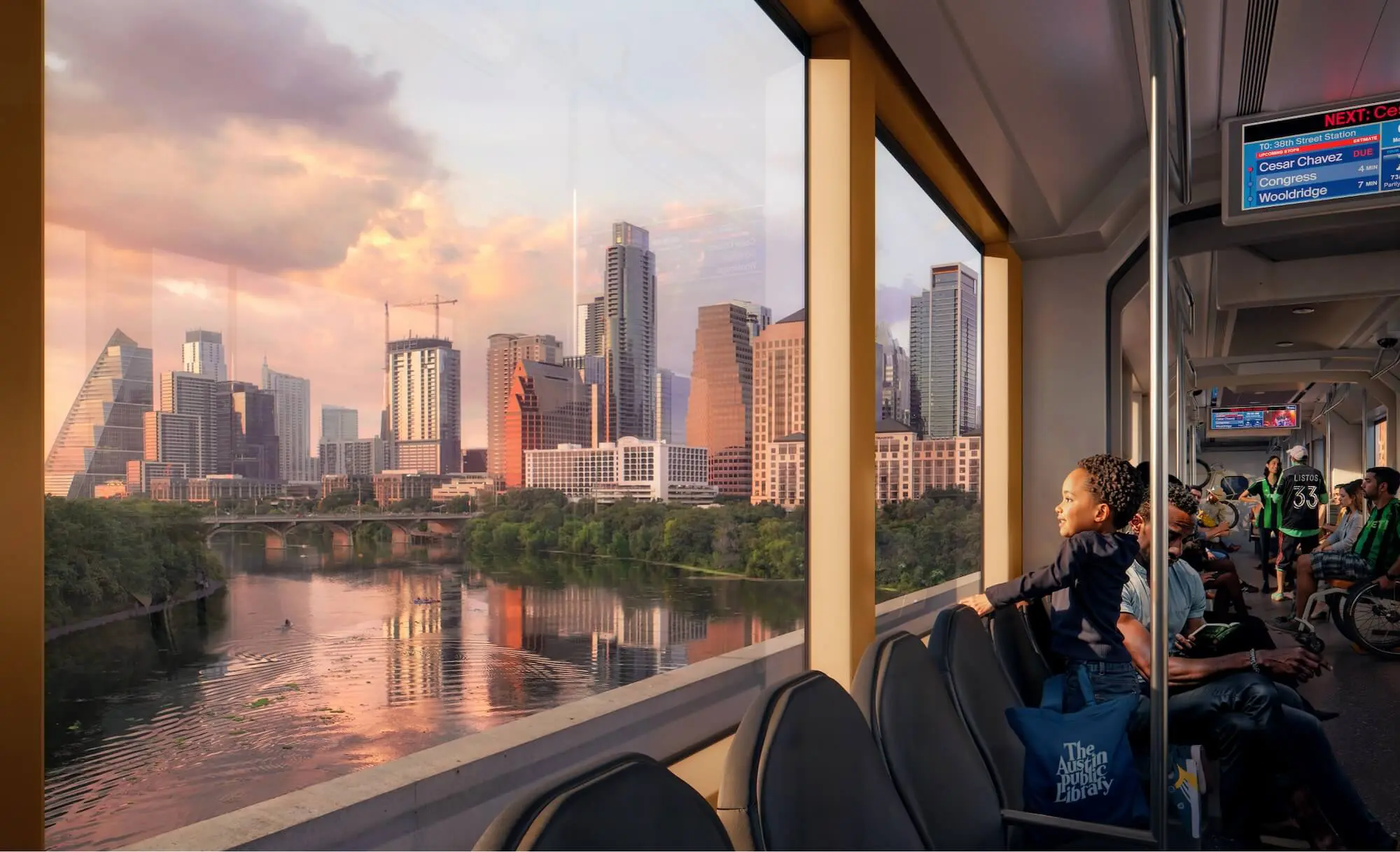
The Austin Transit Partnership (ATP) has reached a critical milestone in bringing rail transit to the Texas capital, officially selecting a joint venture between Sundt Construction and Stacy and Witbeck to lead the construction of Austin’s first light rail system. This contract award moves the multi-billion-dollar “Project Connect” initiative out of the purely theoretical planning stages and into pre-construction reality. By utilizing a Construction Manager/General Contractor (CM/GC) delivery method, ATP is bringing the heavy civil builders to the table early during the final design phase. This strategy allows the construction team to provide immediate feedback on constructability, supply chain logistics, and cost mitigation before the first shovels hit the dirt.
Jobsite Impact: Utility Relocation and Urban Rail Integration
The scope of work for the Sundt and Stacy & Witbeck team is massive and highly complex, cutting directly through Austin’s densest urban corridors. The initial phase calls for approximately 9.8 miles of track and 15 stations, stretching from 38th Street down Guadalupe Street, crossing Lady Bird Lake, and splitting south to Oltorf Street and east to Yellow Jacket Lane.
Austin Light Rail (Phase 1): Factsheet
Project Name: Austin Light Rail (Project Connect)
Location: Austin, Texas (38th St to Yellow Jacket Ln / Oltorf St)
Client: Austin Transit Partnership (ATP)
Construction Team:
CM/GC Joint Venture: Sundt Construction & Stacy and Witbeck
Project Scope: ~9.8 miles of new light rail surface track.
Stations: 15 new transit stations.
Key Structural Elements: New transit-only bridge over Lady Bird Lake.
Delivery Method: Construction Manager/General Contractor (CM/GC).
Current Phase: Pre-construction services and constructability review.
The most significant immediate “Jobsite Impact” will not be laying the steel rails, but rather the massive subterranean enabling works. The contractors must first execute complex “wet and dry” utility relocations—moving water mains, sewer lines, and telecommunication fiber out from under the future rail alignment to prevent service disruptions. Once the corridor is cleared, the heavy civil work begins, featuring the excavation and pouring of heavily reinforced concrete track slabs.
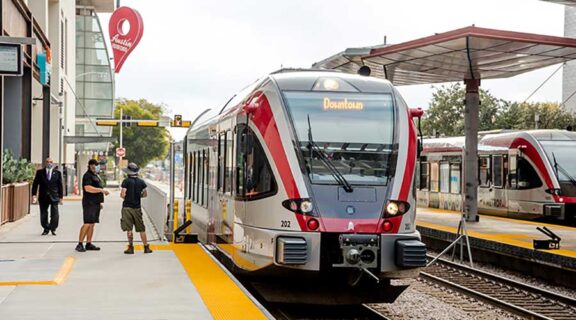
Above ground, the team will erect the continuous Overhead Contact System (OCS) required to power the electric trains, installing traction power substations at strategic intervals along the route. A major focal point for structural engineers on the team will be the construction of a brand-new transit bridge over Lady Bird Lake, which will require specialized marine equipment, cofferdams, and deep-drilled pier foundations to support the structure without disrupting the local ecosystem.
Navigating High-Traffic Environments
Building a rail line down the center of active arterials like Guadalupe Street and Riverside Drive requires meticulous traffic phasing and community coordination. The joint venture brings specialized experience in this exact type of high-friction urban transit construction. Their early involvement means they are currently mapping out staging areas and traffic detour plans to ensure the city keeps moving while the infrastructure is built.
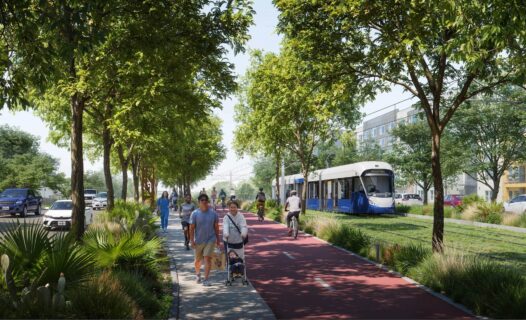
This focus on urban connectivity mirrors similar ambitious transit projects across the U.S., such as the Atlanta BeltLine’s $3.5 billion light rail proposal, which aims to link diverse neighborhoods through sustainable mass transit. Moving forward, the team will work alongside ATP’s design engineers to finalize the Guaranteed Maximum Price (GMP) before heavy equipment mobilization begins.
Leave a Reply