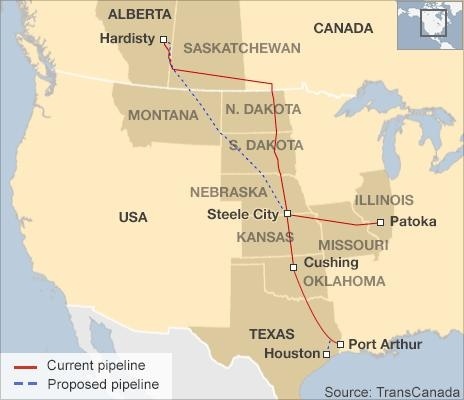
The terminated $8bn Keystone XL pipeline may find a different form in the proposed Bridger pipeline project. The Keystone XL is a cancelled pipeline project that ran through the heart of United States. U.S.-based Bridger Pipeline has filed an application with a Montana regulator to build and operate a 550,000-barrel-a-day line. Moreover, the line is expected to move Canadian crude to Wyoming.
Bridger Pipeline’s planned route would originate near where Keystone XL was supposed to cross the border between Canada and the US. That raises some interesting possibilities on the Canadian side. There is a possibility the project would make use of the stranded steel of Keystone XL. The steel could be converted into a working pipeline system according to reports from RBN Energy.
South Bow, the company spun out of former Keystone proponent TC Energy, is now evaluating an expansion that would leverage existing infrastructure. It is also considering permitted corridors in Canada to connect with downstream pipelines in the US. Energy projects across the U.S. are becoming the norm, with projects such as the world’s largest gas facility taking shape in Ohio.
Outlook on the Return of the Keystone XL Pipeline
There have been speculations that the Bridger Pipeline project takes the shape of the terminated Keystone XL pipeline. However, that might not be the case. But such a project would surely be welcomed by President Donald Trump, who has called for the pipeline to be built. On the other hand, Alberta Premier Danielle Smith, who also wants to see as much crude-export capacity as possible achieved.
Prime Minister Mark Carney has also shown an openness to it, though the government’s recent focus has been on boosting non-US exports. The original line, proposed in 2008, was designed to run from Hardisty, Alberta, to Steele City, Nebraska. However, it became a huge point of conflict between environmentalists and supporters of expanded oil development. Once attaining office, President Joe Biden killed it hours after taking office in 2021.
Project Factsheet
- Project Name: Bridger Pipeline Project.
- Project Type: Crude oil pipeline.
- Proponent/Developer: Bridger Pipeline.
- Similar Legacy Project: Keystone XL Pipeline.
- Projected Capacity: 550,000 barrels per day.
- Geographic Scope: Canada-United States cross-border crude transport route.
Project Overview
- Suggested crude oil line aimed at transferring Canadian crude oil into the United States market.
- Permission also applied to Montana state regulators to construct and operate the pipeline.
Route and Alignment
- Proposed origin close to the previous borders of the Keystone XL border crossing
- Oil route that was meant to transport crude oil to refinery and distribution centers in Wyoming.
- Potential to also be linked with the current downstream U.S. pipeline infrastructure.
Infrastructure Concept
- Potential to reuse the stranded Keystone XL pipeline steel in the new system.
- Also, analysis of the utilization of already authorised pipeline corridors in Canada.
Connection to existing North American crude transport networks under consideration.
Key Stakeholders
- Pipeline developer: Bridger Pipeline.
- Proprietor of legacy infrastructure: TC Energy.
- Spun-out assessing entity: also South Bow.
Project Status
- Application to authorities of Montana.
- Feasibility and also infrastructure integration under consideration
- No publicly confirmed final investment decision.
Historical Context
- Based on the aborted Keystone XL pipeline project that was announced in 2008.
- Keystone XL was to operate between Hardisty, Alberta, and Steele City, Nebraska.
- In 2021, project was canceled following changes in U.S. federal policy.
Strategic Significance
- Crude export capacity into U.S. markets that can be restored across the Canadian border.
- Also possible to use existing infrastructure and authorized corridors to shorten development schedules.
- Is also a reconfigured but not a direct restart of Keystone XL.
Leave a Reply