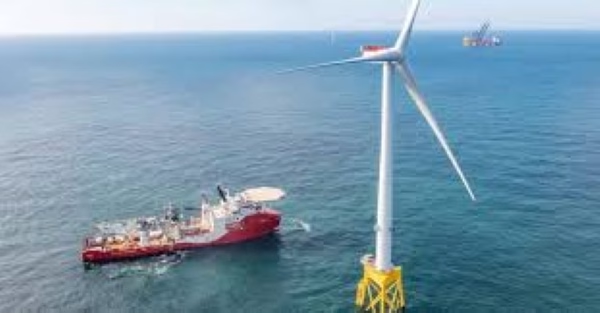
The war on offshore wind power projects being waged by the Trump Administration has gone into overdrive following reports that the administration has suspended five major offshore wind power projects across the United States. The Interior Department ordered the pauses after the Defense Department raised national security concerns, particularly around the potential for offshore wind turbines to interfere with radar systems. The decision has stalled projects at various stages of development and triggered legal challenges, industry backlash, and renewed debate over the future of offshore wind in the U.S.
Coastal Virginia Offshore Wind (Virginia)
The Coastal Virginia Offshore Wind project, developed by Dominion Energy, is one of the most advanced offshore wind projects affected by the pause. Located off the coast of Virginia Beach, the project has been under construction since early 2024 and was expected to begin generating power in 2026. Once operational, it is designed to supply electricity to approximately 660,000 homes, making it a cornerstone of Virginia’s clean energy strategy. Dominion argues the project is critical for meeting rapidly growing electricity demand driven by the expansion of data centers in the region. The company says the federal suspension is costing it millions of dollars per day due to idle construction vessels and contractual obligations. Dominion has filed a lawsuit challenging the order, calling it unlawful and warning that prolonged delays could push costs onto customers or shareholders.
Empire Wind (New York)
Empire Wind is a large offshore wind development planned off the coast of New York and led by Equinor. The project is intended to support New York State’s ambitious clean energy targets by delivering renewable power to millions of residents. Empire Wind has already undergone extensive environmental reviews and permitting and represents billions of dollars in private investment. The federal pause has disrupted construction timelines and created uncertainty around long-term planning and financing. Developers argue that the project is vital for reducing reliance on fossil fuels and strengthening grid resilience in the Northeast. The delay also raises concerns about job losses, as Empire Wind was expected to support thousands of construction and supply-chain jobs. Industry observers see the pause as a significant setback for New York’s offshore wind ambitions.
Atlantic Shores Offshore Wind (New Jersey)
Atlantic Shores Offshore Wind, located off the coast of New Jersey, is another major project affected by the federal suspension. Jointly developed by international energy firms, the project was expected to play a central role in New Jersey’s transition to renewable energy. Atlantic Shores was planned to deliver large-scale offshore wind power to densely populated areas, helping stabilize electricity supply and reduce emissions. The project has already faced delays related to permitting, rising costs, and political opposition, making the federal pause an additional blow. Developers warn that continued uncertainty could jeopardize long-term viability and discourage future investment. New Jersey officials have previously emphasized offshore wind as a key economic and environmental priority, meaning the pause could have broader implications beyond energy generation.
Vineyard Wind (Massachusetts)
Vineyard Wind, one of the first utility-scale offshore wind projects in the United States, is located south of Martha’s Vineyard in Massachusetts waters. The project has often been viewed as a test case for the entire U.S. offshore wind industry. Although parts of Vineyard Wind have progressed further than many other projects, the federal pause has introduced new uncertainty into its construction and expansion plans. Vineyard Wind is expected to supply clean electricity to hundreds of thousands of homes while supporting local manufacturing, port upgrades, and workforce development. Industry groups argue that pausing such a high-profile project sends a negative signal to investors and developers, potentially slowing offshore wind growth nationwide. Supporters stress that the project has already met rigorous environmental and regulatory standards
South Fork Wind (Northeast U.S.)
South Fork Wind, located in the northeastern United States, is another offshore wind project impacted by the recent federal actions. The project was developed to supply renewable electricity to coastal communities while reducing dependence on imported fossil fuels. South Fork Wind has been promoted as a relatively smaller but strategically important development that could pave the way for future offshore wind expansion. The pause has disrupted construction schedules and raised concerns about cost overruns and contractual penalties. Developers argue that national security concerns can be addressed through mitigation measures rather than blanket suspensions. Energy analysts warn that delays to projects like South Fork Wind could collectively weaken regional clean energy goals and slow progress toward emissions reduction targets.
Together, these five projects highlight the growing tension between national security concerns and the push for large-scale renewable energy development in the United States.
Leave a Reply