France’s TotalEnergies and Abu Dhabi Future Energy Company PJSC, Masdar, have signed a binding agreement to establish a $2.2 billion, 50/50 joint venture that will merge their onshore renewable energy activities across nine Asian countries into a single, Abu Dhabi-headquartered platform. The new entity will serve as the exclusive vehicle for both companies’ onshore renewables operations in Azerbaijan, Indonesia, Japan, Kazakhstan, Malaysia, the Philippines, Singapore, South Korea, and Uzbekistan, consolidating a combined portfolio of 3 gigawatts of operational capacity and 6 gigawatts under advanced development expected to reach commercial operation by 2030. Each company will contribute assets of comparable value. The joint venture will be headquartered at Abu Dhabi Global Market (ADGM), the UAE’s international financial centre, and will be staffed by approximately 200 employees drawn from both organisations. Completion of the transaction remains subject to regulatory approvals and customary conditions.
The Nine-Country Platform: Geography, Portfolio, and Exclusive Mandate
The joint venture’s geographic scope — Azerbaijan, Indonesia, Japan, Kazakhstan, Malaysia, the Philippines, Singapore, South Korea, and Uzbekistan — spans three distinct regional clusters that together constitute a microcosm of Asian energy transition dynamics. The Central Asian cluster of Azerbaijan, Kazakhstan, and Uzbekistan represents markets where both Masdar and TotalEnergies have been active pioneers in bringing large-scale solar and wind capacity to grids that have historically depended almost entirely on hydrocarbon generation. Masdar has explicitly described itself as a pioneer of renewable energy deployment in Central Asia and the Caucasus, and the three Central Asian countries in the JV portfolio each have significant awarded or contracted solar capacity already under development by the two companies.
Project Fact Sheet: TotalEnergies–Masdar Asia Onshore Renewables Joint Venture
Joint Venture Name: To be announced
Structure: 50/50 joint venture between TotalEnergies and Masdar
Total JV Value: $2.2 billion
Headquarters: Abu Dhabi Global Market (ADGM), Abu Dhabi, UAE
Agreement Type: Binding agreement signed 2 April 2026
Status: Subject to regulatory approvals and customary closing conditions
Staff: ~200 employees (from both TotalEnergies and Masdar)
Countries of Operation (Exclusive Mandate): Azerbaijan, Indonesia, Japan, Kazakhstan, Malaysia, Philippines, Singapore, South Korea, Uzbekistan
Technologies: Onshore solar, wind, and battery energy storage
Operational Portfolio: 3 GW (combined existing assets at closing)
Development Portfolio: 6 GW (advanced development; expected operational by 2030)
Asset Contribution: Each partner contributes assets of comparable value
Key Stakeholders
TotalEnergies (Paris / LSE / NYSE: TTE): Global integrated multi-energy company; Chairman and CEO: Patrick Pouyanné
Masdar (Abu Dhabi Future Energy Company PJSC): Global clean energy leader; owned by TAQA (43%), Mubadala (33%), ADNOC (24%); Chairman: HE Dr Sultan Al Jaber (UAE Minister of Industry and Advanced Technology); CEO: Mohamed Jameel Al Ramahi
TAQA: Masdar shareholder; Abu Dhabi listed energy and utilities company; also a signatory to the JV announcement
Masdar Global Portfolio: >65 GW across 6 continents (as of early 2026); target: 100 GW by 2030; investment programme: $30–35 billion equity and project finance (2026–2030)
The East and Southeast Asian cluster — Indonesia, Japan, Malaysia, the Philippines, Singapore, and South Korea — represents a different category of market opportunity: large, sophisticated energy systems with rapidly growing electricity demand, strong credit quality, and established frameworks for private power development, but where the installed base of renewable capacity remains well below both the economic potential of the available resources and the policy targets set by national governments pursuing decarbonisation commitments. In several of these markets — particularly Japan, South Korea, and the Philippines — the combination of high electricity prices, strong carbon reduction policy, and growing corporate demand for renewable power purchase agreements makes the development environment highly attractive for well-capitalised international developers bringing both project development expertise and access to project finance. The exclusivity provision in the JV agreement — making the new entity the sole vehicle for both TotalEnergies and Masdar across all nine countries — is a structural commitment that concentrates both partners’ management attention, capital allocation, and business development resources behind the platform, preventing either party from competing with or undermining it through parallel activity.
TotalEnergies, Masdar, and the Strategic Logic of the Partnership
TotalEnergies — one of the world’s largest integrated energy companies, listed in Paris, London, and New York — has been building its renewables portfolio aggressively as part of a strategy to become a leading producer of low-carbon electricity alongside its legacy hydrocarbon business. The company’s chairman and chief executive, Patrick Pouyanné, has articulated a consistent thesis: that the transition to a multi-energy world requires TotalEnergies to develop at scale in solar, wind, and battery storage, and that doing so through strategic partnerships in high-growth markets is more capital-efficient and commercially effective than attempting to build dominant positions country by country through wholly owned subsidiaries. The tie-up with Masdar in Asia follows the same logic that drove TotalEnergies’ earlier partnerships with Masdar and other players in other geographies, and reflects Pouyanné’s view that combining the companies’ complementary strengths will create more value than operating separately across the nine target markets.
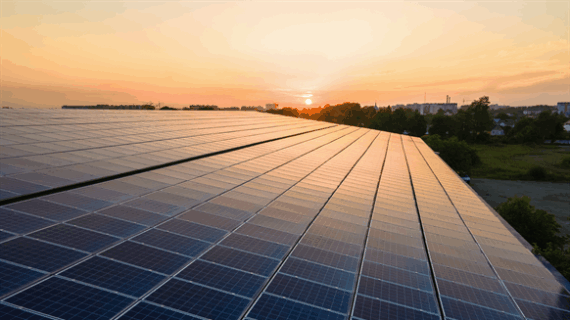
Masdar — established in 2006 by the UAE government as Abu Dhabi’s vehicle for global renewable energy development — is jointly owned by TAQA (43 per cent), Mubadala (33 per cent), and ADNOC (24 per cent), three of Abu Dhabi’s largest state investment and energy entities. With more than 20 years of experience in renewables, Masdar has grown its global portfolio to over 65 GW across six continents as of early 2026 — up from 51 GW in 2025 — placing it two-thirds of the way toward its target of 100 GW by 2030. The $30 to $35 billion in additional equity and project finance that Masdar has committed to deploying over the next five years — adding an average of 10 GW of new capacity annually — underpins its ambition to become one of the world’s two or three largest renewable energy companies by the end of the decade. The Asia joint venture with TotalEnergies accelerates the deployment of a portion of that capital through a structure that shares execution responsibility and market risk with a co-investor whose technical project development and power purchase agreement structuring expertise in Asian electricity markets is highly complementary to Masdar’s financial firepower and ADGM-anchored capital market access.
Sultan Al Jaber, UAE Minister of Industry and Advanced Technology and Chairman of Masdar, placed the partnership in the context of Asia’s central role in global energy demand: the continent is, he stated, expected to be the main driver of global electricity demand growth this decade, and the collaboration with TotalEnergies will accelerate Masdar’s progress across that market, unlocking new opportunities to deliver competitive and reliable energy solutions.
Abu Dhabi as the Platform’s Strategic Anchor and the ADGM Headquarters
The decision to headquarter the joint venture at Abu Dhabi Global Market — the Abu Dhabi International Financial Centre on Al Maryah Island — is not merely a logistical convenience. ADGM has become over the past decade one of the most significant financial centres for renewable energy and infrastructure transactions in the developing world, serving as the domicile for a growing number of clean energy investment platforms, project finance structures, green bond programmes, and multilateral energy deals that combine Middle Eastern capital with global project pipelines. Its legal framework, which is based on English common law administered by Abu Dhabi courts, provides the contractual certainty and investor protection that international project finance lenders require; its proximity to Abu Dhabi’s sovereign wealth and state energy ecosystem provides access to capital flows and co-investment opportunities that are unavailable in other financial centres.
For Masdar specifically, ADGM is the natural home of a joint venture in which Abu Dhabi’s capital infrastructure plays a central role: TAQA — one of Masdar’s three shareholders — is itself a major listed energy and utilities company that has become an increasingly active participant in global renewable energy investment, and its presence in the ownership chain of both the JV platform (through Masdar) and in the ADGM ecosystem creates synergies in capital raising, project financing, and corporate governance that would be harder to replicate elsewhere. The approximately 200-person staff drawn from both TotalEnergies and Masdar will constitute the JV’s operational core, bringing together project development, engineering, commercial, legal, and financial expertise from two of the world’s most experienced international renewables developers.
Asia’s Electricity Demand Surge and What 9 GW by 2030 Represents
The 6 GW of projects in advanced development that the joint venture’s portfolio contains — expected to reach commercial operation by 2030 — must be understood in the context of Asia’s electricity system dynamics. Asia accounts for the majority of global electricity demand growth in every credible projection through 2035, driven by a combination of industrial expansion, rising living standards, rapid electric vehicle uptake, and the beginning of the AI data centre buildout in markets like Japan, South Korea, Singapore, Malaysia, and Indonesia. In several of the JV’s nine countries, electricity demand is growing at 4 to 7 per cent annually — rates that require the addition of 5 to 10 GW of new generation capacity per year in the larger economies just to keep pace with demand, let alone to decarbonise the existing fossil-fuelled generation base.
This focus on high-capacity renewable infrastructure is a pillar of the global energy transition, as demonstrated by the news that Masdar and Iberdrola $16B offshore wind and green hydrogen investment plan, a massive strategic partnership aimed at scaling up clean energy capacity across key international markets.
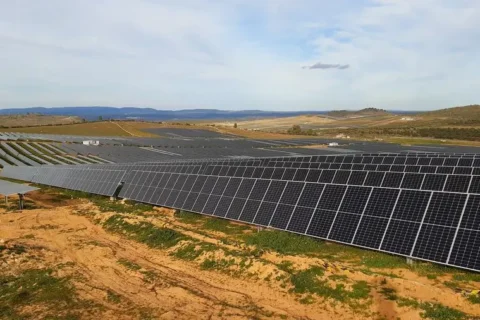
Against this backdrop, the combined 9 GW portfolio of the TotalEnergies-Masdar JV — 3 GW operational and 6 GW under advanced development — represents a meaningful but not dominant share of the investment required in these nine markets over the next five years. Its significance lies less in its absolute volume than in its structural quality: a well-capitalised, 50/50 platform backed by two of the world’s most creditworthy energy companies, with the exclusive mandate to originate, develop, finance, and operate solar, wind, and battery storage projects across nine high-growth economies simultaneously. For the governments and utilities in those nine countries that are seeking to accelerate renewable capacity additions while managing development risk, a platform of this quality and scale offers a category of counterparty — financially strong, technically deep, and geographically committed — that stands apart from the fragmented landscape of smaller developers competing project by project.



Leave a Reply