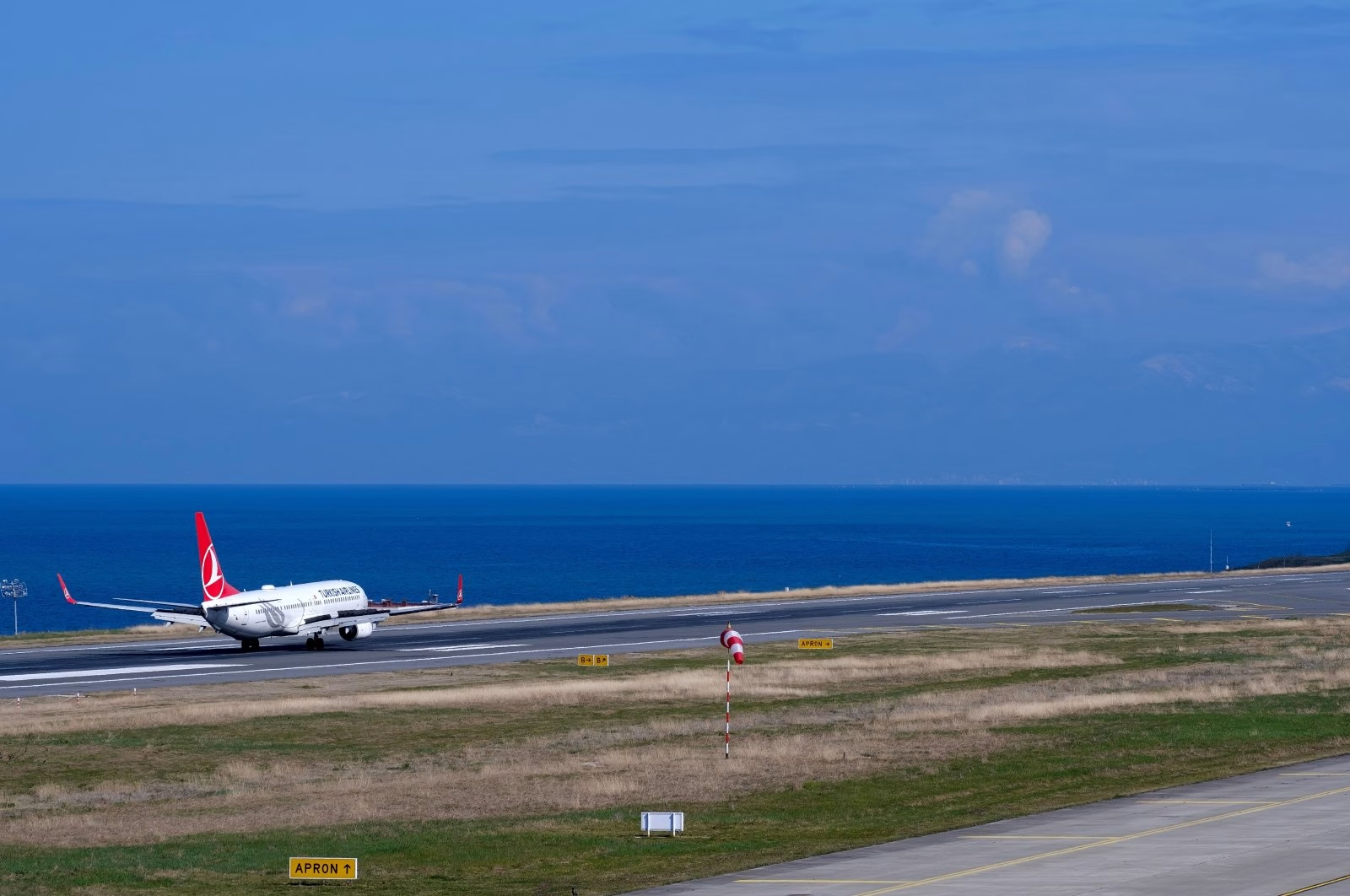
Türkiye is set to embark on one of its most ambitious aviation infrastructure projects to date, with officials confirming that construction will commence this year on a new offshore airport in the Black Sea province of Trabzon. Transport and Infrastructure Minister Abdulkadir Uraloğlu announced on Wednesday, January 14, 2026, that the government has finalized the tender process and included the project in its formal investment program. This development marks a significant engineering feat, as the entire facility will be constructed on land reclaimed from the sea—a strategic necessity given the region’s rugged, mountainous topography which offers little flat land for expansion. The project aims to transform Trabzon into a major international gateway, catering to surging tourism demand and establishing a critical logistics node on the Black Sea coast.
Engineering a Maritime Gateway
The new facility is designed to completely replace the existing Trabzon Airport, which has become a bottleneck for regional growth. The current airport, limited by a 2,650-meter runway and constrained terminal space, handles approximately 3 million passengers annually but lacks the physical footprint to expand further inland.
Expanded Capabilities: The new offshore airport will feature a 3,000-meter (approx. 9,840-foot) runway, specifically engineered to accommodate wide-body aircraft. This upgrade is crucial for enabling direct, long-haul international flights, which the current infrastructure cannot support.
Terminal Capacity: A modern terminal building will be constructed with the capacity to handle 10 million passengers per year, more than tripling the region’s current processing power.
“We are now at the stage of site delivery, groundbreaking, and starting excavation,” Minister Uraloğlu stated, signaling that heavy civil works are imminent.
Trabzon Offshore Airport Project: Factsheet
Project Name: New Trabzon Airport (Offshore)
Location: Trabzon Province, Türkiye (Black Sea Coast)
Project Type: Offshore/Reclaimed Land Airport
Status:
Included in 2026 Government Investment Program.
Tender process completed.
Site handover and excavation imminent.
Key Specifications:
Annual Capacity: 10 million passengers.
Runway Length: 3,000 meters (approx. 9,840 ft).
Aircraft Capability: Wide-body international jets.
Reason for Construction:
Existing airport capacity capped at ~3 million passengers.
No land available for expansion at current site.
National Context:
Will contribute to Türkiye’s goal of 60 operational airports.
Supports national passenger traffic projected to hit 260 million in 2026.
Aviation Growth and National Connectivity
This project is part of a broader surge in Türkiye’s aviation sector. Minister Uraloğlu noted that air passenger traffic in the country hit a record 247 million in 2025 and is projected to exceed 260 million in 2026. To meet this demand, the government is aggressively expanding its airport network. Alongside the Trabzon project, the openings of the Bayburt-Gümüşhane and Yozgat airports later this year will bring the total number of active airports in Türkiye to 60. The Trabzon initiative is seen as vital for unlocking the tourism potential of the Black Sea region, which attracts millions of visitors annually for its historical sites and natural beauty.

Part of a Larger Logistics Masterplan
The announcement of the Trabzon airport comes amidst a wider push to position Türkiye as a central global logistics corridor—a strategic expansion trend also seen as SGTM and TGCC win a $1.29 billion contract for the massive Mohammed V International Airport expansion in Casablanca. During the announcement, Minister Uraloğlu also highlighted progress on the Development Road project, a strategic multi-modal corridor intended to link Iraq’s Grand Faw Port to Europe via Türkiye. This massive initiative involves a 1,200-kilometer rail and road network designed to rival the Suez Canal by shortening transit times between Asia and Europe. Furthermore, the government is advancing plans for the Istanbul Northern Railway Crossing, a $6 billion rail line that will traverse the Bosporus via the Yavuz Sultan Selim Bridge, eliminating freight bottlenecks in Istanbul. The new Trabzon airport will serve as the aerial anchor for these interconnected transport systems, bridging the gap between maritime, rail, and air logistics—a network recently strengthened as Ankara’s Esenboğa Airport opens a new runway in a $346M expansion push.
Leave a Reply