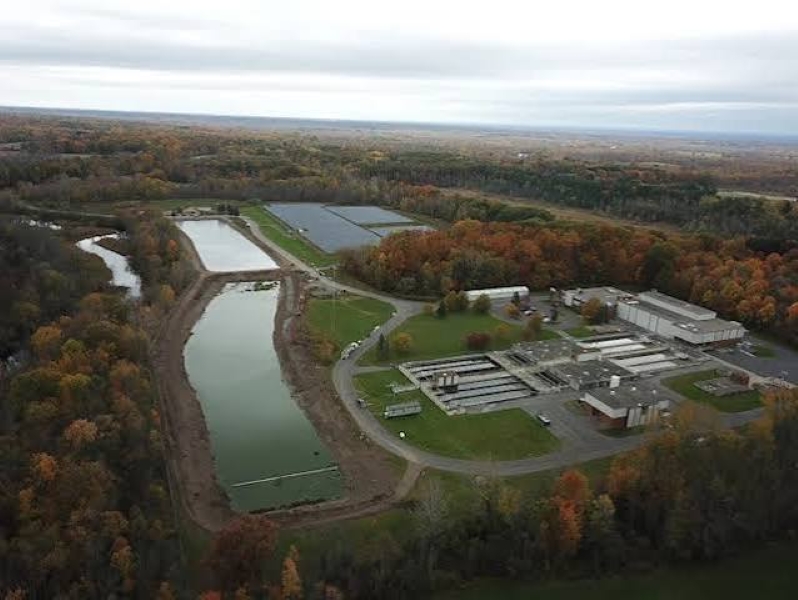
Onondaga County to start contract negotiations with Kiewit engineering and construction firm to advance the planned US$1 billion Micron wastewater treatment plant that will serve the semiconductor company’s new fabrication facility in Clay, New York. The project is an important component of Micron’s broader US$100 billion investment in Central New York. It is designed to provide advanced treatment capacity for the large volumes of industrial wastewater expected from semiconductor manufacturing operations. The recommendation of Kiewit to construct the industrial wastewater treatment facility marks another major milestone for one of the largest industrial developments underway in the U.S. after recent selection of Bechtel to build the fab facilities.

Kiewit Discussing Contract for US$1bn Micron Wastewater Treatment Plant in New York
The wastewater facility, estimated to cost US$1 billion, will be one of the largest infrastructure projects ever undertaken by the county. It will process and treat industrial wastewater generated by Micron’s future semiconductor manufacturing operations. These operations will consume and recycle substantial quantities of water once production begins.
Additionally, Micron’s investment could ultimately reach US$100 billion over the next two decades. It would also include up to four semiconductor fabrication plants at the White Pine Commerce Park site in Clay, just north of Syracuse.
Critical Infrastructure for Micron’s Semiconductor Campus
The industrial wastewater treatment plant is being developed as a dedicated facility separate from the region’s municipal wastewater infrastructure. The facility will serve the Oak Orchard Industrial Sewer District. Oak Orchard was established specifically to support Micron and future suppliers who will set camp near the semiconductor campus.
County officials have also emphasized that the treatment plant will be designed to manage tens of millions of gallons of industrial wastewater daily. This is while meeting stringent environmental and regulatory standards. The facility will also act as a key safeguard to prevent contaminants associated with advanced semiconductor manufacturing from entering local waterways before final discharge.

Financing Structure
According to county officials, Micron is expected to bear the full cost of constructing and operating the industrial wastewater treatment facility through long-term user agreements. While Onondaga County may initially issue bonds to finance construction, Micron is expected to reimburse project costs through negotiated payments tied to facility usage.
This financing approach has been central to discussions surrounding the project. County officials have also repeatedly stated that local taxpayers will not be responsible for funding the industrial treatment facility. The creation of the industrial sewer district also provides the legal framework necessary for financing and operation of the infrastructure.
Supporting America’s Largest Semiconductor Investment
The wastewater treatment project forms part of the infrastructure backbone supporting Micron’s transformational semiconductor manufacturing initiative in New York.
Micron’s planned campus in Clay is expected to become the largest semiconductor manufacturing project in U.S. history. The company intends to invest up to US$100 billion over more than 20 years, beginning with an initial phase valued at approximately US$20 billion. The development could eventually feature four advanced memory chip fabrication facilities encompassing roughly 2.4 million square feet of clean-room space.
The project will also create about 9,000 direct Micron jobs and support more than 40,000 additional construction, supplier and community jobs across the region. Production from the first fabrication plant is currently targeted for around 2030.

Environmental Considerations
Environmental performance remains a key focus of the wastewater treatment project due to the highly specialized nature of semiconductor manufacturing processes.
The treatment facility is expected to incorporate advanced technologies capable of handling complex industrial effluents associated with semiconductor fabrication. State regulators and community stakeholders have also closely scrutinized wastewater management plans. They have centered on treatment requirements, water reuse targets and the handling of emerging contaminants.
Micron has also publicly committed to ambitious sustainability objectives for its New York operations. This includes goals for water reuse and recycling, renewable energy utilization, greenhouse gas reductions and sustainable facility design. The wastewater treatment infrastructure will play an important role in achieving those objectives while supporting long-term regulatory compliance. New York has also undertaken its own water treatment initiatives in the interest of public health, including the Hopewell Water Remediation Project.
Micron Industrial Wastewater Treatment Plant Project Fact Sheet
Location: Clay, Onondaga County, New York
Project Value: US$1 billion
Associated Development: Micron New York Semiconductor Megafab Campus
Industrial District: Oak Orchard Industrial Sewer District
Treatment Capacity: Tens of millions of gallons per day
Associated Micron Investment: Up to US$100 billion
Expected Micron Facilities: Up to four semiconductor fabrication plants
First Fab Production Target: Around 2030
Estimated Employment Impact: Nearly 50,000 total jobs including 9,000 direct Micron positions
Current Status: Kiewit Infrastructure recommended as contractor; negotiations ongoing

Leave a Reply