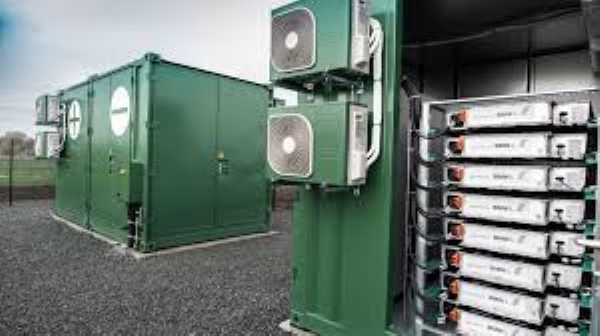
Vattenfall has secured planning permission for a 254 MW/700 MWh battery energy storage system (BESS) at the decommissioned Brunsbüttel nuclear power plant site in northern Germany. The approval, granted by a local council, continues to progress Germany’s efforts to repurpose legacy nuclear sites for clean energy use. Vattenfall’s approval also comes after Fluence announced plans for a 4 GWh battery storage project, as well as ADS-TEC with one of the largest BESS installations in the world in Germany.
Project Overview
Vattenfall’s BESS at Brunsbüttel nuclear power plant site will help with the demand swings and grid stability. The battery storage will also find utility in capacity firming and flexibility services as more intermittent renewable generation comes online in the country. The former nuclear site’s existing grid connections and infrastructure are also going to be advantageous to the project. Vattenfall’s battery energy storage system at Brunsbüttel now remains subject to a final investment decision (FID). The local council approval and public consent to Vattenfall also puts the battery storage project’s commissioning date to be by 2028.

Project Factsheet for Vattenfall Battery Energy Storage (BESS) at Brunsbüttel Nuclear Power Plant Site in Germany
Developer: Vattenfall
Location: Site at decommissioned Brunsbüttel nuclear power plant in Schleswig Holstein, northern Germany.
Power Capacity: 254 MW
Storage Capacity: 700-800 MWh
Site Advantages: Existing grid connection infrastructure from former nuclear plant. Proximity to the North Sea for possible interconnection with other renewables like wind.
Project Status: Approval by local council. FID pending.
Target Commissioning Date: 2028
Project Timeline
December 2025: Brunsbüttel local council approves zoning plan for 254 MW/700 MWh battery project, giving green light for construction planning to proceed.
2026 through 2027: Site preparation, grid connection upgrades, permit filings expected. Also expected are substation works and BESS foundation.
2028: Target commissioning year. The date also aligns with Germany’s grid flexibility and renewable integration roadmap.
When completed, Vattenfall’s battery energy storage system (BESS) could be among the first using a decommissioned power plant site in Europe.
Leave a Reply