
Bulgaria has confirmed that its domestic infrastructure expansion tied to the Vertical Gas Corridor is proceeding on schedule, with major upgrades to cross-border interconnectors and transmission capacity expected to be completed by the end of 2026.
Greece and Bulgaria are accelerating the development of the Vertical Gas Corridor, positioning it as a key north-south energy infrastructure designed to move liquified natural gas (LNG) from Greek import terminals toward Southeastern and Central Europe, including Ukraine. The initiative has gained renewed momentum following high-level talks between Greek Prime Minister Kyriakos Mitsotakis and Bulgarian Prime Minister Rumen Radev in Sofia, where both leaders underscored the corridor’s strategic importance in strengthening regional energy security and reducing reliance on Russian gas supplies.
Vertical Gas Corridor at the Center of Energy Security and Geopolitical Rebalancing
At the core of the Vertical Corridor is a coordinated effort by Greece, Bulgaria, Romania, Moldova and Ukraine – supported by the European Commission – to create a commercially viable and physically integrated gas route from Greek LNG terminals northward. The geopolitical infrastructure project will enable flexible gas flows and diversify supply sources, particularly through increased imports of US LNG routed via Greece.
Mitsotakis has emphasized that Southern Europe now serves as a critical entry point for non-Russian gas into the continent. Greece, he added, acts as the primary gateway for LNG imports that are redistributed north through interconnected pipelines.
This positioning aligns with broader EU objectives to fully phase out Russian pipeline gas by 2027. This will reshape long-established supply routes in Eastern and Southeastern Europe. Russia, in turn, is banking on other export geographies to help sustain its gas exports through projects such as Power of Siberia 2 gas pipeline to China via Mongolia.

Bulgaria’s Infrastructure Push and Timelines
Bulgaria has emerged as a central transit and construction hub for the Vertical Gas Corridor project. Its gas transmission operator confirming steady progress on expansion works across multiple interconnection points. Key upgrades include capacity increases at border connections with Greece and Romania, forming a continuous transmission link from the Aegean Sea to Ukraine.
According to official communication, two major Bulgarian segments of the corridor are expected to become operational by the end of 2026, significantly increasing throughput capacity and improving bidirectional flow flexibility.
Once fully completed, the Vertical Gas Corridor will handle up to around 10 billion cubic meters (bcm) annually, reinforcing its role as a structural alternative to legacy east–west supply routes.
Vertical Gas Corridor: Project Regulatory Breakthroughs and Commercial Framework
A major milestone in March 2026 saw transmission system operators across the corridor countries reach agreement with the European Commission on a unified tariff structure. The deal introduces standardized capacity products – daily, monthly, quarterly, and annual – beginning with the 2026-2027 gas year.
This is important in the commercialization of the Vertical Gas Corridor. It will help address long-standing concerns about pricing competitiveness and under-utilization of infrastructure. The agreement also ensures transitional arrangements to maintain supply security for Ukraine while new market mechanisms are phased in.

Regional Integration and an Expanding Energy Network
Beyond Greece and Bulgaria, the corridor now incorporates Romania, Moldova and Ukraine, with further discussions involving Hungary and other Central European states. Furthermore, the system is increasingly linked to LNG import capacity in Greece. This is almost exclusively particular to terminals that receive US-sourced cargo in a bid to strengthen transatlantic energy ties.
Recent diplomatic momentum has also seen discussions on broader Balkan energy cooperation frameworks aimed at synchronizing infrastructure development, investment flows and cross-border trade routes under the Vertical Corridor umbrella.
Project Overview: Vertical Gas Corridor Core Infrastructure Components
1. IGB Pipeline (Greece-Bulgaria Interconnector)
Operator: ICGB AD
Route: Komotini, Greece to Stara Zagora in Bulgaria
Length: 182 km
Capacity: 3 bcm/year (expandable to 5 bcm/year)
Connection points: Trans Adriatic Pipeline (TAP), DESFA (Greece’s national gas transmission operator) system in Greece, Bulgartransgaz system in Bulgaria
2. Bulgarian Transmission Network Expansion
Operator: Bulgartransgaz EAD
Role: Transit hub linking Greece to Romania, Moldova and Ukraine
Ongoing works:
- Capacity expansion (up to 5 bcm additional throughput at Greece-Bulgaria interface)
- Bottleneck removal along Kardam/Negru Voda axis
3. Greek Transmission and LNG Gateways
Operator: DESFA
Key assets:
- Revithoussa LNG terminal
- Komotini interconnection point (IGB entry)
- Alexandroupolis FSRU linkage (regional LNG hub)
4. Regional Expansion Network
Romania: Transgaz S.A. (State-owned gas operator)
Hungary: FGSZ Ltd. (Hungarian Gas Transmission Operator)
Moldova & Ukraine: Ukraine’s national gas transmission system operator (GTSOUA) and national transmission system operators (TSOs)
LNG supply integration: Gastrade (Alexandroupolis FSRU)
Governance and Cooperation Framework
- Formal coordination via Memorandum of Understanding (MoU) among TSOs
- EU Commission backing under REPowerEU energy security plan
- Market-based capacity allocation (tariff harmonization introduced 2026)
Key Strategic Objectives
- Diversification of gas supply away from Russian routes
- Integration of Southeastern and Central European gas markets
- Full utilization of Greek LNG import capacity (Alexandroupolis and Revithoussa)
- Supply security for Ukraine and Moldova
- Creation of a flexible bidirectional EU gas corridor
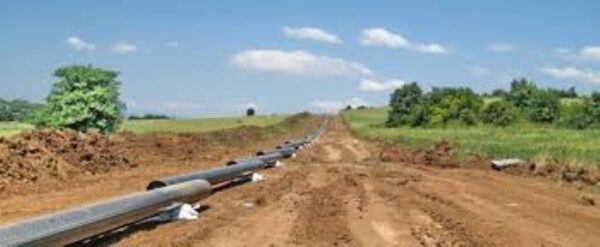
Vertical Gas Corridor Development Outlook: Toward a North-South Energy Axis
The Vertical Gas Corridor is taking shape as one of Europe’s most significant post-2022 energy infrastructure projects. It will effectively reverse traditional east-west dependency patterns. With construction advancing in Bulgaria, regulatory frameworks being finalized at EU level and political backing from Greece, the corridor is moving toward full operational readiness by the late 2020s.
If completed as planned the strategic energy infrastructure linking the Aegean to the Black Sea and Ukraine will reshape regional energy flows and strengthening Europe’s supply diversification agenda.
Risks and Challenges Ahead
Despite progress, several structural challenges remain. These include tariffs, long-term demand uncertainty as Europe transitions away from fossil gas, and the risk of underutilization if LNG supply contracts do not scale as expected. Infrastructure coordination across multiple jurisdictions also introduces complexities in regulations, particularly in aligning investment cycles between EU and non-EU participants.
Nonetheless, current trajectory is suggestive of sustained political commitment, with the corridor increasingly embedded in EU energy security planning.
About Bulgartransgaz
Bulgartransgaz is the Bulgarian combined operator performing licensed activities of natural gas transmission and storage. The company operates 3 484 km high-pressure gas pipelines, its compressor stations are about 80% of the compressing power in the regionand it also owns and operates the Chiren UGS. The gas infrastructure is well interconnected and provides significant entry and exit capacities at IPs with all neighbouring countries. Bulgartransgaz is

Leave a Reply