Vestas Wind Systems has announced plans to establish a nacelle and hub assembly factory in Scotland, United Kingdom, with a capital investment in excess of €250 million, that would produce nacelles and hubs for the company’s V236-15.0 MW offshore turbine — the largest and most powerful wind turbine currently in commercial deployment globally. The facility would create up to 500 skilled direct jobs and support a broader network of indirect employment in the surrounding supply chain economy. However, the announcement carries a significant condition: the final investment decision is explicitly contingent on Vestas securing sufficient UK-based orders through the UK’s offshore wind Allocation Round 7 (AR7) and AR8 competitive tender processes. Subject to that order volume materialising and planning approvals proceeding on schedule, the factory could commence production by 2029–2030. The announcement, made from Hamburg on 25 March 2026, follows record-breaking results in the January 2026 AR7 auction and reflects coordinated strategic discussions between Vestas, the UK Government, and the Scottish Government on co-investment arrangements for the facility.
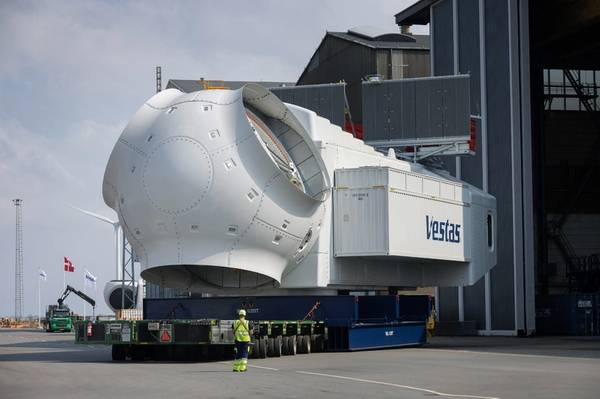
The V236-15.0 MW Nacelle: What This Factory Would Make
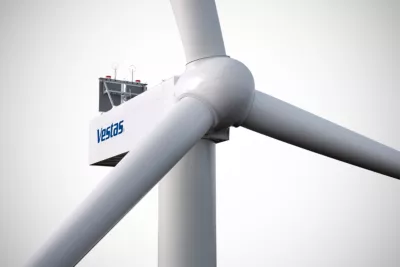
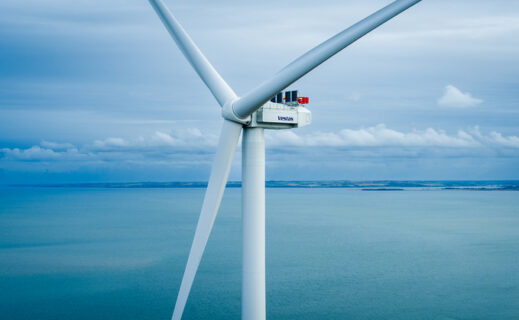
The V236-15.0 MW is Vestas’s flagship offshore wind turbine — a machine that defines the current frontier of wind energy technology with a 236-metre rotor diameter, a nameplate rating of 15 MW, and a swept area greater than four football pitches. The nacelle — the large housing mounted atop the tower that contains the generator, drivetrain, control systems, and yaw mechanism — and the hub, which connects the three rotor blades to the drivetrain, are among the most technically sophisticated and heaviest single components in the entire turbine assembly. The nacelle of a V236-15.0 MW turbine weighs approximately 520 tonnes and must be manufactured to tolerances that allow reliable operation for 25 to 30 years at sea under continuous loading from wind, waves, and marine corrosion.
Project Fact Sheet: Vestas Scotland Nacelle and Hub Factory
Project Name: Vestas Scotland Nacelle and Hub Factory (proposed)
Location: Scotland, UK (specific site not yet disclosed)
Developer: Vestas Wind Systems A/S (Aarhus, Denmark)
Capital Investment: In excess of €250 million (~£215 million)
Products: Nacelles and hubs for V236-15.0 MW offshore wind turbines
Turbine Model: V236-15.0 MW (largest commercially deployed wind turbine globally; 236m rotor; 520-tonne nacelle)
Direct Jobs: Up to 500 skilled direct jobs
Status: Plans announced; Final Investment Decision conditional on AR7 and AR8 order volume
Target Production Start: 2029–2030 (subject to orders and planning)
Significance: Would become Vestas’s 5th European offshore nacelle/blade factory
Supply Chain Opportunity: Plans to co-locate sub-suppliers of major components on site
UK Government Engagement: Ongoing strategic discussions with UK Government and Scottish Government since at least 2021
Policy Trigger: Record AR7 auction results (January 2026, ~13 GW awarded)
Project Team / Key Stakeholders
Manufacturer / Investor: Vestas Wind Systems A/S
Vestas CEO: Henrik Andersen
Vestas Communications VP: Anders Riis
UK Energy Secretary: Ed Miliband
Scottish Deputy First Minister / Economy Secretary: Kate Forbes
Co-investment Partners: UK Government; Scottish Government (co-investment discussions ongoing)
Relevant UK Auction Rounds: AR7 (results January 2026); AR8 (upcoming)
The Scottish factory, if built, would become Vestas’s fifth European facility dedicated solely to the manufacturing of offshore wind turbine nacelles and blades — joining existing plants that serve the company’s expanding European offshore pipeline. Its specific focus on the V236-15.0 MW is strategically important: as the UK and European offshore wind pipelines shift decisively toward the largest available turbine classes, co-locating nacelle production closer to key offshore wind installation ports in Scotland — including ports such as Nigg Energy Park in Easter Ross, Ardersier in the Inner Moray Firth, and the Cromarty Firth cluster — reduces the logistical complexity and cost of final assembly and load-out for UK projects. The announcement also notes that the plan includes identifying opportunities for co-locating sub-suppliers of other major components in the vicinity of the factory, which would begin to establish the kind of integrated supply chain cluster that the UK offshore wind sector has historically lacked compared with Denmark, Germany, and the Netherlands.
The Conditional Investment Decision: AR7, AR8, and the Order Pipeline Logic
Vestas has been consistently clear — in this announcement and in all prior public statements about UK manufacturing investment — that the business case for a large-scale nacelle factory in the UK is inseparable from the existence of a visible, committed order pipeline of sufficient volume to justify the fixed cost base of a purpose-built production facility. This conditional logic is not a negotiating tactic; it is the fundamental economics of capital-intensive offshore wind manufacturing, where a factory producing nacelles for 15 MW turbines must run at high utilisation across a multi-year programme to achieve the unit cost economics that make domestic manufacturing financially viable against imported alternatives.
The January 2026 AR7 results — which established new records for the volume of offshore wind capacity awarded in a single UK auction round — provided the first concrete evidence that the UK offshore wind pipeline is large enough and predictable enough to meet this threshold. With approximately 13 GW of new offshore wind capacity awarded in AR7, and AR8 expected to follow on a similar or larger scale within the next 12–18 months, the cumulative order pipeline visible to a turbine supplier of Vestas’s scale is beginning to approach the level that can justify dedicated in-country nacelle production. Vestas CEO Henrik Andersen’s statement explicitly welcoming the UK government’s commitment to fostering a competitive offshore wind market, and the statements from UK Energy Secretary Ed Miliband and Scottish Deputy First Minister Kate Forbes, reflect a mature three-way conversation between government and industry that has been ongoing since at least 2021 — the year from which Scottish Ministers have formally engaged with Vestas on supply chain development. Final investment decision timing remains tied to the AR7 and AR8 award outcome and the subsequent planning process.
Scotland, the Scottish Government, and the Industrial Policy Stakes
Scotland’s interest in hosting Vestas’s nacelle factory extends well beyond the immediate prospect of 500 direct jobs. The Scottish Government has pursued an increasingly assertive industrial policy around offshore wind over the past decade, positioning the country — which has some of the most energetic offshore wind resources in the world, particularly in the North Sea, Moray Firth, and Scottish Atlantic margins — as a natural hub for offshore wind manufacturing, installation, and operations and maintenance. The country’s deep-water ports, its long established oil and gas supply chain (whose skills and capital equipment are substantially transferable to offshore wind operations), and its large existing manufacturing and engineering workforce create the physical and human infrastructure conditions that large-scale offshore wind manufacturers require.
The conditional character of Vestas’s announcement has drawn close public attention precisely because Scotland has been through this cycle before. The most prominent precedent is the BiFab fabrication yard experience of the 2010s, in which Burntisland Fabrications won subcontracts on major Scottish offshore wind projects but faced insolvency as the main contractors sourced a higher proportion of work overseas than domestic content expectations had implied. The Harland & Wolff situation — the Belfast and Methil-based fabricator that entered administration in 2024 — provides another recent illustration of the structural difficulty facing UK fabrication businesses in a market where the cost competition from established European and Asian supply chains is intense. Vestas’s €250 million commitment, if it proceeds, would be qualitatively different from a fabrication subcontract: it would be a first-party investment by a leading global turbine manufacturer in its own permanent production infrastructure, with a long-term commitment to UK-based manufacturing rather than a conditional subcontracting arrangement.
Vestas, the V236, and the Race to Anchor the UK’s Offshore Supply Chain
The Scotland nacelle factory announcement arrives at a moment when the race to anchor permanent offshore wind manufacturing infrastructure in the UK is accelerating across multiple turbine manufacturers and component suppliers simultaneously. Siemens Gamesa opened its blade factory at the Port of Hull in 2016 and expanded it subsequently, establishing the model for what a dedicated offshore wind manufacturing presence in the UK can look like. GE Vernova — now operating independently following its separation from General Electric — has maintained nacelle and assembly commitments linked to its Dogger Bank project deliveries. The Vestas announcement adds a second major offshore turbine OEM to the UK nacelle manufacturing landscape, with the specific geography of Scotland providing a different centre of gravity from Hull’s Humber estuary focus: one that is aligned with the Moray Firth and Atlantic offshore wind lease areas that are expected to drive the post-2030 wave of UK offshore wind development. This industrial expansion is a core component of the region’s broader energy strategy, as the development of Scotland’s largest renewable energy hub remains well on course, providing the necessary infrastructure to support these massive manufacturing and generation goals.
For the UK as a whole, Vestas’s announcement — together with the government’s active co-investment discussions — represents a meaningful step toward the industrial policy goal that has motivated UK offshore wind policy since the Crown Estate’s Round 3 allocations in 2010: the creation of a durable, diversified UK offshore wind supply chain that captures a substantial share of the manufacturing, installation, and service value created by a sector that could ultimately represent 50 to 70 GW of installed offshore capacity by 2050. Whether the factory ultimately proceeds on the timeline set out in the announcement will depend on forces — auction results, project financing timelines, turbine technology choices by developers — that are not fully within either Vestas’s or the UK government’s control. But the announcement itself, and the sustained political engagement it reflects, marks a stage of maturity in the UK’s offshore wind industrial policy that would not have been plausible even five years ago.
Leave a Reply