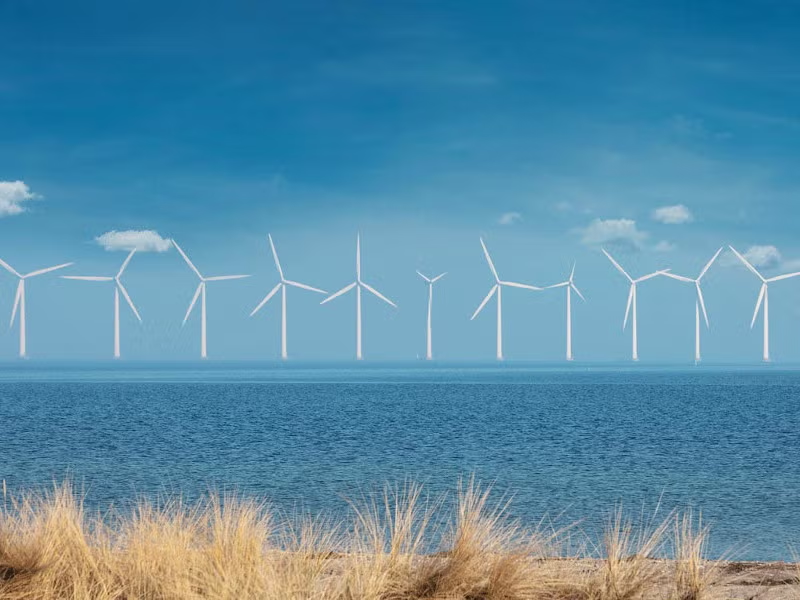
Virginia has taken a significant legislative step toward securing its long-term offshore wind ambitions, with both chambers of the General Assembly passing House Bill 67 (HB67) in March 2026. The bill, which now awaits the Governor’s signature, tasks the Virginia Department of Energy with evaluating training and educational needs specific to the offshore wind sector — a move that positions the state to meet mounting labour demands as its coastline becomes home to one of the most ambitious clean energy projects in American history. Despite Trump’s administration favoring the use of natural gas projects such as the Golden Pass LNG in Texas over offshore wind projects, some states are fighting back.
Bridging the Skills Gap Before It Widens
At the heart of HB67 is a directive to the Virginia Department of Energy to assess and identify gaps in the state’s current training infrastructure as it relates to offshore wind. The Department is required to work alongside relevant industry stakeholders to map existing capabilities against the sector’s specific demands — including technical skills, safety certifications, and specialised operational competencies required for offshore installations and maintenance activities.
Project Fact Sheet
Bill Number: HB67
Jurisdiction: Commonwealth of Virginia, United States
Introduced: 2026 Session, Virginia General Assembly
Legislative Status: Passed both the Virginia House of Delegates and State Senate; awaiting Governor’s signature
Lead Agency: Virginia Department of Energy
Mandate: Evaluate and identify workforce training and educational resource gaps for the offshore wind sector
Key Focus Areas: Technical skills, safety requirements, alignment with offshore wind industry demands
Related Project: Coastal Virginia Offshore Wind (CVOW) Commercial — 2.6 GW, developed by Dominion Energy, off Virginia Beach; expected completion 2026
Project Team
Lead Legislative Body: Virginia General Assembly (House of Delegates and State Senate)
Implementing Agency:Virginia Department of Energy
Key Stakeholders: Offshore wind industry partners, educational institutions, training providers, safety certification bodies
Primary Developer (Related Project): Dominion Energy (CVOW Commercial Project)
Governor’s Office: Pending signature to enact HB67 into law
The legislation reflects a growing recognition among state policymakers that the workforce challenge in offshore wind is not simply a matter of headcount, but of specialisation. Offshore wind technicians require a distinct blend of skills — marine safety training, high-voltage electrical competencies, working-at-height certifications, and familiarity with complex subsea and turbine systems — that are not typically covered by conventional vocational or engineering programmes. By mandating a structured assessment, Virginia is taking a proactive rather than reactive approach to that challenge, seeking to identify and address gaps before the demand curve outpaces supply.
The Project Driving the Urgency
The urgency behind HB67 is inseparable from the scale of what is already being built off Virginia’s coast. Dominion Energy’s Coastal Virginia Offshore Wind (CVOW) commercial project — a 2.6 GW development located off Virginia Beach — is currently under construction and expected to reach full completion in 2026. The project recently achieved a landmark moment, producing its first power shortly after its inaugural wind turbines were installed, making it the largest offshore wind farm in the United States. Virginia already operates the 12 MW CVOW pilot project, which has been generating power since 2020 and served as a proving ground for the far larger commercial development now taking shape.
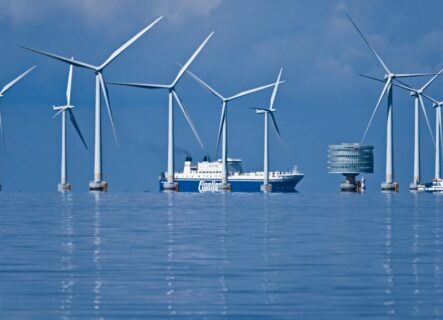
The sheer scale of the commercial CVOW project — comprising 176 turbines and capable of powering hundreds of thousands of homes — means that the operational workforce required to maintain and manage the facility over its lifespan will be substantial. HB67 is therefore less about the construction phase and more about ensuring Virginia has a trained, local talent pool ready to sustain the asset for decades to come.
A Wider Lens: The US Offshore Wind Workforce Challenge
Virginia’s legislative action arrives at a pivotal and complicated moment for the US offshore wind industry. The sector has faced significant headwinds at the federal level, including a stop-work order issued to all offshore wind projects under construction in late 2025 — a directive that was subsequently challenged in court, with construction ultimately allowed to resume. Dominion Energy itself was among the developers affected, filing legal action before courts permitted the CVOW project to continue. The episode highlighted the vulnerability of offshore wind development to shifting federal policy, making state-level commitments to infrastructure — both physical and human — all the more strategically important. This focus on state-driven energy independence is being further realized in the Northeast, where Maine has signed its first-ever contract for floating offshore wind energy, a historic agreement for the 144 MW Pine Tree Offshore Wind project that will pioneer deep-water turbine technology in the Gulf of Maine.
Across the Atlantic, the United Kingdom, Germany, and Denmark have each developed dedicated offshore wind workforce programmes over the past decade, creating structured training pipelines through partnerships between government agencies, port authorities, and technical colleges. The Global Wind Energy Council estimates that the offshore wind industry will require over 200,000 additional skilled workers globally by 2030. Virginia’s HB67, while modest in scope as an assessment-focused measure, aligns with an increasingly mainstream understanding that the energy transition cannot be sustained by turbines alone — it requires trained people to build, operate, and maintain them.
Leave a Reply