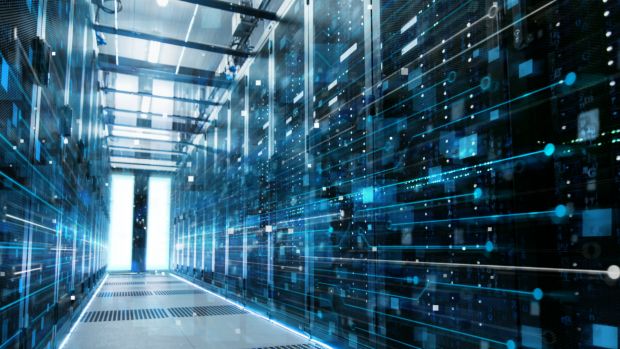
Michael Paulson a seasoned network engineer building networks and servers themselves and who has worked as an IT specialist since the days of Windows XP shared his remarks of the effects of a Stargate data center on the local community like Port Washington.
Power Usage
Michael’s vote would be against any attempt to build a Data Center in or near his city. He feel that the tech has not proven cost effective because not many are interested in cloud computing/A.I. and are pushing back against it. Also many don’t understand the amount of power needed to run even a 4 or 5 server network 24/7. “With a datacenter we are not talking about 500–1000 wats an hour. We are talking about kilowatts. Meaning the entire power usage by a datacenter is measured going to be over 1000 wats per hour for a single server in it. Add up all the watts being used and hour and that pushes that total wattage an hour for every system combined close to a million wats an hour”. He adds
Cooling and Noise Concerns
Another big concern is cooling and noise. Truth is the more power a server needs and the faster it runs, the more heat it generates. So servers tend to have cooling racks in them to constantly pull hot air out of them and blow it out of the back. That means many small fans that sound like a helicopter taking off running 24/7. For example a house fan makes about 50 to 200 rotations per min and a server fan not even half the size doing 1600 rotations per min. So most server rooms have a good amount of noise isolation in them to ensure everyone in the office isn’t hearing those fans running while at work. But I don’t see a data center going all out with noise isolation and that’s why people in cities and towns near them are reporting hearing a constant background hum in the area since one was built.
Water cooled option
Sure you can setup a liquid cooling system for a server. But with a data center you need to ask where is all the water needed going to come from and if they need to flush the system where is the water going to go? The truth is with a liquid cooling system it’s not just water. Most of the time it’s desilted water with a corrosion inhibitor and anti-biological supplement in it to prevent the growth of mold in the system. Some fluids also have glycol aka anti-freeze in them as well. So you don’t want to pour a lot of the cooling liquid down the sink if you need to change it. Also I’d not want a data center flushing their system and simply dumping it outside. Because I don’t want to risk it ending up in the ground water and that creating some issues with the local water supply.
An overworked local grid
Last big issue is local infrastructure. The power needs of a data center and going to be close to a smallish town or a medium sized town in the end. If your not 100% sure your local electrical grid can handle the power demand of one, I’d push back. Because you don’t want random power outages or to be able to get less power wattage in your town or city due to the data center demanding more then your local power grid can provide. Some companies are trying to include a small natural gas based power station in data center builds. Because the power usage is that high and they don’t know if the local grid can handle it.
Michael concludes by saying that in the end these are is things that people need to think about and things people trying to sell you on a data center near your town or city will avoid talking about. Because like A.I. companies they are trying to work fast, make as much money as they can now before the bubble really pop’s. Because data centers go hand and hand with AI. But when you look at the recent stock trends of Nvidia and the on going unraveling of OpenAI as a company the AI bubble is playing out like a slow motion car crash.

Leave a Reply