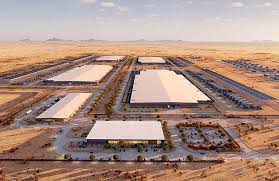
One of the largest data center investments ever proposed in the United States is taking shape in Doña Ana County, New Mexico, and Oracle is now laying out in full detail what the project means for the residents living alongside it.
Project Jupiter is a $165 billion AI training data center campus being developed by Oracle and BorderPlex Digital Assets near Santa Teresa. The campus spans 818 acres and will include four data center buildings and a warehouse, powered by an on-site 2.45 gigawatt microgrid built entirely on Bloom Energy fuel cell technology. Construction began in late 2025 and the core build-out is targeted for completion by 2028, with the full investment footprint projected to unfold over a 30-year operational window.
Years in the making
The project has been years in the making and its path to construction has not been smooth. STACK Infrastructure first revealed its development role on August 28, 2025, marking the project’s first public appearance. Less than a month later, on September 19, 2025, the Doña Ana County Board of County Commissioners approved a landmark ordinance authorizing up to $165 billion in Industrial Revenue Bonds to fund the campus — a financial commitment on a scale the county had never seen. Oracle was not publicly identified as the primary tenant until January 27, 2026, when the company was confirmed alongside partner OpenAI as the anchor of the 1,400-acre AI campus.
By then, community opposition was already building. Residents and environmental activists flooded public comment sessions with concerns about water usage, air quality, and emissions in a region where water scarcity is not an abstract worry but a daily reality. The original power plan, centered on natural gas turbines and diesel backup generators, became a flashpoint. Dozens of community members demanded extended environmental permitting review windows, and multiple groups challenged the project’s potential strain on local aquifers.
Redesign of the campus power infrastructure
The pressure worked. On April 27, 2026, Oracle and BorderPlex announced a fundamental redesign of the campus power infrastructure, scrapping the gas turbines entirely and replacing them with up to 2.45 gigawatts of Bloom Energy fuel cells. The shift was significant on multiple levels. Fuel cells produce electricity through an electrochemical process rather than combustion, eliminating the localized air pollution and greenhouse gas emissions that had drawn the sharpest criticism. The redesign also dramatically reduced the project’s water footprint, directly addressing the concern that had most galvanized local opposition.
Water
On water, Oracle has been specific. The campus cooling system is a closed-loop, non-evaporative design that requires only a one-time startup fill of non-potable water sourced from an existing water rights holder. The fuel cell systems do not require water during normal operations. Neither system will draw from the Camino Real Regional Utility Authority’s public drinking water supply. Oracle says ongoing water usage across both systems will average the equivalent of just two U.S. households annually — a figure that stands in sharp contrast to the water-intensive evaporative cooling systems that dominate conventional data center design.
On energy, Oracle has committed to funding all infrastructure and electricity costs associated with the campus. The on-site microgrid will operate independently of the local power grid, meaning residential electricity rates and supply reliability will not be affected by the project’s massive power demands. For a community that had genuine fears about being asked to subsidize a corporate infrastructure investment through higher utility bills, that commitment carries real weight.
The race to build America’s AI data center infrastructure is spreading fast beyond traditional technology hubs. Across the South, Applied Digital recently revealed Rapides Parish in Central Louisiana as the home of its $3.6 billion Delta Forge 1 AI campus — another purpose-built facility pushing to meet hyperscaler demand that shows no sign of slowing.
Community investment
Oracle has assembled a substantial community investment package around Project Jupiter. The project directs $360 million in direct payments to Doña Ana County for schools, infrastructure, and local services. A separate $50 million commitment targets local water and wastewater system improvements — going beyond the campus’s own operational needs to address the county’s broader infrastructure gaps. Oracle has allocated an additional $6.9 million for community projects across New Mexico, covering $4 million for local workforce development and education, $1.5 million for the county community fund supporting the Boys and Girls Club of Las Cruces, $1 million for habitat restoration, $250,000 for desalination and clean drinking water access, and $150,000 for regional connectivity at the community college.
The economic returns projected for the region operate on a different scale entirely. Project Jupiter will deliver $384 million in annual economic impact to Doña Ana County during the construction phase alone, falling to $113 million annually once the campus reaches full operation. The project will generate more than 4,000 construction jobs between now and 2028. Once complete, the campus will carry over 1,500 permanent on-site and community-supported positions with average salaries of $75,000 to $100,000 — well above regional wage norms. A binding Doña Ana County First hiring policy locks in priority access for local suppliers, vendors, contractors, and residents throughout construction and operations.
Project Jupiter is not just the largest economic development commitment in Doña Ana County’s history. At $165 billion projected over its lifetime, it ranks among the most consequential private infrastructure investments anywhere in the United States. Whether the community ultimately embraces or continues to resist it, the project is reshaping the county’s infrastructure. Its employment landscape, and its place in the national conversation about where America’s AI future gets built.

Doña Ana County Data Centers — Factsheet
- Developer: Oracle and BorderPlex Digital Assets
- Primary Tenant: Oracle, alongside partner OpenAI
- Location: Near Santa Teresa, Doña Ana County, New Mexico
- Site Area: 818 acres
- Campus Configuration: Four data center buildings and a warehouse
- Total Investment: Up to $165 billion over project lifetime
- Construction Start: Late 2025
- Core Build-Out Target: 2028
- Operational Window: 30-year master plan
- Industrial Revenue Bonds: Up to $165 billion approved by Doña Ana County Board of County Commissioners, September 19, 2025
Power and Energy
- On-site microgrid capacity: Up to 2.45 GW
- Power technology: Bloom Energy fuel cells, combustion-free
- Grid independence: Microgrid operates independently of local power grid
- Energy costs: Fully funded by Oracle, no impact on residential electricity rates
Water
- Cooling system: Closed-loop, non-evaporative liquid cooling
- Water source: One-time startup fill of non-potable water from existing water rights holder
- Public water supply: No draw from Camino Real Regional Utility Authority
- Ongoing water usage: Equivalent to two U.S. households annually
Jobs and Economic Impact
- Construction jobs: 4,000+
- Permanent jobs: 1,500+ at average salaries of $75,000 to $100,000
- Hiring policy: Binding Doña Ana County First priority for local residents, vendors, and contractors
- Annual economic impact during construction: $384 million
- Annual economic impact once operational: $113 million
Community Investments
- $360 million in direct payments to Doña Ana County for schools, infrastructure, and local services
- $50 million to improve local water and wastewater systems
- $4 million for local workforce development and education
- $1.5 million for the Boys and Girls Club of Las Cruces community fund
- $1 million for habitat restoration
- $250,000 for desalination and clean drinking water
- $150,000 for regional connectivity at the community college
Key Milestones
- August 28, 2025: STACK Infrastructure publicly reveals development role in Project Jupiter
- September 19, 2025: Doña Ana County approves up to $165 billion in Industrial Revenue Bonds
- January 27, 2026: Oracle confirmed as primary tenant alongside OpenAI
- April 27, 2026: Oracle and BorderPlex announce shift from gas turbines to Bloom Energy fuel cells following community opposition
- Late 2025: Construction begins
- 2028: Core infrastructure build-out targeted for completion




Leave a Reply