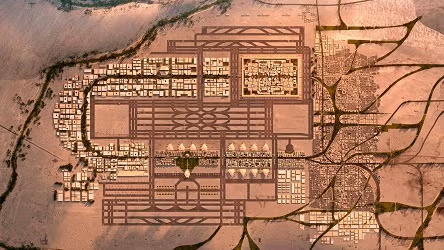
The world’s largest King Salman International Airport is set to have various mixed-use projects as part of its development. MEED noted that the King Salman International Airport Development Company (KSIADC) has signed multiple agreements. These include memorandums of understanding with local firms to develop the projects within the airport in Riyadh.
The agreements were signed on the sidelines of the Private Forum 2026 in Riyadh. Moreover, they involve major investments and development firms such as Sumou Holdings and Mohammed al-Habib investment. Furthermore, it includes Kinan Adjan, Retal, Urjuan, and Osus.
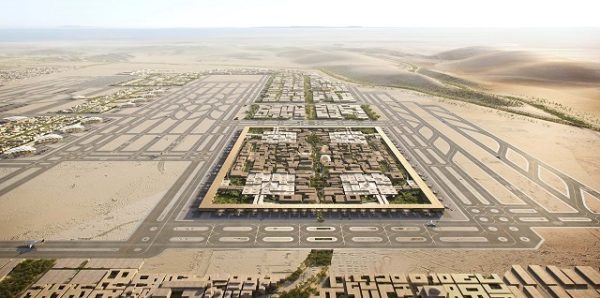
The developments will comprise residential, commercial, retail, hospitality, entertainment and other related projects. They will be located within the airport’s master development area. Of the allocated region, 12 square kilometres (sq km) will be set aside for real estate development. Various airports are competing for the final title of the world’s largest airport with the Dubai Al-Maktoum International Airport also following closely behind.
Scope of Implementation on the World’s Largest King Salman International Airport
Saudi Press Agency noted their remarks regarding the mixed-use development project on world’s largest King Salman International Airport. “KSIADC’s development scope also includes integrated economic and logistics zones covering approximately 3 million square meters, aligning real-estate development with economic activity and supporting services,” the agency noted.
The world’s largest King Salman international airport covers an area of about 57 sq. km. The space will allow for six parallel runways, and will include the existing terminals at King Khalid International airport. The airport aims to accommodate up to 100 million passengers by 2030. Furthermore, the cargo processing goal is to reach 2 million tonnes a year by 2030. Saudi Arabia plans to invest significantly in its aviation sector.
Riyadh’s Saudi Aviation Strategy aims to triple Saudi Arabia’s annual passenger traffic to 330 million travelers by 2030. It also aims to increase air cargo traffic to 4.5 million tonnes and raise the country’s total air connections to more than 250 destinations.
Project Factsheet
- Name: King Salman International Airport Mixed-Use Development.
- Developer: King Salman International Airport Development Company (KSIADC)
- Type: Mega integrated mixed-use real estate with infrastructure airport.
- Airport Area: 57 sq km
- Real Estate Allocation: 12 sq km set aside to mixed use development.
- Location
- City: Riyadh
- Nation: Kingdom of Saudi Arabia.
Development Partners (Commercial Real Estate)
- Sumou Holdings – Mixed-use development real estate.
- Mohammed Al-Habib Investment – Property development partner.
- Kinan – Mixed-use and retail development partner.
- Retal Urban Development Company – residential development partner.
- Urjuan Group – Development partner in real estate.
- Osus Real Estate – Commercial and mixed-use developer.
Mixed-Use Development Scope
- Residential communities
- Commercial office space
- Retail districts
- Hospitality (hotels)
- Entertainment zones
Economic and Logistics Component:
- Combined economic and logistics zones.
- 3 million sq m committed to logistics and other services.
Airport Infrastructure Scope
- Six parallel runways (scheduled).
- Passenger capacity goal: 100 million in 2030.
- Cargo handling target: 2M tonnes per year by 2030.
- Target air connectivity: 250+ destinations.
Strategic Importance
- Positioned as the world’s largest airport by land area
- Fundamental element of Aviation Strategy of Saudi Arabia.
- Favors diversification of Vision 2030.
- The architectural design is built as an integrated aerotropolis.
Leave a Reply