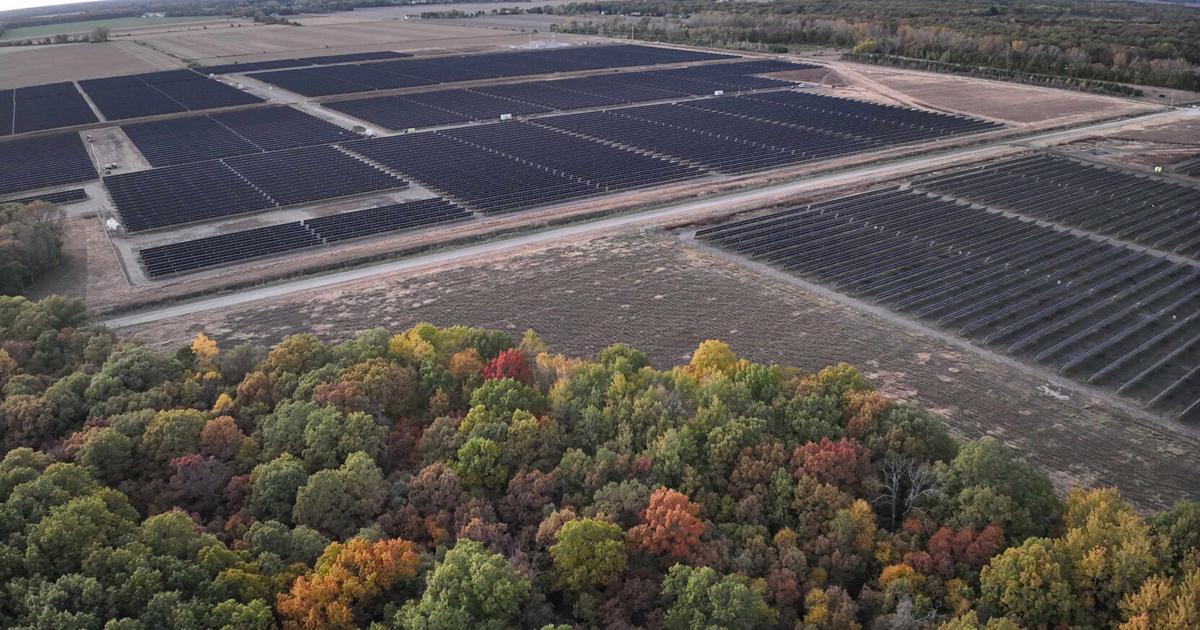
Madrid-headquartered renewable energy developer Zelestra has secured a $600 million green financing credit facility from Société Générale and HSBC to support the construction and delivery of two utility-scale solar projects currently under active development in northeast Texas — the 253 MWdc Echols Grove Solar Project in Lamar County and the 188 MWdc Cedar Range Solar Project in Hopkins County. Both projects broke ground in January 2026 with McCarthy Building Companies as lead EPC contractor, and commercial operations are targeted for the end of 2027. The two facilities are underpinned by long-term power purchase agreements with Meta — the parent company of Facebook, Instagram, and WhatsApp — and form part of a broader partnership between Zelestra and Meta encompassing seven projects with a combined capacity of 1.2 GWdc, making it one of the largest corporate renewable energy programmes in the United States. Together, Echols Grove and Cedar Range will install 704,000 bifacial solar modules across approximately 2,400 acres, support more than 400 construction jobs, and generate approximately $20 million in local economic spending during their construction phases.
2,400 Acres, 704,000 Panels: The Physical Scale of Echols Grove and Cedar Range
The two projects occupy geographically distinct sites in northeast Texas that share broadly similar land characteristics: flat to gently rolling agricultural terrain with high solar irradiance, readily available land, and proximity to transmission infrastructure within the ERCOT grid — the deregulated electricity market that has become the most active utility-scale solar construction zone in the United States. Echols Grove, the larger of the two facilities at 253 MWdc, sits in Lamar County in the Paris, Texas area — a county in the northeastern corner of the state that borders the Red River and has seen growing renewable energy interest driven by its transmission connectivity and agricultural land availability. Cedar Range, at 188 MWdc, is located in Hopkins County, home to Sulphur Springs, a small city west of Lamar County that similarly offers the flat terrain and grid access conditions that utility-scale solar developers prioritise.
Project Fact Sheet: Echols Grove and Cedar Range Solar Projects
Echols Grove Solar Project
Location: Lamar County, Texas, USA
Capacity: 253 MWdc
Construction Start: January 2026
Target COD: End of 2027
EPC Contractor: McCarthy Building Companies
Cedar Range Solar Project
Location: Hopkins County, Texas, USA
Capacity: 188 MWdc
Construction Start: January 2026
Target COD: End of 2027
EPC Contractor: McCarthy Building Companies
Combined Portfolio
Combined Capacity: 441 MWdc
Grid Market: ERCOT (Texas)
Total Land: ~2,400 acres
Modules: ~704,000 bifacial photovoltaic panels (single-axis tracking)
Local Jobs: 400+ construction jobs
Local Economic Spending: ~$20 million
Green Financing: $600 million credit facility (Société Générale and HSBC)
Offtaker: Meta (long-term PPAs)
Meta-Zelestra Total Programme: 7 projects / 1.2 GWdc (including 81 MWdc Jasper County, Indiana; 176 MWdc Skull Creek, Texas; Echols Grove; Cedar Range; + 3 additional projects)
Project Team: Echols Grove and Cedar Range
Developer / Owner: Zelestra (Madrid, Spain; US HQ: Arlington, Virginia)
Zelestra US CEO: Phil North
Zelestra US CFO: Sybil Milo Cioffi
Lead EPC Contractor: McCarthy Building Companies
McCarthy President, Renewable Energy: Dhruv Patel
Green Financing Banks: Société Générale; HSBC
Offtaker: Meta Platforms Inc. (Facebook, Instagram, WhatsApp)
Zelestra Global Portfolio: ~21.6 GWdc solar; ~29.8 GWh BESS; ~4.2 GW wind
Zelestra US Pipeline: ~15 GW renewable energy across key markets
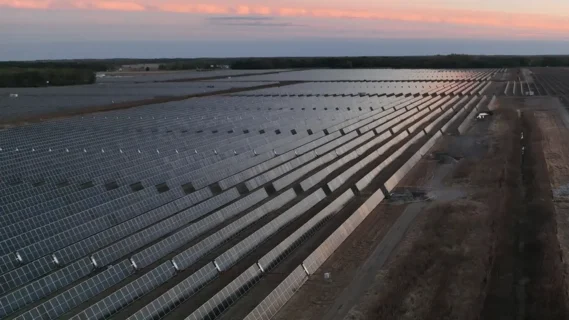
The technology deployed across both sites is bifacial photovoltaic modules mounted on single-axis tracking systems — the standard utility-scale solar configuration in ERCOT, which maximises energy yield by continuously orienting modules toward the sun throughout the day while capturing additional reflected irradiance from the ground surface on the rear face of each bifacial panel. At 704,000 modules across 2,400 acres, the average module density is approximately 293 panels per acre — a figure consistent with large-scale tracker installations that balance land efficiency with inter-row spacing optimised for shading avoidance. McCarthy Building Companies, the lead EPC contractor, brings an extensive utility-scale solar construction portfolio across the United States; its President of Renewable Energy, Dhruv Patel, has described the Echols Grove and Cedar Range sites as long-term investments in Texas communities that will create quality jobs and opportunities for local contractors and suppliers throughout the construction and commissioning programme.
The $600 Million Green Financing: Société Générale, HSBC, and the Capital Structure
The $600 million green financing facility arranged by Société Générale and HSBC represents a significant capital markets transaction — one of the larger individual project finance closings in the US solar sector in the first quarter of 2026. The facility is structured as a green credit facility, meaning that the proceeds are designated for eligible green assets in accordance with a green financing framework aligned with recognised market standards such as the International Capital Market Association’s Green Bond and Green Loan Principles. Green financing structures are increasingly standard in the US utility-scale solar sector because they allow borrowers to access a broader pool of capital from investors with ESG mandates, and because the underlying project economics — long-term contracted revenues under investment-grade counterparty PPAs — are well-suited to the credit analysis frameworks preferred by green-labelled debt investors.
Sybil Milo Cioffi, Zelestra’s US CFO, characterised the financing as a milestone reflecting strong confidence from Société Générale and HSBC in Zelestra’s strategy and execution capabilities. The Meta PPA underpinning both projects provides the revenue certainty that supports the credit case: Meta is rated investment-grade, ranked as the world’s largest corporate clean energy offtaker in 2025 by BloombergNEF with 10.24 GW contracted in the year, and has publicly committed to matching 100 per cent of its global operations with clean and renewable energy on an ongoing basis. A long-term PPA with Meta is, in the language of project finance, about as clean a credit counterparty as the US renewable energy market offers — a quality that Société Générale and HSBC will have priced accordingly in the facility’s interest rate and terms.
Zelestra, Meta, and the 1.2 GWdc Partnership Behind These Projects
Zelestra — formerly known as X-Elio before its 2024 rebranding under new management — is a global multi-technology renewable energy company headquartered in Madrid, Spain, with US operations based in Arlington, Virginia. The company’s global portfolio encompasses approximately 21.6 GWdc of solar, 29.8 GWh of battery energy storage, and 4.2 GW of wind capacity under development or in operation across multiple markets, including Spain, the United States, Japan, Chile, Kenya, and Australia. In the United States specifically, Zelestra is advancing approximately 15 GW of renewable energy projects, with BloombergNEF recognising the company in February 2026 as one of the top ten corporate PPA sellers in the US market. Phil North, Zelestra’s US CEO, has described 2025 as a year of rapid growth and 2026 as a year of accelerating construction delivery — a trajectory that the Echols Grove and Cedar Range financing confirms.
The Meta-Zelestra PPA relationship began to take public shape in early 2025 with the announcement of the first joint projects. Echols Grove and Cedar Range are the second and third tranches of what has become a seven-project, 1.2 GWdc programme. The 81 MWdc Jasper County Solar Project in Indiana — the first project in the Meta-Zelestra partnership — reached commercial operations, providing the track record that underpins confidence in the two Texas projects’ execution. In February 2026, Zelestra signed an additional PPA with Meta for the 176 MWdc Skull Creek Solar Plant in Texas, adding a further project to the pipeline of operational sites committed to Meta’s clean energy goals. All told, Zelestra’s seven Meta PPAs — spanning Indiana, Texas, and other US states — will contribute 1.2 GWdc of new-build solar generation to the US grid, specifically structured to ensure additionality: generating clean electricity from new capacity rather than simply purchasing certificates from existing plants.
Meta’s Clean Energy Strategy and Texas Solar’s Role in Hyperscaler Procurement
Meta’s position as the world’s largest corporate clean energy buyer in 2025 — contracting 10.24 GW in the year, according to BloombergNEF — reflects a procurement strategy built around additionality and scale. Unlike some corporate renewable programmes that rely primarily on unbundled renewable energy certificates from existing generation, Meta’s PPA strategy requires developers to build new plants that add genuinely incremental clean generation to the grid, creating a direct and verifiable link between Meta’s electricity consumption and new renewable capacity. The 1.2 GWdc Meta-Zelestra programme, of which Echols Grove and Cedar Range are the Texas centrepiece, exemplifies this approach: both facilities are greenfield builds on previously undeveloped agricultural land in counties that did not previously host significant renewable energy capacity.
Texas — specifically the ERCOT market — has become the dominant US geography for corporate renewable procurement by hyperscalers and major technology companies. Amazon, Google, and Microsoft have all contracted hundreds of megawatts of ERCOT solar and wind in recent years, attracted by the same combination of factors that drew Meta and Zelestra to Lamar and Hopkins counties: abundant land, consistently high solar irradiance, competitive interconnection costs, a deregulated wholesale market that allows flexible commercial structures, and the surging electricity demand from data centres and AI computing loads concentrated in the Dallas-Fort Worth corridor and expanding into north and east Texas. The combination of Zelestra’s EPC execution capability through McCarthy, its Spanish parent’s global balance sheet, and the investment-grade Meta credit counterparty positions Echols Grove and Cedar Range as a template for the continuing wave of hyperscaler-driven solar construction that will define the Texas energy market for the remainder of the decade. This trend of massive utility-scale investment is exemplified by the Aktina Renewable Power Project, the largest solar power project in Texas, which has officially broken ground, marking a significant milestone in the state’s transition toward a high-capacity, renewable-heavy grid.
Leave a Reply