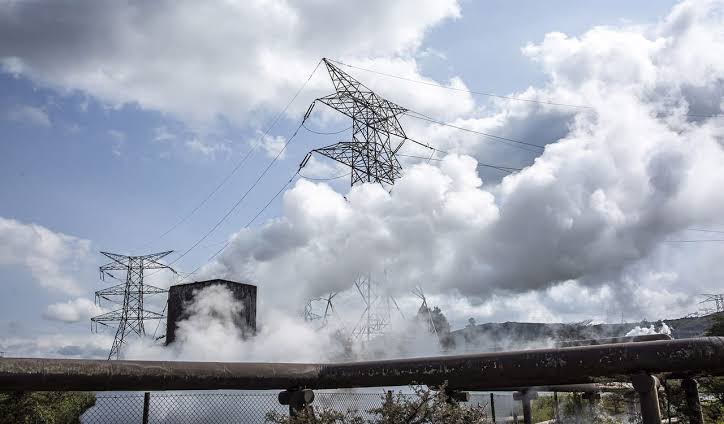
The planned $1 billion geothermal-powered data center initiative in Olkaria, Kenya was originally announced in May 2024 by Microsoft and UAE-based AI firm G42. The project faced significant setbacks following concerns over power grid constraints and financial guarantees. Estimates indicated that the hyperscale facility would require up to 1,000 megawatts of electricity, representing nearly a third of Kenya’s existing total installed generation capacity. President William Ruto publicly noted that supplying enough power to run the single data center under present conditions would threaten energy stability for the rest of the country, triggering discussions over postponing or restructuring the project while Kenya works to scale its national grid capacity toward 10,000 megawatts.
Reports also highlighted friction regarding funding mechanisms and capacity commitments, with negotiations between Microsoft and the government encountering impasses over minimum guaranteed payment terms. In response to growing media reports that the deal had stalled or been permanently shelved, Kenyan government officials clarified that the state remains committed to the broad digital partnership. Special Tech Envoy Ambassador Philip Thigo emphasized that the project has not been formally abandoned; rather, the focus has shifted toward building out the prerequisite power infrastructure and regional energy capacity required to sustainably host such large-scale cloud and AI infrastructure.

Similar Projects
Also, in a another similar project that is planned for coastal Kenya, Greek multinational firm Amaco Energy Group has revealed plans to construct a $1.5 billion off-grid data center. This data center will not rely on Kenya’s grid, giving it an operational advantage as it will not be subject to setbacks that could be caused by Kenya’s elctricity grid.
May 20, 2026
A Microsoft data center site in East Africa has been delayed and Kenya is pushing ahead with the talks, and “it is not failed or withdrawn,” Bloomberg quoted principal secretary at Kenya’s Ministry of Information John Tanui as he mentioned in an interview. Also, a separate 60 MW data center project involving local developer EcoCloud also remains under discussion.
“The scale of the data center they wanted to do still needs some structuring,” he stated. Additionally, he said that power requirements are still under discussion.
Microsoft, G42, and Kenya’s Information Ministry did not immediately give feedback to a request by Reuters for comment. Furthermore, Reuters could not immediately verify the Bloomberg report by disagreements with the Kenyan government over the company’s request for guaranteed payments, Bloomberg News reported on the previous citing people familiar with the matter.
In May 2024, Microsoft partnered with UAE-based AI firm G42 to invest $1 billion in a data center in Kenya. This was part of G42’s efforts to expand cloud-computing services in East Africa. Addutionally, the project was announced during Kenyan President William Ruto’s state visit to Washington, USA under the Biden administration.
The facility was set to run entirely on geothermal power. Also, it was set to provide access to Microsoft’s Azure via a cloud region for East Africa.
Microsoft and G42 asked the Kenyan government to commit to paying for a certain amount of capacity annually. However, the talks broke down when it could not provide the guarantees at the level Microsoft requested, the Bloomberg report said.
May 6, 2024
Kenya’s plans to construct a $1 billion data centre backed by Microsoft and UAE-based G42 have stalled. This is after President William Ruto said the country lacks sufficient power capacity to support the data center project.
Highlighting the immense energy requirements of the facility, Kenyan President William Ruto noted that powering the full-scale project would necessitate shutting off half of the country’s existing electricity supply.
The data center facility was first announced during Ruto’s state visit to Washington in May 2024. It was expected to be located about 100 kilometres northwest of Nairobi and run largely on geothermal energy. Moreover, the investment, valued at approximately $1 billion, emerged as a flagship project to deliver cloud services via Microsoft’s Azure platform to businesses and government institutions.
The Data Center Cancellation Exposes Constraints in Kenya’s Electricity System
However, the energy demands present a significant electricity infrastructure challenge. Kenya’s total installed electricity capacity ranges between 3,000 MW and 3,200 MW. The peak national demand usually reaches 2,444 MW. Consequently, a 1 GW data center would consume about one-third of the nation’s total capacity. Even the initial 100 MW phase would consume a substantial portion of the Olkaria geothermal complex’s total 950 MW output.
“To switch on that one data centre, we would need to shut off power for half the country. That’s when I knew there was a problem,” Ruto said.
Kenya has promoted its renewable energy credentials, particularly geothermal power, which accounts for around 40% of its energy mix. This aspect stood as a competitive advantage in attracting energy-intensive digital infrastructure. Yet officials now acknowledge that the existing supply remains insufficient to accommodate hyperscale data facilities without straining the national grid.
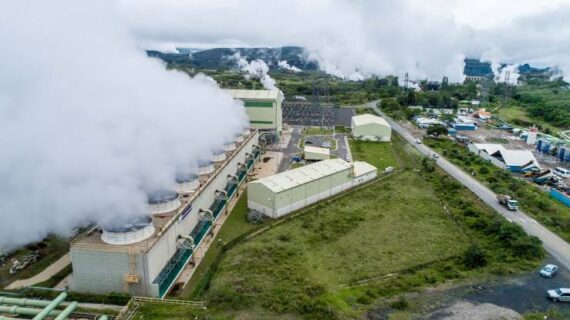
Government officials familiar with the discussions stated a concept note for the project was prepared by Kenya’s technology ministry and submitted to the National Treasury for funding approval. The proposal did not receive clearance, effectively stopping progress. By August 2025, meetings between Kenyan officials and Microsoft executives had already indicated that the project would miss its original May 2026 completion target.
Also, neither Microsoft nor G42 provided immediate comment on the latest developments.
Significance of the Project
The project had been viewed as a symbol of deepening ties between Kenya and the United States, particularly as Washington seeks to expand its technological footprint in East Africa amid growing competition from China. Its delay highlights the risks associated with high-profile investment announcements made during diplomatic engagements, which may not always reflect underlying technical or financial feasibility.
Impact of the Cancellation on Africa’s Digital Infrastructure
Analysts say the setback underscores a broader structural challenge across Africa, where demand for artificial intelligence and cloud services is rising faster than the infrastructure needed to support it. While Kenya’s data centre market expects to grow significantly, existing energy demands from households and industry limit the scale at which new facilities can be deployed.
Despite the uncertainty surrounding the Microsoft-backed project, momentum in Kenya’s data centre sector continues. Airtel Africa subsidiary Nxtra is currently developing a 44MW facility in Tatu City, expected to be the largest in East Africa upon completion. Additionally, Airtel is also developing a data center in Nigeria in bid to expand its digital infrastructure in Africa.
Other Microsoft Investments in Africa
Elsewhere on the continent, Microsoft has maintained its expansion plans. In April, the company announced a $329 million investment in South Africa to grow its cloud infrastructure and artificial intelligence capabilities, including improvements in power and water readiness for future data centres.
The contrasting trajectories highlight a key reality for African markets: while investor interest in digital infrastructure remains strong, execution will depend heavily on the pace of upgrades to foundational systems such as energy supply.
Project Factsheet
Project Name: East Africa Cloud Region / Olkaria Geothermal Data Center
Primary Partners: Microsoft (USA), G42 (UAE), Government of Kenya
Initial Investment: $1 Billion
Announced: May 2024 (during President Ruto’s State Visit to the USA)
Cancellation Date: May 2026
Primary Reason for Cancellation: Energy Shortfall. The project required 1,000MW, roughly 1/3 of Kenya’s total capacity.
Why it Failed
- Grid Capacity: Kenya’s total installed capacity is approximately 3,000 MW. The full-scale data center would have consumed roughly 1,000 MW. This is a demand the government determined to be impossible to meet without massive infrastructure upgrades.
- National Treasury Approval: The Kenyan National Treasury reportedly withheld final funding approvals for the government’s portion of the infrastructure support. This further stalled the project’s “concept note.”
- Geopolitical Scrutiny: The involvement of UAE’s G42 drew scrutiny from US officials earlier in the project’s life cycle. This was regarded to potential ties to China. This led to delays in security clearances for high-end AI chips.
- Timeline Slippage: it was originally slated for completion by May 2026. However, the project had failed to break ground by late 2025, making the target impossible to hit.
Project Team
Primary Corporate and Strategic Partners
- Microsoft: Providing the underlying cloud infrastructure (Azure platform), software tools, and digital skilling programs.
- G42: The Abu Dhabi-based AI technology firm leading the design, construction, and initial $1 billion funding arrangement for the green data center campus.
Power and Energy Infrastructure Partners
- Kenya Electricity Generating Company (KenGen): The state-owned power producer hosting the campus at its Green Energy Park in Olkaria and supplying the required renewable geothermal power.
Government Agencies and Facilitators
- Ministry of Information, Communications and the Digital Economy (Kenya): Leading governmental oversight, framework development, and negotiations.
- U.S. and UAE Governments: Providing diplomatic support and strategic backing for the bilateral technology corridor.
Local Connectivity and Implementation Partners
- EcoCloud Data Center: Local data center developer collaborating on broader regional infrastructure efforts in Olkaria.
- Connectivity Partners: Local internet infrastructure providers including Mawingu Networks, Liquid Intelligent Technologies, and CSquared.



Leave a Reply