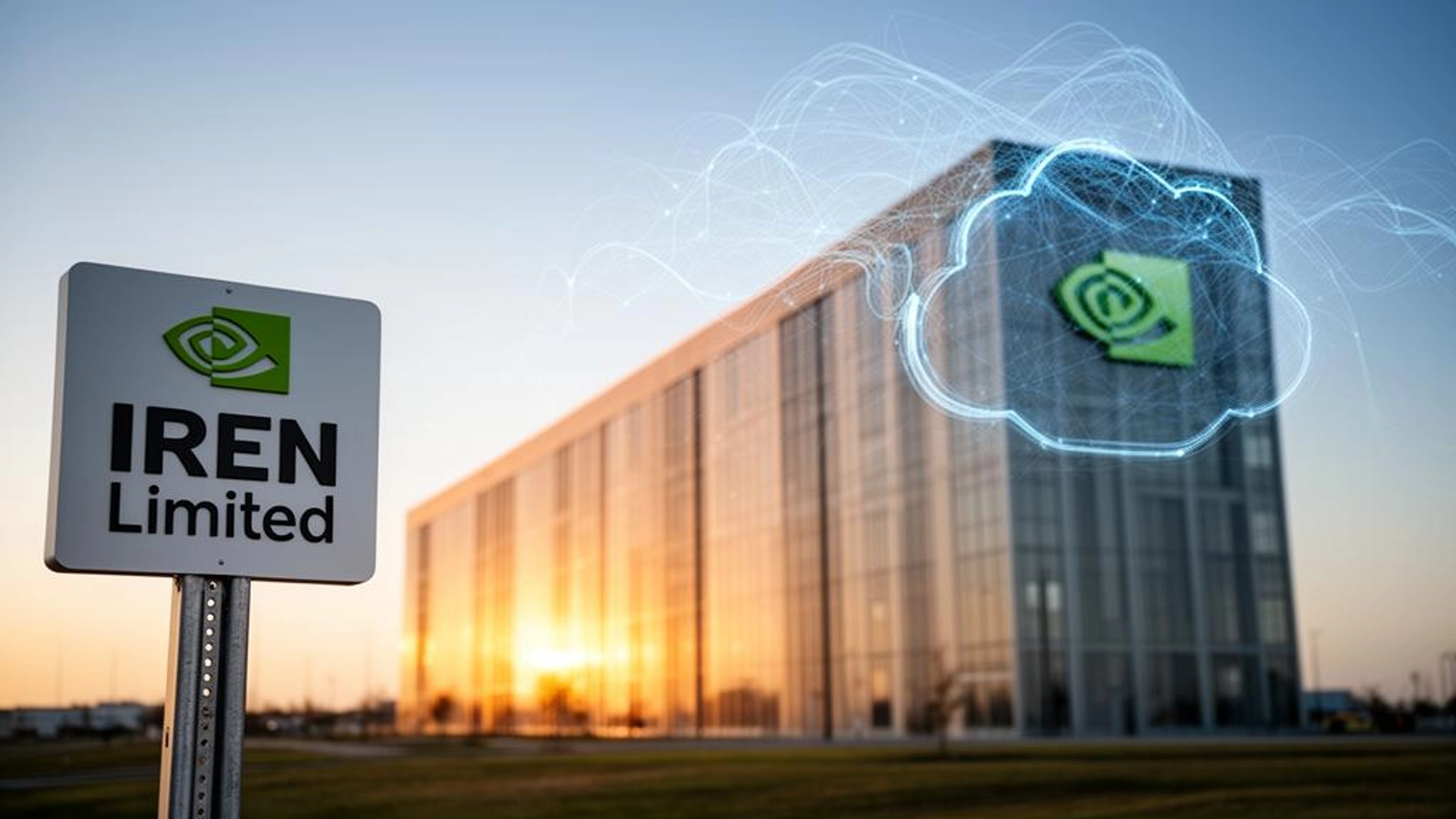
Bundey data center is advancing through Australia’s development pipeline after the federal government determined its environmental approval was not required. IREN’s proposed 800MW campus near Robertstown, South Australia, remains one of Australia’s largest planned AI infrastructure developments.
The project carries an estimated A$10 billion investment, equivalent to about $6.9 billion. It will combine three large data halls with high-voltage substations and transmission infrastructure. IREN expects energisation from 2028, subject to remaining approvals and project conditions.
Bundey Data Center moves through environmental process
The federal environmental referral started on July 31, 2026, after IREN announced the project’s transmission connection. The government published its decision on September 23, 2026. The decision determined that the project does not require approval under the Environment Protection and Biodiversity Conservation Act.
The project will occupy about 610.4 hectares near Robertstown. That footprint includes a 565.2-hectare data centre campus and a 45.3-hectare transmission corridor.
The development will feature three data halls, each offering up to 200MW of IT capacity. Supporting infrastructure will include three primary substations and one 330kV bulk substation.
Furthermore, the project requires two parallel 330kV double-circuit overhead transmission lines. Additional 132kV transmission infrastructure will connect the bulk substation with the primary substations.
The current preliminary design identifies 269.3 hectares of disturbance. That figure includes 169.3 hectares of permanent disturbance and 100 hectares for temporary construction activities.
IREN has also identified 146.5 hectares for retention and 43.1 hectares for avoidance. The design aims to reduce impacts on native vegetation and threatened species habitat.
Bundey Data Center prepares for major construction programme
Construction will progress progressively over approximately six to eight years. The programme will include site establishment, vegetation clearance, earthworks and civil works.
Contractors will then build foundations, structural frameworks and data hall envelopes. Mechanical, electrical, cooling and IT equipment will follow as individual facilities progress.
The transmission works will involve tower foundations, tower erection and conductor installation. The project will also require temporary access tracks, construction compounds and concrete batching facilities.
IREN expects the project to create more than 500 construction jobs. Once operational, the campus could support more than 200 skilled positions.
The developer secured four 330kV feeder exits under its transmission connection agreement with ElectraNet. Those connections can support the planned 800MW capacity without requiring network upgrades.
IREN expects the campus to benefit from South Australia’s renewable energy system. The state targets 100% net renewable electricity by 2027.
The site also offers submarine fibre connectivity into Singapore, Indonesia, South Korea and Japan. This infrastructure could help the campus serve growing Asia-Pacific AI computing demand.
IREN’s latest financial update confirms that Bundey remains under development alongside its global data centre pipeline. The company identified Bundey among projects progressing toward future capacity delivery.
The project has also attracted local attention because of its scale and electricity requirements. Community concerns have focused on renewable power availability, water use and potential regional impacts.
IREN has promoted a closed-loop cooling approach to limit ongoing water consumption. The company has also indicated that the campus could use existing and developing renewable generation around South Australia.
The Bundey development forms part of a broader Australian push for large-scale AI infrastructure. Similarly, the proposed Kurri Kurri data centre in New South Wales targets major computing capacity alongside access to high-voltage electricity.
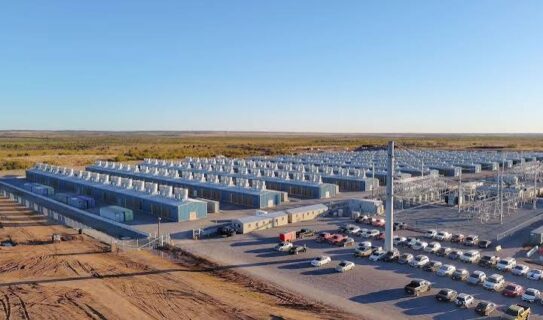
Bundey Data Center Hits Transmission Milestone
The Bundey Data Centre project has reached a significant development milestone after IREN secured a transmission connection agreement for its planned 800MW AI-ready campus in South Australia. The agreement enables the project to move into the next phase of planning and early development while keeping the first stage on track for energization from 2028. As one of the largest proposed hyperscale data center developments in the Asia-Pacific region, the project continues to strengthen Australia’s ambitions to become a leading destination for AI infrastructure powered by renewable energy.
The project is accelerating in South Australia after US-based IREN committed to develop an 800MW hyperscale AI campus near Bundey, approximately 125km northeast of Adelaide. The $10 billion infrastructure project targets Australia’s first 100% net renewable electricity grid, positioning the state as a global leader in green-powered digital infrastructure. Consequently, the development aligns with rising global demand for AI compute capacity powered by low-carbon energy systems. Moreover, the project strengthens South Australia’s role as a strategic hub for data-intensive technologies. It will be delivered in phases, with energization expected from 2028.
Transitioning from planning to execution, the Bundey site sits near a major transmission node at the Bundey substation. Therefore, the project benefits from existing high-voltage infrastructure and proximity to large-scale renewable generation. Additionally, the surrounding region hosts wind, solar, and battery assets that already support grid stability. As a result, developers expect reduced infrastructure delays and improved construction efficiency.
Importantly, IREN secured a transmission connection agreement with ElectraNet. This agreement enables four 330kV feeder exits, allowing up to 800MW of grid capacity without major upgrades. Consequently, the Bundey Data Centre construction project gains a critical foundation for rapid scaling and staged delivery.
IREN confirms 800MW Bundey data centre campus with 2028 energisation target
The Bundey Data Centre project has advanced from concept to early development after IREN confirmed it had secured an 800MW transmission connection agreement for the site near Bundey in South Australia. The campus will become IREN’s first Australian AI data centre and one of the country’s largest digital infrastructure developments. Initial grid energisation is expected to begin in 2028, supporting phased delivery of the hyperscale campus.
The project is currently in the development stage, with planning and regulatory work continuing before a formal development application is submitted. Industry trackers identify the Bundey campus as the largest planned data centre project in South Australia, with a planned capacity of 800MW. The development pipeline includes environmental assessments, engineering design, utility coordination, and statutory approvals before construction can commence.
Bundey Data Centre construction project strengthens Australia’s AI infrastructure strategy
Bundey Data Centre development supports rising AI workloads across cloud computing, machine learning, and large-scale model training. Furthermore, the facility will serve regional demand across the Asia-Pacific market through high-capacity fiber links to Singapore, Japan, South Korea, and Indonesia. Therefore, the project enhances Australia’s position in the global digital economy.
South Australia’s renewable energy transition plays a central role in project selection. The state is on track to reach 100% net renewable electricity by 2027. Consequently, the Bundey Data Centre construction project will operate in one of the world’s cleanest grid environments. Additionally, this supports long-term power purchase agreements tied to wind and solar generation.
Transitioning to economic impact, the project is expected to generate more than 500 construction jobs. Moreover, it will support over 200 permanent technical and operational roles. These opportunities strengthen regional employment while building a skilled workforce for Australia’s growing AI sector.
Bundey Data Centre project anchors renewable-powered industrial corridor
Bundey Data Centre construction is integrated into a broader renewable energy corridor already hosting major infrastructure projects. For example, Neoen’s Goyder Energy Park includes large-scale wind, solar, and battery systems adjacent to the substation. Therefore, the data center benefits from a highly developed renewable ecosystem.
Additionally, nearby developments such as the Bundey Solar Farm and large battery storage projects further reinforce grid reliability. Consequently, the region is evolving into a high-density energy and digital infrastructure hub. This co-location model reduces transmission losses and improves energy efficiency for large-scale computing loads.
Importantly, the project reflects a global shift toward renewable-powered AI infrastructure. Developers increasingly prioritize stable, low-carbon electricity sources for hyperscale facilities. As a result, the Bundey Data Centre construction project may influence future data center investments across Australia and beyond.
The Bundey Data Centre construction project connects directly to Australia’s broader AI infrastructure expansion strategy already underway across multiple states. Notably, Microsoft’s parallel $25 billion Australia data centre project is accelerating nationwide development of AI, cybersecurity, and hyperscale cloud infrastructure, reinforcing Australia’s position as a key Indo-Pacific digital hub. In addition, both projects align with rising hyperscale demand that is reshaping power procurement, with developers increasingly targeting renewable-rich grids and long-term energy agreements.
Furthermore, the Bundey development complements Microsoft’s wider network of AI-focused data centers being deployed across Sydney and Melbourne, where capacity expansion is already underway. Consequently, Australia is emerging as a multi-operator AI infrastructure market, where projects like Bundey and Microsoft’s national buildout collectively strengthen grid investment, transmission upgrades, and renewable integration. Therefore, the Bundey Data Centre project should be viewed not as an isolated asset, but as part of a coordinated national shift toward large-scale, renewable-powered digital infrastructure development.
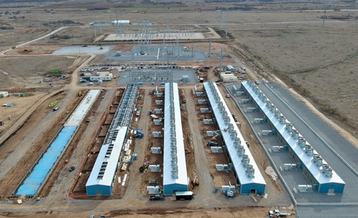
Updates on the Bundey Data Center Project
The Bundey Data Centre project driving Australia’s first 100% net renewable grid build continues to reshape the country’s hyperscale infrastructure landscape as construction momentum strengthens and grid integration advances in South Australia. The project has emerged as a defining benchmark for renewable-powered digital infrastructure, where artificial intelligence demand, energy transition goals, and large-scale computing capacity converge into a single development model. As of June 18, 2026, Bundey remains central to Australia’s strategy of aligning hyperscale data centre expansion with long-term clean energy planning, positioning itself as one of the most ambitious AI infrastructure campuses in the region.
Its relevance extends beyond South Australia, linking directly to broader capital flows in the sector, including major financing activity in Sydney’s hyperscale market. For instance, AirTrunk’s $2.9 billion financing initiative for its Sydney data centre project highlights parallel expansion in established infrastructure hubs, while Bundey represents the next generation of renewable-integrated mega campuses. Together, these developments illustrate a dual-track strategy across Australia’s digital infrastructure sector, where mature markets are scaling capacity and emerging projects are redefining sustainability standards.
Community consultation intensifies as project attracts national attention
The proposed campus has generated significant public interest because of its scale and expected demand for electricity and water. Local residents have raised questions about environmental impacts and resource use, while IREN has stated that community consultation will form a key part of the project’s development. The company says it will work with stakeholders throughout the planning process as approvals progress.
AI demand strengthens the project’s commercial outlook
Since unveiling the Bundey proposal, IREN has significantly expanded its AI infrastructure business. The company recently secured $2.8 billion in new multi-year AI cloud contracts and raised its annualized AI cloud revenue target to more than $4 billion. The agreements reinforce demand for large-scale AI infrastructure and strengthen the commercial case for developing the Bundey campus.
Australian Government introduces expectations for AI infrastructure projects
The Australian Government has also released new national expectations for AI infrastructure and data centre developers. The guidance emphasizes energy security, environmental performance, data sovereignty, and community engagement. These policy expectations will shape the delivery of major projects such as the Bundey Data Centre as Australia expands its AI infrastructure capacity.
The Bundey development also mirrors the rapid expansion of hyperscale infrastructure across the Asia-Pacific region. A similar trend is evident in Malaysia, where the Johor Data Center expansion project recently secured a $2.3 billion green loan to accelerate construction of AirTrunk’s hyperscale campus. Together, the two projects demonstrate how developers are pairing AI-ready digital infrastructure with sustainable energy strategies to support growing cloud and artificial intelligence demand.
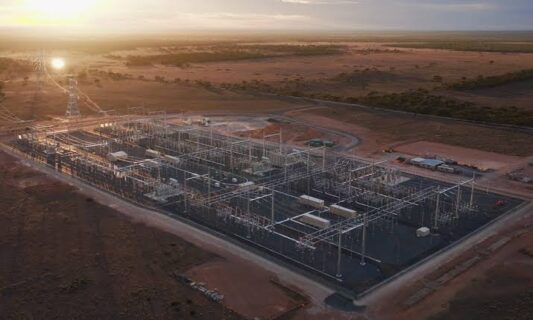
Project Fact Sheet
Project Name: Bundey Data Centre (Australia Renewable Data Centre Project)
Location: Bundey, South Australia (~125km northeast of Adelaide)
Project Value: $10 billion
Capacity: 800MW hyperscale AI data centre campus
Developer: IREN (formerly Iris Energy)
Project Type: AI-focused hyperscale construction project
Grid Connection: ElectraNet transmission agreement
Electrical Interface: Four 330kV feeder exits
Energy Source: South Australia 100% net renewable electricity grid (target 2027)
Construction Phasing: Multi-stage development
First Energization: 2028
Primary Use: AI computing, cloud services, data processing
Connectivity: Fibre links to Singapore, Japan, South Korea, Indonesia
Estimated Construction Jobs: 500+
Estimated Permanent Jobs: 200+
Strategic Advantage: Renewable energy corridor integration
Project Team
Project Developer: IREN
Co-Founder & Co-CEO: Daniel Roberts
Transmission Network Operator: ElectraNet
State Government Partner: Government of South Australia
Premier of South Australia: Peter Malinauskas
Renewable Energy Developer Ecosystem: Neoen (Goyder Energy Park)
Battery Storage Developers: Neoen and regional energy storage providers
Solar Energy Developers: Genaspi Energy (Bundey Solar Farm)
Transmission Infrastructure Project: Project EnergyConnect stakeholders
Regulatory Authority: Australian Energy Market Operator (AEMO)
AI Hardware Ecosystem: NVIDIA and associated suppliers
Cloud & AI Clients: Microsoft and global enterprise users
Engineering & Procurement Contractors: To be appointed
Construction Contractors: To be appointed
Telecommunications Partners: Submarine fibre network operators
Local Stakeholders: Bundey and Mid North South Australia communities


Leave a Reply