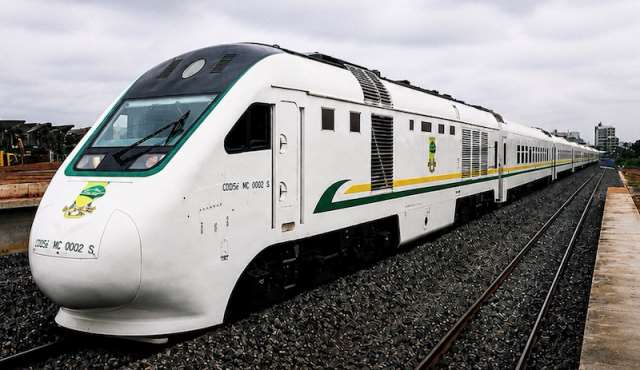
Lagos-Maiduguri high-speed rail plans could reshape Nigeria’s long-distance transport network through a proposed 360km/h railway. The Federal Government unveiled the corridor as part of broader efforts to modernize national transport infrastructure.
The proposed project would connect Nigeria’s commercial hub with Maiduguri, Borno State, while reducing reliance on long-distance road travel. The government disclosed the plans during the 19th National Council on Transportation in Abuja.
Lagos-Maiduguri high-speed rail
Permanent Secretary at the Federal Ministry of Transportation, Engr. Funsho Adebiyi, announced the project on September 1. He said trains could operate at speeds reaching 360 kilometers per hour.
The announcement came as Nigeria seeks to integrate rail, road, maritime, and aviation infrastructure. Therefore, the government expects rail development to reduce pressure on major highways.
Adebiyi said the proposed system could significantly shorten travel times between major Nigerian cities. He also indicated that the government wants passengers to favor rail for long-distance journeys.
However, authorities have not announced a construction start date for the Lagos-Maiduguri corridor. They have also not named a contractor, financing structure, or detailed construction schedule.
That distinction remains important because the project currently represents a government plan rather than an awarded construction contract.
The proposed corridor also arrives amid continued expansion of Nigeria’s existing railway network. Active routes include Lagos-Ibadan, Abuja-Kaduna, Port Harcourt-Aba, and Warri-Itakpe.
Rail construction expands across northern Nigeria
Meanwhile, ongoing railway projects could strengthen the wider network required for future high-speed connectivity. The Kaduna-Zaria-Kano line targets commissioning by December 2026.
The government also expects the Kano-Daura-Katsina section to reach commissioning in December 2026. Recent government inspections placed the project above 75% completion.
Furthermore, the Nigerian Railway Corporation plans further network expansion, including the Port Harcourt-Maiduguri corridor. It also plans to complete the Lagos-Kano railway connection.
These projects could provide important regional links as Nigeria develops a more integrated national railway system.
The Federal Government is also promoting freight rail to move heavy cargo from highways. This strategy aims to reduce congestion, road maintenance costs, and traffic-related fatalities.
Additionally, the government approved a smart national transport data bank under a DBFOT model. The platform will centralize transport records and support improved passenger identification.
The Lagos-Maiduguri proposal also builds on Nigeria’s wider ambition to establish a nationwide high-speed railway network. In 2024, the government outlined a $60 billion high-speed rail project linking major cities across the country.
Lagos-Maiduguri high-speed rail development outlook
The proposed high-speed railway forms part of a broader infrastructure push rather than an isolated transport scheme.
Earlier in April, the government established a technical committee to review a separate proposed $200 billion integrated gas, power, and high-speed rail project. That proposal envisages a 4,000-kilometre dual-track network connecting all 36 states and the Federal Capital Territory.
However, the government has not confirmed that the £12 billion Lagos-Maiduguri proposal forms part of that separate scheme.
For now, the Federal Ministry of Transportation must develop the route, engineering requirements, financing model, procurement strategy, and implementation timetable.
The scale of the proposal will require extensive civil works, including track infrastructure, stations, bridges, drainage, signaling, power systems, and maintenance facilities.
It will also require significant land acquisition and environmental assessment along the eventual alignment.
Therefore, further government announcements should clarify the project’s route, funding arrangements, construction phases, and delivery partners.
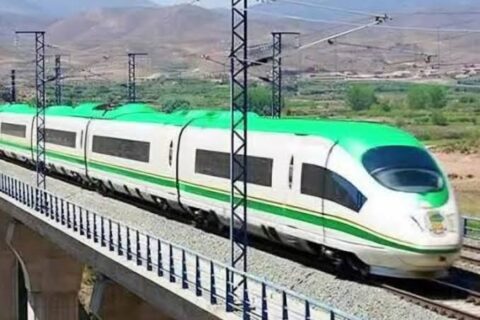
Project Fact Sheet
Project: Lagos-Maiduguri High-Speed Rail Project
Type: National high-speed railway
Proposed route: Lagos to Maiduguri
Western terminus: Lagos, Nigeria
Eastern terminus: Maiduguri, Borno State
Proposed train speed: Up to 360 kilometers per hour
Estimated project cost: £12 billion
Current status: Government planning and announcement stage
Construction status: Construction start date not announced
Contractor: Not yet announced
Financing structure: Not yet announced
Route length: Not yet disclosed
Delivery schedule: Not yet announced
Key objective: Improve long-distance passenger connectivity
Strategic objective: Reduce dependence on road transportation
Wider network: Links with Nigeria’s expanding intercity railway program
Project Team
Sponsor: Federal Government of Nigeria
Lead Ministry: Federal Ministry of Transportation
Railway Operations Stakeholder: Nigerian Railway Corporation
National Transport Policy Stakeholder: Federal Ministry of Transportation

Leave a Reply