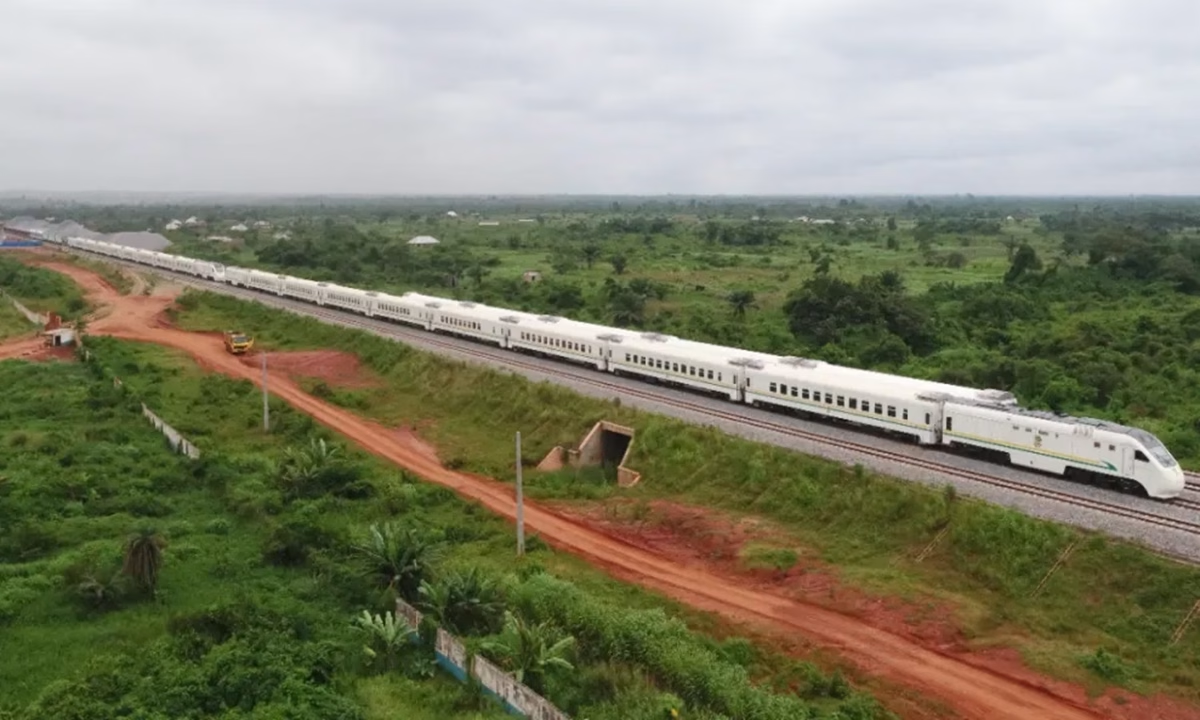
Nigeria high speed rail project is gaining renewed attention as the Federal Government expands its national transport infrastructure program. The proposed $60 billion network targets approximately 4,000 kilometers of high-speed railway. It aims to connect major economic centers while improving long-distance passenger movement across Nigeria. The project also forms part of broader efforts to shift transport demand from roads toward rail.
The proposed network initially prioritizes Lagos, Abuja, Kano, and Port Harcourt. Its first phase covers about 1,600 kilometers and carries an estimated $55 billion investment. Developers have previously indicated that construction could take approximately 36 months.
Nigeria High Speed Rail Project
The Federal Government has continued discussions around financing and implementation of the proposed railway. De-Sadel Nigeria Limited and China Liancai Petroleum Investment Holdings Limited are linked to the development proposal.
In August 2025, the consortium presented proof of funds for the proposed $60 billion development. The partners said the funding would support the first phase across four major cities.
The proposed railway would use high-speed technology to reduce journey times between major Nigerian cities. Therefore, the project could create a faster alternative to long-distance road transportation.
However, the project still faces important implementation requirements before construction can fully proceed. These include final financing arrangements, detailed engineering, route development, land acquisition, and procurement.
Power supply also remains a major consideration for the project. High-speed railway operations require reliable electricity and supporting infrastructure.
Consequently, the proposed development includes plans to connect the railway with Nigeria’s gas resources. The associated gas infrastructure has previously been estimated at more than $4 billion.
This approach could reduce dependence on Nigeria’s existing national electricity grid. It would also provide dedicated energy infrastructure for railway operations.
Nigeria High Speed Rail Network Expansion
Nigeria’s wider railway program continues to develop alongside the proposed high-speed network. Existing passenger services include Lagos-Ibadan, Abuja-Kaduna, Warri-Itakpe, and Port Harcourt-Aba.
Meanwhile, northern railway construction is advancing through several projects. The Kaduna-Zaria-Kano railway targets commissioning by December 2026.
The Federal Government is also pursuing additional northern connections. These include the Kano-Daura-Katsina corridor and other railway developments.
Against this backdrop, officials announced plans on September 1, 2026, for a separate high-speed railway linking Lekki in Lagos with Maiduguri. The proposed line could operate at speeds of up to 360km/h, but authorities have not announced its cost or construction schedule.
The new proposal demonstrates the government’s continuing interest in expanding high-speed rail beyond the corridors identified under the $60 billion scheme. However, officials have not confirmed that the two proposals share the same financing or delivery framework.
Nigeria’s latest railway plans complement the government’s broader transport infrastructure ambitions. Read our earlier report on the Lagos-Maiduguri high-speed rail plan for details on the separate proposed corridor and its 360km/h operating target.
Nigeria High Speed Rail Development Outlook
The proposed network could deliver significant infrastructure and economic benefits if authorities complete its implementation framework.
High-speed rail could reduce journey times between major cities while supporting tourism and commercial activity. It could also encourage development around new stations and transport corridors.
Furthermore, shifting passengers and freight from roads could reduce highway congestion. It could also lower pressure on road maintenance budgets.
Nevertheless, the project requires substantial civil and systems engineering works. These will include dedicated railway tracks, stations, bridges, signaling, telecommunications, power systems, and maintenance facilities.
The government must also complete environmental assessments and land acquisition along the selected corridors. These processes will influence the eventual construction schedule.
Financing remains another critical factor for the proposed development. Although project proponents have presented proof of funds, implementation will require clearly defined financing and contractual arrangements.
The Federal Government therefore faces a substantial delivery challenge before physical construction begins. If successfully implemented, the project would represent one of Africa’s largest railway infrastructure investments. It could also establish a new benchmark for intercity rail transportation in Nigeria.
Updated September 3, 2025
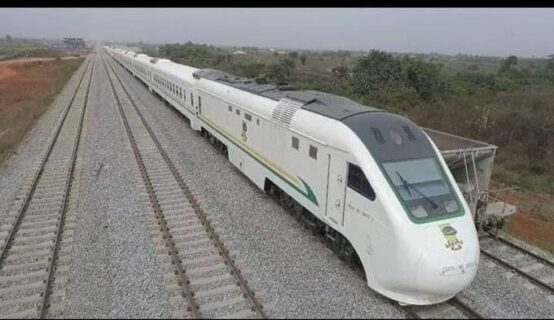
Many have been inquisitive as to how Nigeria aims to power its bullet train in its $60 billion high speed rail project. The proposed project has had critics pointing fingers on one of its major flaws, how to power the rail. A bullet train would require uninterrupted electricity. However, Nigeria barely generates 5GW, far short of the minimum requirement of 12GW. Additionally, it has decrepit distribution infrastructure that is frequently vandalized. The government has noted that to ensure the project’s smooth success, the proposed high-speed rail project will be directly linked to Nigeria’s gas sector. This is because the trains will require a significant and reliable gas supply for power.
The project will involve developing gas infrastructure to meet the energy needs of the new rail system without reliance on the national power grid. The gas development infrastructure, which forms part of the layout, is expected to cost over $4 billion. Ekperikpe Ekpo, Minister of State for Petroleum Resources assured the consortium of investors of adequate gas supply. “We have sufficient gas that needs to be used for the project, I can assure the investors,” he said. Despite skepticism, the bullet train infrastructure is edging closer to execution. He added that $55 billion of the funds earmarked for the first phase is available.
The train is expected to enhance activity on the Lagos, Abuja, Kano, and Port Harcourt corridor, Moreover, it will improve movement, increase property values and boost tourism. Nigeria has been steadfast in implementing various transport infrastructure projects such as the Port Harcourt-Maiduguri rail link project which is expected to be essential in improving mobility and access.
August 13, 2025: Nigeria’s high speed rail project is taking shape as construction of the $60 billion megaproject draws towards implementation. The Federal government will be working in collaboration with De-Sadal Nigeria Limited and China Liancai Petroleum Investment Holdings Limited. The scope of implementation entails the construction of a 4,000-kilometer high speed rail project in Nigeria. This was disclosed when the consortium presented proof of funds to the Secretary to the Government of Federations. Moreover, the Ministers of Transportation and State for Petroleum Resources.
Chief Executive Officer of De-Sadal Nigeria Limited, Samuel Uko, provided insight on how the construction would commence. He noted that the fiirst phase of the project would cover four major cities in Nigeria. These include Lagos, Abuja, Kano, and Port Harcourt. “Today, with our partners, I have just presented the official approval form for the project. The fund is coming from the Asian Development Investment Bank. And it is to cover the first phase of the project that cuts across four major cities in Nigeria,” he noted.
Also read:
The Scope of Implementation on Nigeria’s High Speed Rail Project
The Federal government has shown its zeal and commitment to ensuring that Nigeria’s high speed rail project becomes a reality. The rail line will stretch from Lagos to Abuja, to Kano, and from Abuja to Port Harcourt. The government, through ICRC, approved the outline of the business plan, drawing the project closer to commencement. The next step was for the consortium to submit the approval form to the government, which they did on Tuesday. Samuel Uko noted that he was confident in the project and that “in the shortest time possible, Nigerians will start enjoying a high-speed rail in Ngeria.”
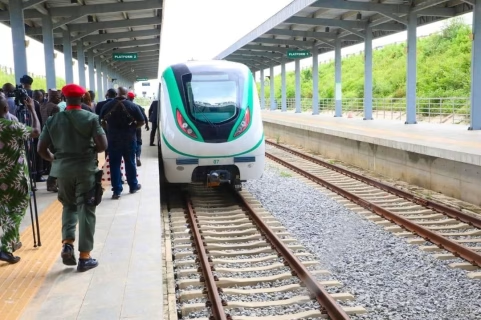
While speaking on the amount, he said a total of $60 billion had been approved for the project. “Today, $60 billion approval fund has just been submitted to the government through our financial and technical partners. The first phase of the project is $55 billion. So the fund is ready, and the country is ready to move forward with this project,” he added. On the timeline for the completion of the project when commenced, Uko provided valuable insight. The executive noted that the 1600 kilometers that covers the four major cities of the country will take 36 months to build. However, he noted that it may not take the whole 36 months. For instance, from Lagos to Lokoja, he noted that they will cut across about six states. However, when they get to the second, third state, the people from the first two states will start enjoying the speed train.
Also read:
$3 Billion Port Harcourt-Maiduguri Rail Link Project Recommences in Aba, Eastern Nigeria.
Construction of $350m Cross River Railway Project Commences in Nigeria
Project Fact Sheet
Project: Nigeria High Speed Rail Project
Type: High-speed railway network
Estimated investment: $60 billion
Proposed network length: Approximately 4,000 kilometers
First-phase investment: Approximately $55 billion
First-phase length: Approximately 1,600 kilometers
Initial cities: Lagos, Abuja, Kano, and Port Harcourt
Proposed construction period: Approximately 36 months for the first phase
Railway technology: High-speed rail
Energy component: Dedicated gas-linked infrastructure
Estimated gas infrastructure cost: More than $4 billion
Current status: Project development and financing arrangements
Construction status: Full construction commencement not confirmed
Proof of funds: $60 billion presented by project proponents
Route alignment: Detailed final alignment not publicly confirmed
Strategic objective: Improve intercity connectivity
Transport objective: Reduce dependence on road transportation
Economic objective: Improve movement between major commercial centers
Infrastructure requirements: Tracks, stations, bridges, signaling, power, telecommunications, and maintenance facilities
Project Team
Sponsor: Federal Government of Nigeria
Lead Ministry: Federal Ministry of Transportation
Government Stakeholder: Federal Government of Nigeria
Nigerian Development Partner: De-Sadel Nigeria Limited
International Development Partner: China Liancai Petroleum Investment Holdings Limited
Railway Stakeholder: Nigerian Railway Corporation
Infrastructure Procurement Stakeholder: Infrastructure Concession Regulatory Commission
Petroleum Sector Stakeholder: Federal Ministry of Petroleum Resources
Project Financing Partners: To be finalized
Main Engineering Contractor: Not announced
Main Construction Contractor: Not announced
Railway Systems Contractor: Not announced
Rolling Stock Supplier: Not announced
Signaling Contractor: Not announced
Power Infrastructure Contractor: Not announced
Operations and Maintenance Contractor: Not announced

Leave a Reply