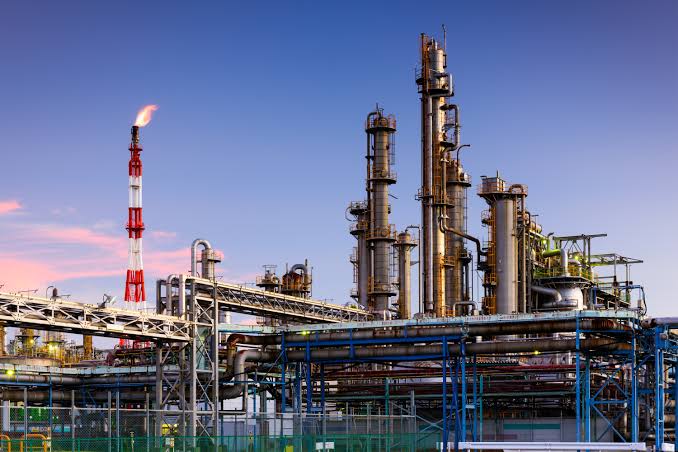
Nigerian billionaire Aliko Dangote has officially selected Kenya over Tanzania to host his conglomerate’s highly anticipated East African mega-refinery, a project valued at up to $17 billion. Dangote Industries Limited confirmed that it has commenced preliminary site works, including soil testing and engineering design, on Lamu Island along the southeastern Kenyan coast. Modeled as a replica of the company’s massive facility outside Lagos, the proposed coastal plant is designed with a massive processing capacity of 700,000 barrels of crude oil per day. Construction is slated to formally begin later this year and is projected to take three to five years to complete, positioning the facility to become East Africa’s largest and the continent’s second-largest refinery.
The strategic investment is a central pillar of Dangote’s broader $46 billion continental expansion program for 2026–2028, which aims to lift the group’s total refining capacity to 2.1 million barrels per day. Company leadership stated that Lamu was ultimately favored over alternative regional ports for technical, logistical, and maritime practicality reasons, offering an efficient gateway to supply refined petroleum products to Kenya, Uganda, Tanzania, and South Sudan. To fund this massive industrial undertaking, Dangote Group plans to utilize a combination of internally generated cash flows, corporate bonds, and proceeds from an upcoming initial public offering (IPO). Once operational, the refinery is expected to dramatically reduce East Africa’s heavy reliance on imported fuels, insulate the region from global energy shocks, and cement Kenya’s status as the commercial gateway and energy hub of the continent.
May 21, 2026
As East Africa intensifies its push to become a regional energy powerhouse, Kenya and Tanzania are emerging as fierce rivals in the race to attract investment linked to Africa’s largest oil refinery project. This refinery project is spearheaded by Nigerian billionaire Aliko Dangote.
The competition underscores the growing strategic importance of fuel infrastructure in the region. Both nations position themselves as the preferred gateway for petroleum trade, industrial growth, and energy security in Africa’s rapidly expanding economy.
Tanzania Takes On Kenya
Tanzania has intensified efforts to outmaneuver Kenya in the battle to host the proposed Dangote-linked refinery project. The country banks on its strategic Indian Ocean coastline, expanding port infrastructure, and investor-friendly energy policies. The refinery was initially announced for Kenya amid expectations that Nairobi would cement its status as East Africa’s petroleum hub due to its established logistics network and growing fuel demand. However, delays, policy uncertainties, and rising operational costs in Kenya opened the door for Tanzania to aggressively court investors by offering cheaper land, improved transport corridors, and closer integration with regional energy projects. Dar es Salaam is now positioning itself as a more stable and cost-effective destination for the multi-billion-dollar investment, setting the stage for a fierce regional contest over one of Africa’s most significant energy projects.
Kenya Defends Itself as the Best Location for the Refinery
Kenya, on the other hand, is fighting to retain its early advantage after the refinery project was first linked to Nairobi as part of plans to strengthen the country’s position as East Africa’s leading oil and logistics hub. The government has been leveraging Kenya’s relatively advanced financial sector, established pipeline network, and access to regional markets through the Port of Mombasa to convince investors that the country remains the most viable location for the refinery. Also, Nairobi is banking on its strategic role in supplying fuel to neighboring landlocked countries such as Uganda, Rwanda, and South Sudan, while pushing policy reforms aimed at improving the investment climate. As Tanzania ramps up its campaign with promises of lower operational costs and faster approvals, Kenya is countering with its stronger commercial ecosystem and existing energy infrastructure in a high-stakes battle for the multi-billion-dollar project.
Proposed Locations for the Refinery
1. Mombasa
Mombasa could host one of Africa’s biggest oil refining projects. This will become possible if proposals by Nigerian billionaire Aliko Dangote move forward.
According to a report released by the Financial Times citing an interview with him, the plan involves a potential $15 billion to $17 billion (Sh2.2 trillion) investment. It aims at constructing a 650,000-barrel-a-day refinery. The refinery will play a big role in reduce East Africa’s dependence on imported fuel.
In the interview, Dangote indicated that Kenya is emerging as a strong contender for the project, pointing to infrastructure advantages along the coast.
2. Lamu, Kenya
Additionally, the list of potential sites for billionaire Aliko Dangote’s planned East African refinery has expanded to include Lamu. Also, it is quite important to note that Lamu holds a notable designation as a UNESCO World Heritage site.
The town joins Mombasa as another location in Kenya under consideration for the refinery. This narrows the options to a 370-kilometre stretch along the Indian Ocean coastline.
Moreover, the addition comes amid growing competition in the region to host what could become East Africa’s largest oil refinery. The refinery will be a planned replication of Dangote’s 650,000-barrel-a-day facility in Lagos, Nigeria.
3. Tanga, Tanzania
Tanga was selected as the preferred location for the refinery due to its strategic position along the Indian Ocean, deep-water port potential, and proximity to regional oil and gas infrastructure projects. Tanzanian authorities also highlighted the city’s available land for industrial expansion, lower congestion compared to larger commercial hubs, and its role in the East African Crude Oil Pipeline corridor as key factors that strengthened its appeal to investors seeking an efficient and cost-effective energy hub
Why is Mombasa Seen as the Best Site of the Project
“I’m leaning more towards Mombasa because Mombasa has a much larger, deeper port,” Dangote said in the interview.
The development comes after President William Ruto last month said that East African countries were in discussions over plans for a joint oil refinery at the Tanzanian port of Tanga, with the proposal modelled on Dangote’s existing refinery operation in Nigeria.
Dangote Compares Two Possible Locations for the Proposed Refinery
However, Dangote compared the two possible locations, Mombasa and Tanga, while highlighting market size and demand differences.
“Kenyans consume more. It’s a bigger economy,” he said.
He added that the final decision would depend on political direction from Nairobi.
“The ball is in the hands of President Ruto. Whatever President Ruto says is what I’ll do,” he said.
Cost of the Dangote Mombasa Oil Refinery
The Financial Times report further indicated that Dangote estimated the refinery project would cost between $15 billion (Sh1.932 trillion) and $17 billion (Sh2.1896 trillion).
Current State of Affairs on East Africa’s Oil Sector
East Africa currently imports all of its refined petroleum products mainly from the Middle East. This leaves the region exposed to supply disruptions and price spikes. This is particularly during periods of geopolitical tension such as the U.S.-Israeli war on Iran.
Additionally, Dangote, speaking at an infrastructure summit in Nairobi last month, said he could replicate his 650,000-barrel-a-day Nigerian refinery in East Africa. This could be made possible provided governments in the region supported the initiative.
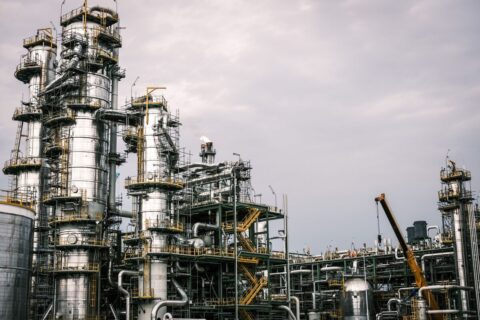
Also, countries like Uganda are gearing up efforts to establish an oil refinery. This project will boost oil production in the region and reduce dependence on oil imports.
Proposed Dangote Mombasa Oil Refinery Factsheet
Location: Mombasa, Kenya
Capacity: 650,000 barrels per day
Significance: the refinery will play a big role in reduce East Africa’s dependence on imported fuel.
Developer: Dangote Group
Cost: approximately $15 billion-$17 billion



Leave a Reply