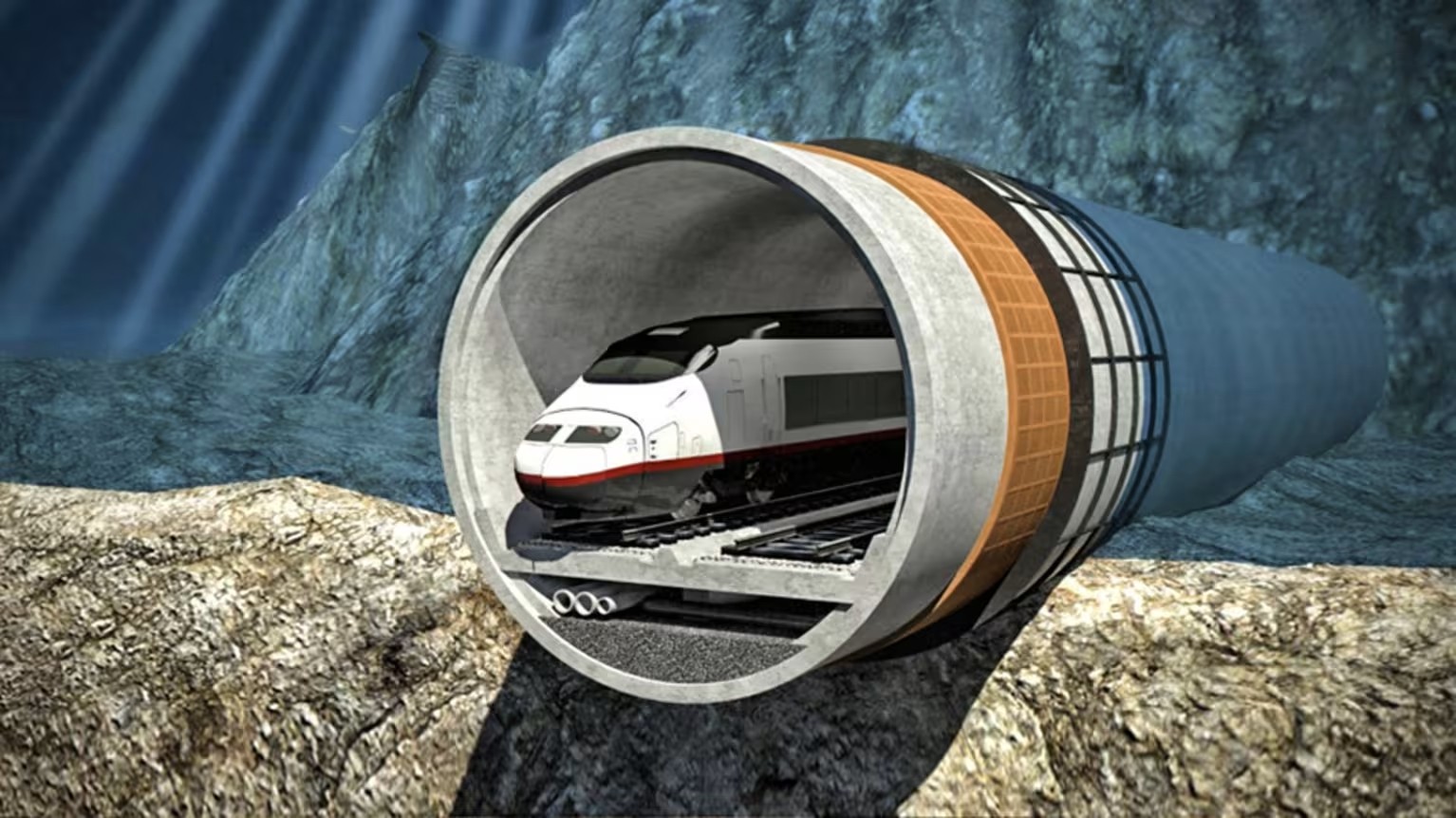
The $23bn Morocco-Spain rail tunnel expected to link two continents is advancing amid global chokepoint risks. The rising tensions in the Strait of Hormuz are prompting countries to reassess global trade routes. Moreover, it is imploring them to seek new pathways to reduce exposure to potential disruptions. Attention is increasingly turning to the Strait of Gibraltar as a strategic route capable of supporting additional trade and logistics flows. The Strait of Gibraltar remains the only natural link between the Atlantic Ocean and the Mediterranean Sea. Furthermore, it is among the busiest maritime routes globally, with about 300 vessels crossing daily. The planned tunnel would consist of two rail tubes carrying both passengers and freight, with a journey time of about 30 minutes. Cost estimates vary, with total project costs ranging between $18 billion and $23 billion. On the other hand, Spain’s share alone is estimated at more than $10.5 billion. Another major transport project taking shape and also expected to link two continents is the Moses bridge.
Morocco-Spain Rail Tunnel Details and Next Steps
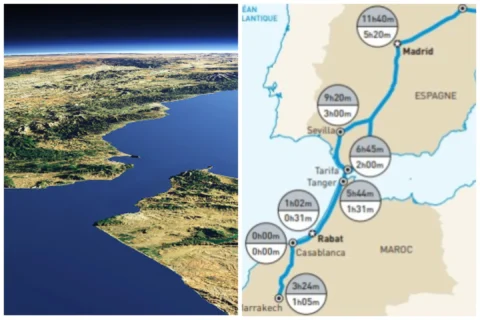
The proposed Morocco-Spain rail tunnel has been under consideration since a 1979 agreement signed in Fez. However, progress has been uneven over the past few decades. A Spanish government-commissioned study by German engineering firm Herrenknecht found the project technically feasible using current technology. Spanish consultancy Ineco is now preparing a detailed blueprint, with approval potentially as early as 2027. The project, overseen by Spain’s SECEGSA and Morocco’s SNED, is expected to span about 42 kilometers. Furthermore, it includes roughly 27 kilometers underwater, linking Punta Paloma in Cadiz to Cape Malabata near Tangier. It also aligns with broader efforts to strengthen trade under frameworks such as the African Continental Free Trade Area.
Anticipated Challenges
Despite its strategic appeal, the Morocco-Spain rail tunnel faces significant engineering challenges. Plans for a bridge were abandoned in 1996 due to extreme conditions in the Strait of Gibraltar, where depths reach up to 900 meters and maritime traffic is heavy. Current plans focus on a deep rail tunnel routed through the Camarinal Sill, with depths of about 475 metres below sea level. Engineers are expected to contend with unstable geological formations, including rock and clay layers, as well as seismic risks linked to the Azores–Gibraltar fault line. “These conditions require a structure that can withstand both high pressure and seismic movement over decades,” a project engineer familiar with the studies said. If completed, the tunnel would allow passenger and freight travel between Africa and Europe in about 30 minutes by rail.
Project Overview
- Project Name: Morocco–Spain Rail Tunnel
- Project Type: Subsea rail tunnel
- Estimated Cost: $18bn–$23bn
- Length: ~42 km (~27 km subsea)
- Purpose: Passenger and freight link
Key Stakeholders
- Spain Entity: SECEGSA
- Morocco Entity: SNED
- Design Consultant: Ineco
- Technical Study: Herrenknecht
Location
- Route: Punta Paloma (Cadiz) – Cape Malabata (Tangier)
- Crossing: Strait of Gibraltar
- Countries: Spain, Morocco
Scope
- Twin rail tunnels
- Passenger and freight services
- ~30-minute travel time
- Deep subsea alignment
Funding / Delivery Model
- Bilateral government-led project
- Shared Spain–Morocco investment
- Long-term infrastructure financing
Status
- Stage: Planning / design
- Progress: Feasibility confirmed
- Next: Blueprint and approvals (~2027)
Key Risks & Challenges
- Complex seabed geology
- Seismic activity risk
- Deepwater engineering (~475m)
- High construction cost
Strategic Significance
- First fixed Africa–Europe link
- Diversifies global trade routes
- Reduces chokepoint exposure
- Boosts intercontinental connectivity
Leave a Reply