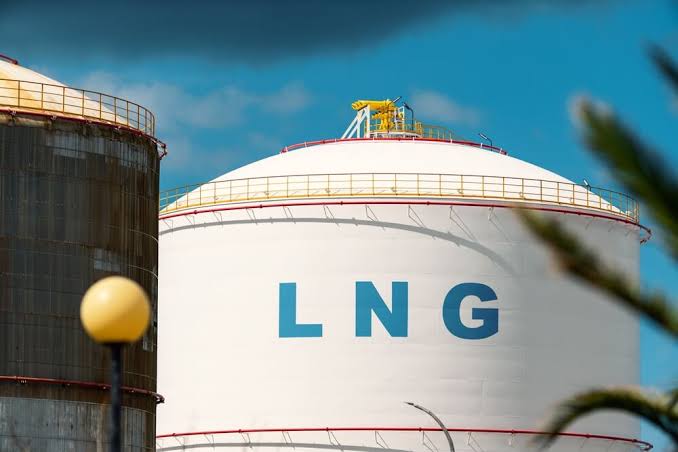
Río Negro LNG project financing has reached a major milestone as JPMorgan and Santander lead talks for up to $15 billion. The proposed financing could unlock construction of one of Argentina’s largest energy infrastructure developments. The integrated project aims to convert Vaca Muerta’s shale gas resources into LNG for international markets.
The financing package reportedly ranges between $14 billion and $15 billion. Meanwhile, the partners estimate the project’s total development cost at approximately $24 billion. They continue discussions with additional lenders, including export credit agencies, to complete the financing structure.
Río Negro LNG project advances toward construction
The project will integrate gas production, processing, transportation and offshore liquefaction infrastructure. Its development will draw gas from Argentina’s prolific Vaca Muerta shale formation.
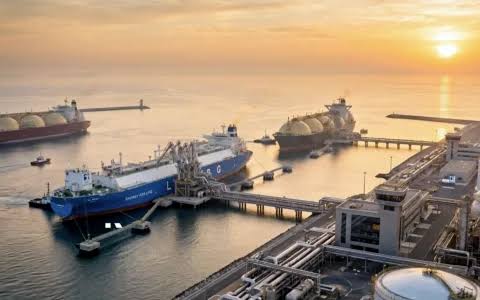
It will feature two floating LNG units with combined capacity of 12 million tonnes annually. Each floating liquefaction unit will provide 6 million tonnes of annual capacity.
Additionally, the wider infrastructure includes dedicated gas transportation systems and processing facilities. Reports also identify two cross-country pipelines and a natural gas liquids plant within the development scope.
The offshore facilities will operate off Río Negro province along Argentina’s Atlantic coast. Therefore, the development connects Vaca Muerta production directly with global LNG markets.
Argentina LNG could also expand beyond its initial 12 million tones annually. Project plans allow potential scaling to 18 million tones in the relevant development phase.
The financing push builds on earlier efforts to establish Argentina as a major LNG exporter. In 2024, YPF and Shell signed a $50 billion agreement to advance infrastructure for Argentina’s LNG ambitions. The agreement covered gas production, pipelines and LNG facilities, supporting the country’s plans to expand exports.
Río Negro LNG project builds financing momentum
JPMorgan and Santander now lead financing discussions for the proposed $14 billion-to-$15 billion debt package. However, the arrangement remains under negotiation and does not represent a completed financial close.
The sponsors continue engaging other lenders and export credit agencies. Consequently, the final financing structure could change before the partners reach financial close.
The financing push follows progress on the project’s development framework. YPF, Eni and XRG signed a binding Joint Development Agreement in February 2026.
Furthermore, Argentina LNG submitted its application for the country’s Large Investment Incentive Regime. The RIGI application supports the project’s development and strengthens its path toward investment approval.
The partners target a Final Investment Decision toward the end of 2026. Eni also expects a four-year development cycle between FID and production startup.
The project targets global energy markets
The development seeks to establish Argentina as a major LNG supplier while monetizing Vaca Muerta’s extensive gas resources. The integrated model combines upstream production with midstream transportation and liquefaction.
The Río Negro LNG project could therefore reshape Argentina’s energy export infrastructure. It would also strengthen the country’s access to international gas markets.
The scale of the financing requirement highlights the infrastructure demands behind Argentina’s LNG ambitions. A potential $15 billion financing package would cover a substantial portion of the estimated $24 billion project cost.
Meanwhile, the project’s 12-million-tonne annual capacity would create significant export infrastructure. The partners also continue evaluating LNG and natural gas liquids marketing opportunities.
Construction activity remains subject to financing completion, final approvals and the FID. Therefore, contractors and suppliers will await further clarity as the development advances.
The financing negotiations nevertheless signal growing international lender interest in Argentina’s energy infrastructure. They also demonstrate the increasing importance of Vaca Muerta to Argentina’s long-term export strategy.
The project reflects a broader expansion of LNG and gas infrastructure across Latin America. Similar investments are also advancing in Brazil, where the Barcarena Power Plant combines LNG infrastructure with large-scale thermal power generation. Together, the developments highlight growing investment in gas-based energy infrastructure across the region.
Project Fact Sheet
Name: Río Negro LNG.
Type: Integrated upstream, midstream and LNG export development.
Location: Offshore Río Negro province and the Vaca Muerta basin, Argentina.
Estimated total project cost: $24 billion.
Proposed financing package: $15 billion.
Initial LNG capacity: 12 million tones per annum.
Floating liquefaction units: Two FLNG units.
FLNG capacity: 6 million tones per annum each.
Gas source: Vaca Muerta shale gas resources.
Infrastructure scope: Gas production, processing, transportation and offshore LNG liquefaction.
Additional infrastructure: Two cross-country pipelines and natural gas liquids facilities.
Potential expansion: Up to 18 million tones annually for the current development phase.
Wider national LNG ambition: Up to 30 million tones annually through phased developments.
Regulatory framework: Argentina’s Large Investment Incentive Regime (RIGI).
RIGI status: Application submitted in August 2026.
Target FID: Toward the end of 2026.
Expected development period: Approximately four years from FID to production.
Export objective: Supply international LNG markets.
Development stage: Pre-FID, with financing and major engineering activities progressing.
Project Team
Sponsors:
Lead financing arrangers: JPMorgan Chase and Banco Santander.
Argentine energy partner: YPF.
International energy partner: Eni.
Abu Dhabi energy investor: XRG.
Upstream resource base: Vaca Muerta shale formation.
Financial partners: International lenders and export credit agencies under negotiation.
Regulatory framework: Argentine Government under the RIGI investment regime.

Leave a Reply