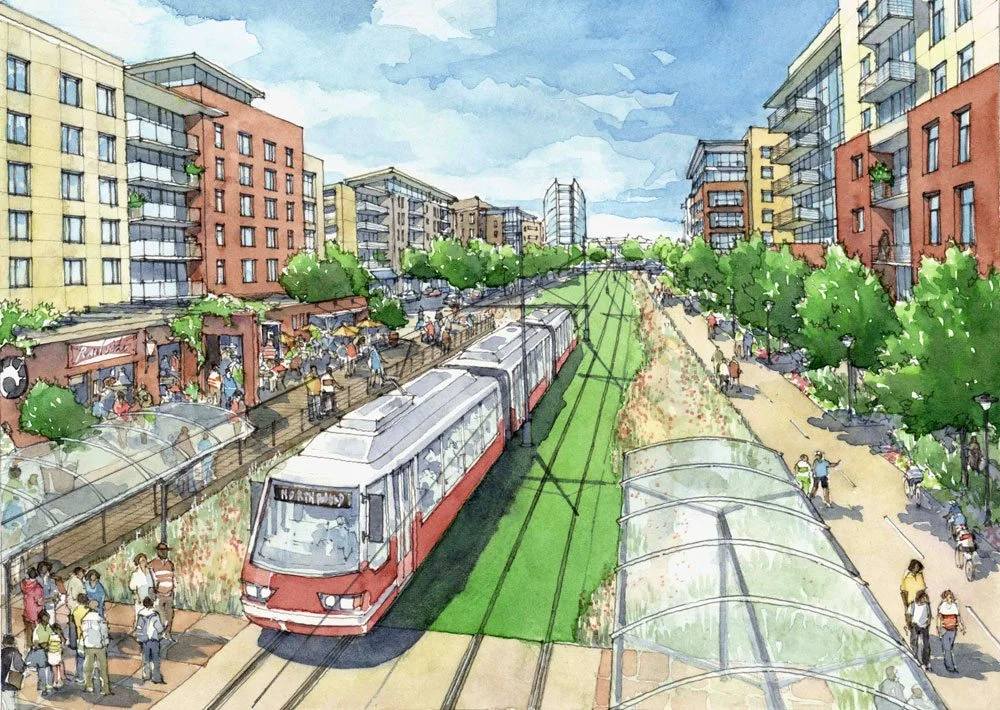
The Atlanta Beltline hosted a public meeting on 3 September to present final recommendations for a $3.5 billion light rail system around the 22-mile loop. The Beltline Transit Study, therefore, brings together years of planning efforts into a single, comprehensive light rail vision. The Atlanta Beltline light rail project is a Federal Transit Administration-funded project that concentrates on three service corridors that link the northwest, southwest and southeast quadrants. In the meantime, the study estimates 4.2 million riders per year on bi-directional service operating 18.5 hours per day.
The three-and-a-half-year study of the Atlanta Beltline light rail project was based on previous MARTA planning efforts in the northeast quadrant. In particular, the study team recommended the CSX alignment for the northwest quadrant service, which is along existing heavy rail corridors. Thus, this alignment will provide the fastest average speeds, shortest travel times, direct access to the hospital, and lowest capital costs, while maximizing projected ridership. Light rail projects such as the $8.2bn Austin light rail project are setting the pace for such projects. However, the project seems to sluggishly advancing as it faces financial hurdles.
Outlook on the Atlanta Beltline Light Rail Study
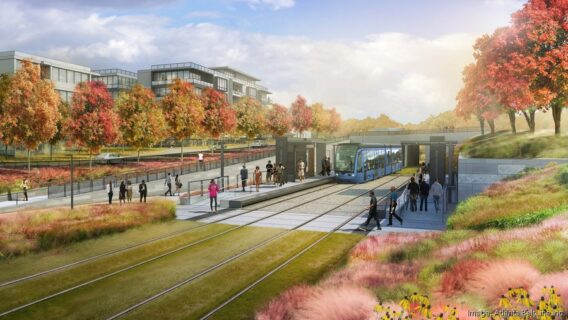
The Atlanta Beltline light rail study determined 13 final station sites throughout the development area. In particular, the stations are located in western areas, including Donald Lee Hollowell Parkway, Joseph E. Boone Boulevard, Martin Luther King Jr. Drive and Ralph David Abernathy Boulevard. In addition, the eastern stations feature Milton Avenue/Hank Aaron Drive, Hill Street, Boulevard and Glenwood Avenue for extensive regional connectivity. In addition, the Atlanta Beltline light rail includes stations at Metropolitan/Pittsburgh Yards and Pryor Road, which are industrial redevelopment sites. The recommended station configuration provides a balance of infill development opportunities, direct downtown connectivity, and transit dependent rider access.
Proposal for Three Service Routes with Downtown Connections
The Atlanta Beltline light rail study recommends three routes providing flexible service options. In particular, a full Beltline Loop runs the entire 22-mile route, and Northern and Southern Loops offer express service to Downtown Atlanta. Furthermore, all routes have bi-directional service from 6 a.m. to 12:30 a.m., which facilitates commuter and recreational trip patterns.
Conservative estimates based on FTA ridership models are 4.2 million riders per year. Furthermore, ridership assumptions include 40% transit-dependent riders, 55% of trips at infill stations, and 21% representing new transit trips generated by improved connectivity.
Project Overview
- Project Name: Atlanta Beltline Light Rail Transit System
- Project Value: $3.5 Billion
- Location: 22-mile Beltline loop, Atlanta, Georgia
- Funding Source: Federal Transit Administration
- Status: Final recommendations presented September 3, 2026
Scope
- Light rail transit along three quadrants (NW, SW, SE)
- 13 designated station locations
- Three service routes (Loop, Northern, Southern)
- 18.5-hour daily operations (6 a.m. to 12:30 a.m.)
- Bi-directional service configuration
- CSX heavy rail corridor alignment (northwest quadrant)
Project Highlights
- 4.2 million projected annual riders
- 40% transit-dependent ridership
- 55% of trips at infill development stations
- 21% new transit trips generated
- Direct connections to Piedmont Hospital
- Downtown Atlanta express service routes
Key Developments
- Three-and-a-half-year FTA-funded study completed
- Initial findings presented to public in 2024
- Community engagement and ridership modeling conducted
- Final recommendations presented September 3, 2026
- Public feedback accepted through November 3, 2026
Key Challenges
- Coordinating three service routes across 22-mile loop
- Managing construction impacts during implementation
- Integrating with existing MARTA northeast quadrant service
- Securing funding for phased implementation
- Balancing transit-dependent and discretionary ridership needs
Outlook
- Community feedback accepted through November 3, 2026
- Next phase implementation planning to follow
- Station location refinement based on public input
- Downtown connector service optimization
- Potential phased construction beginning post-feedback period



Leave a Reply