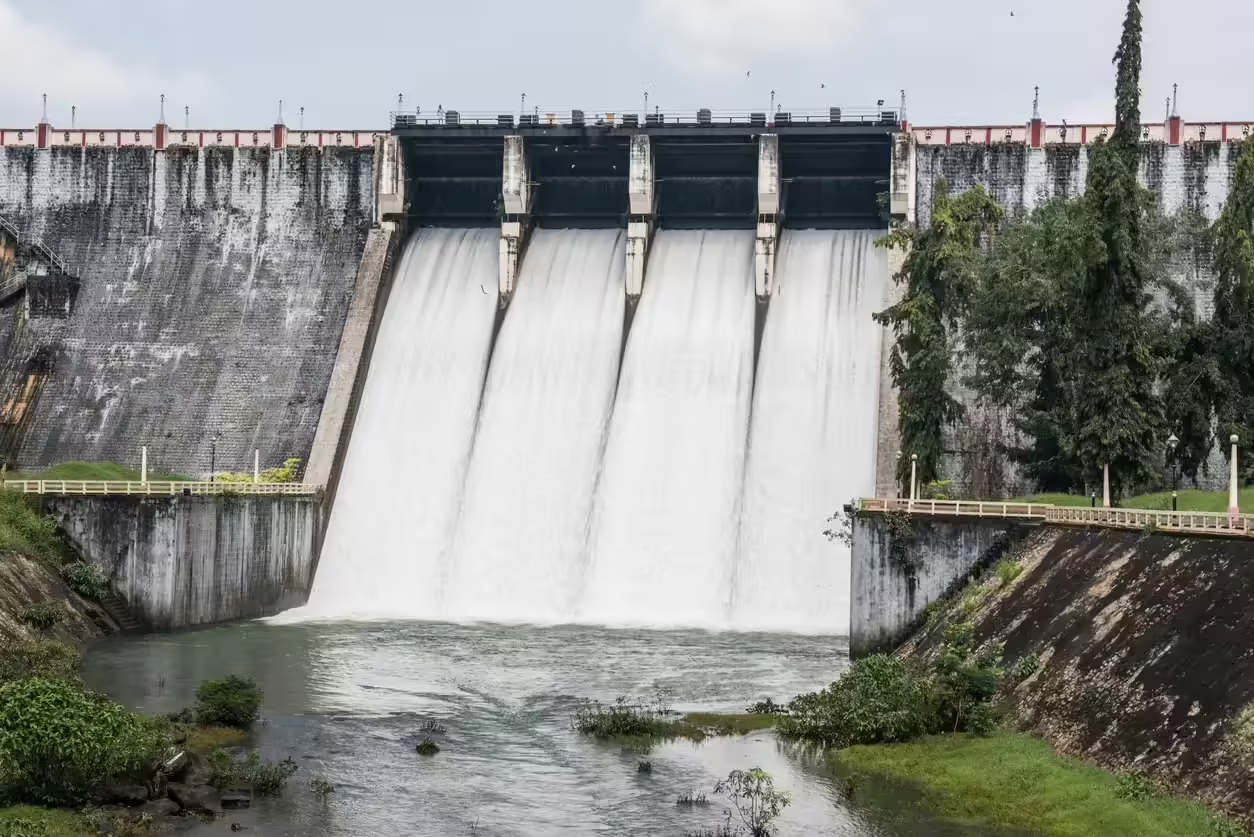
Subansiri Lower Hydro Project enters a decisive construction phase as its fourth generating unit begins commercial operations, strengthening India’s hydropower capacity and advancing long-term energy infrastructure goals. Located on the Subansiri River between Assam and Arunachal Pradesh, the project now moves closer to full completion. Moreover, this milestone confirms steady progress after years of construction delays and technical challenges.
The newly operational unit adds 250 MW to the grid. Consequently, total commissioned capacity now reaches 1,000 MW out of the planned 2,000 MW. Importantly, the development highlights renewed execution momentum across one of India’s largest hydroelectric construction projects. Furthermore, it signals improved coordination among contractors, engineers, and regulatory authorities.
Subansiri Lower Hydro Project construction progress accelerates
Construction activities at the Subansiri Lower Hydro Project have intensified in recent months. As a result, multiple generating units have moved toward commissioning in a phased manner. The fourth unit successfully completed trial operations before entering commercial service. Meanwhile, engineers ensured compliance with grid synchronization and safety standards.
This progress follows earlier commissioning of three units. Therefore, the project steadily transitions from construction to operational status. Notably, the dam structure and underground powerhouse represent key engineering achievements. In addition, extensive tunneling and river diversion works were completed under complex geological conditions. The project features a concrete gravity dam designed to regulate river flow effectively. Consequently, it supports both power generation and downstream water management.
Subansiri Lower Hydro Project strengthens regional energy infrastructure
With the fourth unit operational, the Subansiri Lower Hydro Project enhances electricity supply across northeastern India. As a result, grid stability improves significantly in the region. The project plays a strategic role in meeting rising energy demand. Furthermore, it supports industrial growth and urban expansion across multiple states.
Hydropower from the project provides a renewable energy source. Therefore, it contributes to reducing reliance on fossil fuels and lowering carbon emissions. Additionally, the project aligns with India’s broader clean energy transition strategy. In particular, it complements solar and wind energy through stable baseload generation. Transmission infrastructure linked to the project ensures efficient power evacuation. Meanwhile, upgrades to substations and transmission lines continue alongside construction works.
Final construction phase and remaining works
Despite significant progress, construction continues on the remaining units. Consequently, full project completion will occur in phases over the coming period. Engineers are currently finalizing electro-mechanical installations for additional generating units. At the same time, testing and commissioning procedures are underway.
The project faced earlier environmental and local community concerns. However, mitigation measures and revised construction strategies have addressed key issues. Ongoing monitoring ensures compliance with environmental regulations. Moreover, stakeholder engagement remains a priority as construction advances. Once fully completed, the project will deliver 2,000 MW of installed capacity. Therefore, it will rank among India’s largest hydroelectric developments.
The progress at the Subansiri Lower Hydro Project in India reflects broader regional hydropower development trends, particularly when viewed alongside the Punatsangchhu-I Hydroelectric Project Development in Bhutan, which similarly faces complex Himalayan geology, phased construction challenges, and cross-border energy cooperation dynamics.
Project Fact Sheet
Project Name: Subansiri Lower Hydro Project
Location: Assam–Arunachal Pradesh border, India
River: Subansiri River (tributary of Brahmaputra)
Project Cost: Approximately $3.9 billion (USD)
Installed Capacity: 2,000 MW
Unit Capacity: 8 units × 250 MW each
Commissioned Capacity (2026): 1,000 MW (4 units operational)
Project Type: Run-of-the-river hydroelectric project with storage
Dam Type: Concrete gravity dam
Powerhouse: Underground powerhouse complex
Construction Start: Early 2000s
Current Status (2026): Partial commissioning; ongoing construction of remaining units
Key Features:
- Large-scale tunneling and underground caverns
- Advanced hydro-mechanical systems
- Integrated flood moderation capability
- Purpose: Power generation, grid stabilization, renewable energy supply
Project Team
Project Developer: NHPC Limited (State-owned hydropower developer)
Engineering & Design:
- In-house NHPC engineering teams
- Specialized hydro design consultants
Main Civil Contractors:
- Large infrastructure EPC contractors (multiple packages)
- Tunnel and dam construction specialists
Electro-Mechanical Contractors:
- Turbine and generator manufacturers (global suppliers)
- Power systems integration firms
Transmission Partners: Power Grid Corporation of India Limited (PGCIL)
Regulatory Authorities:
Environmental Oversight: Ministry of Environment, Forest and Climate Change
Project Management:
- NHPC project management units
- Independent engineering consultants
Key Stakeholders:
- State governments of Assam and Arunachal Pradesh
- Local communities and regional authorities

Leave a Reply