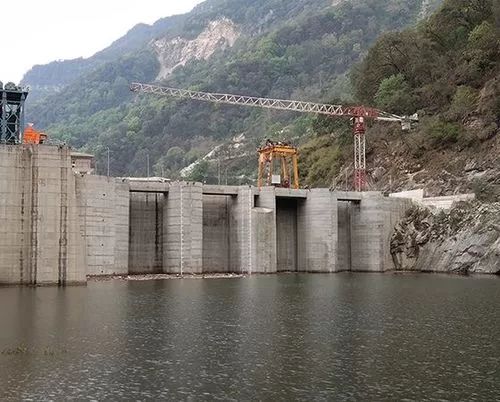
The Punatsangchhu-I Hydroelectric project construction in Bhutan is regaining momentum after a prolonged suspension, as civil works resume on one of the largest Indo-Bhutan energy infrastructure projects. The 1,200 MW facility, located on the Punatsangchhu River in Wangduephodrang, has now entered an advanced execution stage following years of geological redesign and slope stabilization works. Moreover, the project marks a critical step in restoring stalled Himalayan hydropower construction, with dam works restarting in 2026 after nearly seven years of inactivity. The development strengthens regional energy cooperation between India and Bhutan while advancing cross-border renewable energy supply objectives.
Punatsangchhu-I Hydroelectric Project construction resumes after stabilization works
The Punatsangchhu-I Hydroelectric Project construction restarted following extensive geological corrections, particularly on unstable slopes that previously halted progress. According to official updates, dam concreting and civil works resumed in early 2026, marking a key milestone in project revival.
Additionally, engineering teams completed major redesigns of dam structures and underground works before restarting execution. Consequently, construction sequencing has been restructured to prioritize stability and long-term safety. The project had previously achieved over 87% physical progress before suspension, indicating a near-completion stage before technical setbacks delayed works.
Meanwhile, bilateral technical teams from India and Bhutan have continued joint monitoring of construction activities. Furthermore, hydrological and geotechnical assessments have been integrated into ongoing execution strategies to reduce future risk exposure.
Punatsangchhu-I Hydroelectric Project construction advances with phased dam works
The Punatsangchhu-I Hydroelectric Project construction is now progressing through phased civil works, including dam foundations, headrace tunnels, and powerhouse stabilization. The project uses a run-of-the-river design with underground powerhouse infrastructure to minimize environmental impact and improve flow efficiency.
Moreover, turbine installation and electro-mechanical works are nearing completion in select sections. As a result, partial commissioning is expected once remaining civil works are finalized. The project is designed to generate approximately 5,670 million units annually, supporting both domestic Bhutanese demand and electricity exports to India.
However, construction challenges persist due to Himalayan terrain instability. Therefore, slope reinforcement and drainage management remain continuous priorities for engineering teams.
Regional energy impact and cross-border infrastructure alignment
The Punatsangchhu-I Hydroelectric Project construction plays a strategic role in India–Bhutan energy cooperation. It is being developed under a funding structure supported by Indian grants and concessional loans, reinforcing long-term bilateral energy integration.
Additionally, the project aligns with broader regional hydropower expansion, including India’s Subansiri Lower Hydro Project, which is also advancing phased commissioning of large-scale generating units. Together, these projects strengthen cross-border transmission capacity and renewable energy security.
Furthermore, the project supports Bhutan’s export-driven hydropower economy while enhancing India’s access to clean baseload electricity. Consequently, it contributes to regional decarbonization and grid stability objectives.
Challenges
One main reason has been geological problems which include a string of slows that recently occurred in the dam site. These occurrences, inclusive of the most recent one in 2013, have seen construction slow down, or even come to a stand-still, and the project design put under review. Concerns were raised over the structural stability of the right bank of the river where Kadisha Dam is anchored. Consequently, they implemented measures in the affected areas to prevent landslides before proceeding with any further work.
Read also World’s Largest Gigawatt-Scale Renewable Energy Project in India
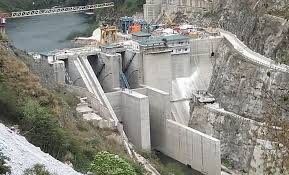
The project developers recently that they will construct a dam instead of a barrage despite it’s geological disadvantages. Construction of the dam considered an advantage in water storage and regulation of river flows. But this decision has also increased the time line of the completion, given a new time line of four years from the present one.
Construction of other major parts of this Punatsangchhu-I Hydroelectric Project still developed and several have already been completed. Additionally, the project team has constructed the headrace tunnel, which channels water to the power generation units, as well as the intake structure. Also, the project has made tremendous progress in addressing the infrastructure required for undertaking the project activity.
The overall completion cost of the project foreseen to go over and above Nu 100 billion. Originally envisaged at a lower cost. The government of Bhutan and the project’s primary partner, the government of India has remained vigilant and continues to counter these challenges to complete the project.
Read also Construction of the World’s First Floating City in the Indian Ocean Nears Completion
Significance
On completion, the Punatsangchhu-I project will have the installed capacity of 1,200 MW and will offer a big boost to the exports of power to India as well as the Bhutanese economy. The energy produced will not only cater for domestics demand of Bhutan but it will also eventually export excess electricity to India which will enhance energy relations between the two countries.
The development of the project is under observation since it is a step toward achieving the future plan of Bhutan, being a dominant hydro-power country in the region. When successful, the PHPA-I will become central to Bhutan’s development process, offering energy security in exchange for revenue through energy sales.
Despite the odds Bhutan has encountered throughout its unyielding commitment to the Punatsangchhu-I Hydroelectric Project, the country’s resolve remains strong. Punatsangchhu-I Hydroelectric Project Authority emphasize acquiring the remaining geophysical data and addressing the time required to complete the project.
Project Fact Sheet
Project Name: Punatsangchhu-I Hydroelectric Project
Location: Wangduephodrang District, Bhutan
River: Punatsangchhu River system
Installed Capacity: 1,200 MW (6 × 200 MW units)
Estimated Project Cost: $2.8 billion (approx.)
Project Type: Run-of-the-river hydropower project
Funding Model: 40% grant and 60% concessional loan (India-supported)
Annual Generation: 5,670 million kWh
Current Status (2026): Resumed construction; >87% physical completion achieved
Key Components:
- Concrete gravity dam
- Underground powerhouse
- Headrace tunnel system
- Surge shaft and tailrace tunnel
Execution Timeline: Originally initiated in 2009; revised completion ongoing post-2026 restart
Key Challenge: Geological instability and slope failure mitigation
Primary Objective: Cross-border clean energy generation and export to India
Project Team
Lead Developer: Punatsangchhu-I Hydroelectric Project Authority (PHPA-I)
Funding Partner: Government of India
Host Government: Royal Government of Bhutan
Civil Works Contractors:
- Larsen & Toubro (dam and hydro-mechanical works)
- Hindustan Construction Company (underground works packages)
- Gammon India Ltd (tunneling packages)
Engineering Consultants:
- WAPCOS Ltd (India)
- Central Water Commission (technical oversight)
Electro-Mechanical Suppliers:BHEL and other Indian turbine/generator manufacturers
Transmission Infrastructure:
- Bhutan Power Corporation (BPC)
- Power Grid Corporation of India Limited (consultancy support)
Regulatory Authorities:
- Central Electricity Authority (India)
- Ministry of Energy and Natural Resources (Bhutan)
Key Stakeholders:
- Druk Green Power Corporation
- State governments and local authorities in Bhutan
- Indian Ministry of Power

Leave a Reply