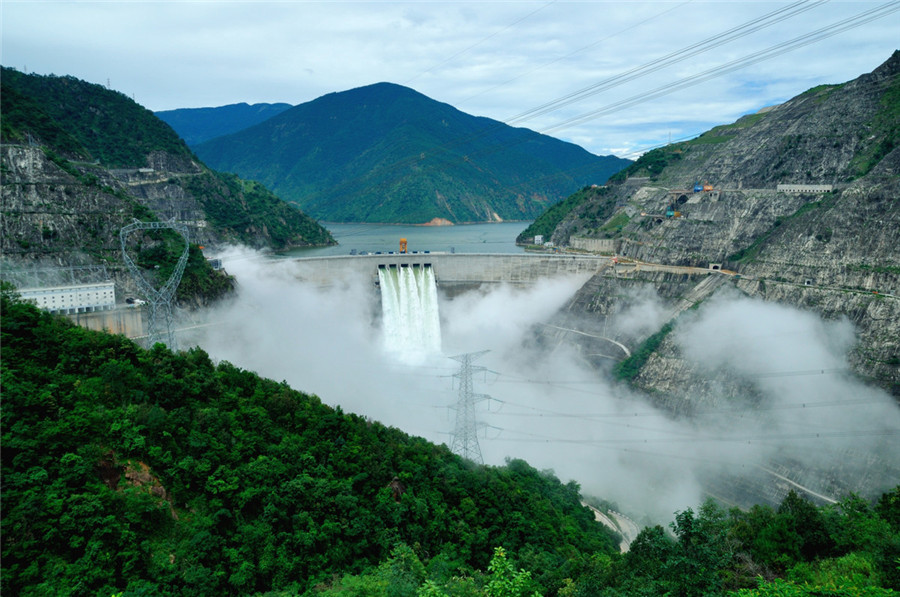
The 5.4 GW Xiaowan hydropower-solar complex has been commissioned by state-owned Huaneng in Yunan, southwest China. The plant combines 4.2 GW of hydropower and 1.23 GW of solar under a coordinated hydro-solar intelligence control system. It integrates electricity from 16 solar power plants through a single collection station. Afterwards, it transmits the combined output alongside hydropower generation from the Xiaowan Hydropower Station.
Moreover, it achieves this by incorporating 16 photovoltaic plants. The facility is operated by the company’s subsidiary Huaneng Lancang River Hydropower Co., Ltd. at the Xiaowan Hydropower Station. “By leveraging the reservoir’s large energy storage capacity and the hydropower plant’s millisecond-level response capability, the system enables coordinated hydro–solar operation and integrated storage and transmission,” the company said in a statement.
The project has come a long way from implementation with its success deemed a significance energy milestone. China is already ahead of the rest in renewable energy and the projects strengthens its grip. Other similar integrated projects in China include the Rudong project which is China’s largest solar-hydrogen hybrid project. The project is located in the tidal flat region of Rudong County, Jiangsu Province. Operations commenced on December 31, 2024.
Outlook on the Xiaowan Hydropower-Solar Complex in Southwest China
The Xiaowan hydropower-solar complex in Southwest China has reportedly overcome key technical challenges in coordinated stability control. Based on a fully domestically controlled system for the hydropower plant, it also achieved full localization of core equipment. These includes photovoltaic station monitoring systems, protection devices, and static synchronous compensators (STATCOMs) according to Huaneng.
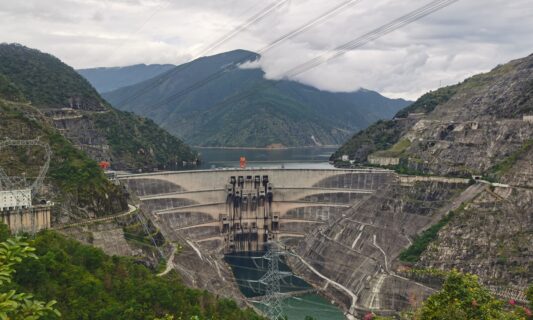
The Xiaowan Dam is a 292-meter-high double-curvature arch dam on the Lancang River in Yunnan. It was completed in 2010 and is one of the tallest of its kind in the world. Moreover, its installed capacity comes from six 700 MW Francis turbines. The dam plays a crucial role in the cascade system with a massive reservoir capacity of about 15 billion m3.
This enables a multi-year water storage, flood control, sediment retention, and also stable downstream flow management. It also functions as a giant natural battery that is essential for coordinating hydropower output with large-scale renewables generation in the whole Yunan province.
Project Overview
- Project Name: Xiaowan Hydropower–Solar Complex
- Project Type: Hybrid renewable energy (hydropower + solar)
- Capacity: ~5.4 GW (4.2 GW hydro + 1.23 GW solar)
- Purpose: Integrated renewable generation and grid stability
- Status: Commissioned
Key Stakeholders
- Developer / Operator: China Huaneng Group
- Operator (Subsidiary): Huaneng Lancang River Hydropower Co., Ltd.
- Country: China
Location
- Province: Yunnan
- River: Lancang River
- Site: Xiaowan Hydropower Station
Scope
- Integration of 16 solar PV plants
- Combined hydro and solar generation via single system
- Coordinated control and transmission infrastructure
Funding / Delivery Model
- State-owned enterprise development
- Domestic technology and equipment integration
- Centralized control and grid coordination system
Status
- Fully commissioned and operational
- Integrated hydro-solar system active
- Delivering combined power output
Key Risks & Challenges
- Complex hydro-solar coordination
- Stability and grid integration challenges
- High technical requirements for control systems
Strategic Significance
- Major milestone in hybrid renewable systems
- Enhances grid reliability and flexibility
- Strengthens China’s renewable energy capacity
Technical Features
- 292 m arch dam with ~15 billion m³ reservoir
- Six 700 MW turbines (hydropower)
- Millisecond response for load balancing
- Acts as large-scale natural energy storage system

Leave a Reply