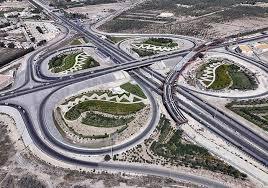
The Asir–Jazan road project worth $5 billion marks a transformative infrastructure development in Saudi Arabia’s southwest region, directly linking Abha in Asir Province with Jazan through a 130-kilometre highway corridor. The project enhances regional mobility while cutting travel time from three hours to about one and a half hours.
Additionally, it strengthens economic integration across densely populated southern provinces. Authorities position the scheme as a strategic transport investment supporting long-term development goals. Moreover, the project addresses geographic constraints through advanced engineering solutions. Chinese firms secured the contract under a consortium arrangement following a competitive prequalification process.
Asir–Jazan Road Project advances Saudi transport connectivity and engineering capacity
The Asir–Jazan Road Project delivers a major upgrade to Saudi Arabia’s transport infrastructure in mountainous terrain. It includes approximately 26 bridges and tunnels designed to overcome complex elevation changes. Consequently, engineers will deploy advanced construction methods to ensure safety and continuity. The route improves connectivity between key urban and rural centers across Asir and Jazan.
Furthermore, the project reduces congestion and improves freight efficiency along a critical economic corridor. Travel time reduction supports logistics operators and daily commuters alike. In addition, the highway enhances access to services and markets across both provinces. Authorities confirmed the project cost at around SAR19 billion, equivalent to $5 billion.
However, under a long-term build-operate-transfer model, lifecycle costs may reach SAR39 billion, or $10.4 billion. Therefore, private sector involvement ensures financing efficiency and operational sustainability. The Roads General Authority, National Centre for Privatization & PPP, and Asir Development Authority jointly oversee implementation.
Asir–Jazan Road Project strengthens regional development and PPP infrastructure strategy
The Asir–Jazan Road Project forms a central pillar of broader regional development planning in southern Saudi Arabia. It aligns with the “Greater Abha” initiative, which integrates Abha, Khamis Mushait, and Al-Majardah into a unified economic zone. Consequently, the highway supports nearly half of Asir’s population concentrated in these urban corridors.
Moreover, planners aim to extend connectivity beyond road infrastructure into multimodal transport systems. Plans include linking the Bisha region to the national railway network. This integration will reduce road congestion, especially during peak seasons. Additionally, it will improve logistics efficiency across multiple transport modes.
The project also reflects Saudi Arabia’s growing reliance on public-private partnerships for large infrastructure delivery. Five consortiums were prequalified in 2025 after a tender process launched in 2024. Ultimately, a Chinese-led consortium secured the contract, reflecting strong international competition.
This development aligns with wider regional infrastructure expansion efforts across the Gulf, including major mobility upgrades such as the SQU–Khoud Six dual carriageway project in Muscat, Oman, which reflects similar transport efficiency and urban connectivity objectives.
Asir–Jazan Road Project delivery framework and construction outlook
The Asir–Jazan Road Project follows a 30-year Design-Build-Finance-Operate-Maintain model. This structure transfers operational responsibility to the private sector while maintaining government oversight. Consequently, it ensures long-term asset performance and financial discipline.
Chinese construction firms operate as part of a consortium rather than a single contractor entity. Although individual companies were not publicly disclosed, the group brings extensive experience in large-scale highway and mountainous infrastructure projects. Therefore, authorities expect accelerated execution timelines and improved technical efficiency.
In addition, the project supports job creation and local supply chain participation. It also enhances knowledge transfer in advanced tunneling and bridge engineering. Construction activities will prioritize safety standards due to challenging terrain conditions.
Overall, the project represents one of Saudi Arabia’s most complex road infrastructure undertakings. It reinforces national goals of improving connectivity, reducing travel time, and supporting regional economic diversification.
Asir–Jazan Road Project: Chinese Consortium Confirmed
Following the tender outcome, a Chinese-led consortium has been confirmed as the preferred contractor group, with post-award reports (early May 2026) indicating involvement of firms such as China Harbour Engineering Company (CHEC) alongside references to other Chinese and regional construction entities and Saudi partners. However, the exact final consortium composition has not been fully disclosed publicly. The project is structured under a long-term Design-Build-Finance-Operate-Maintain (DBFOM) concession model valued at approximately $5 billion in construction scope and up to around $10.4 billion over the lifecycle.
Engineering planning is now the main focus, with teams expected to refine designs for one of the most technically challenging highway corridors in the Kingdom. The route includes extensive infrastructure works such as dozens of bridges and tunnels to traverse mountainous terrain, with earlier planning indicating around 57 bridges and 11 tunnels, along with multiple interchanges designed to improve regional connectivity. Once complete, the highway is expected to reduce travel time between Asir and Jazan from roughly three hours to about 1.5 hours, strengthening logistics links to Jazan Port and supporting broader regional development objectives aligned with Saudi Arabia’s Vision 2030 framework.
Despite strong momentum at the award stage, the project is still at a pre-construction phase where financial close, detailed design finalization, and contractor mobilization are typically required before physical works begin. This is consistent with PPP infrastructure delivery cycles in Saudi Arabia, where early stages often focus on risk allocation, engineering validation, and procurement sequencing before site activity starts.

Project Fact Sheet
Project Name: Asir–Jazan Road Project
Location: Abha (Asir Province) – Jazan Province, Saudi Arabia
Length: 130–136 kilometers
Estimated Cost: SAR19 billion ($5 billion)
Lifecycle Cost (BOT Model): SAR39 billion ($10.4 billion)
Contract Model: Design-Build-Finance-Operate-Maintain (DBFOM)
Duration: 30-year concession
Key Components:
- Approximately 26 bridges and tunnels
- Mountainous terrain highway engineering
- Reduced travel time from 3 hours to 1.5 hours
- High-capacity interprovincial transport corridor
Core Objectives:
- Improve southern regional connectivity
- Enhance logistics and freight efficiency
- Reduce congestion during peak travel periods
- Support economic diversification in Asir and Jazan
Current Status (2026):
- Contract awarded to Chinese-led consortium
- Prequalification completed in 2025
- Tender process initiated in 2024
- Early-stage mobilization underway
Project Team
Project Owner / Client: Ministry of Transport and Logistics Services, Saudi Arabia
Regulatory & Oversight Authorities:
- Roads General Authority (RGA)
- National Centre for Privatisation & PPP (NCP)
- Asir Development Authority (ASDA)
Delivery Model: Public-Private Partnership (PPP) under DBFOM structure
Contractor:
- Chinese-led construction consortium –China Harbour Engineering Company
- Saudi Partners
Technical Scope:
- Highway design and alignment engineering
- Bridge and tunnel construction across mountainous terrain
- Financing under PPP framework
- Operation and maintenance for 30 years
Stakeholders:
- Regional municipalities in Asir and Jazan
- Logistics and freight operators
- National infrastructure planning bodies
- Local workforce and subcontractors



Leave a Reply