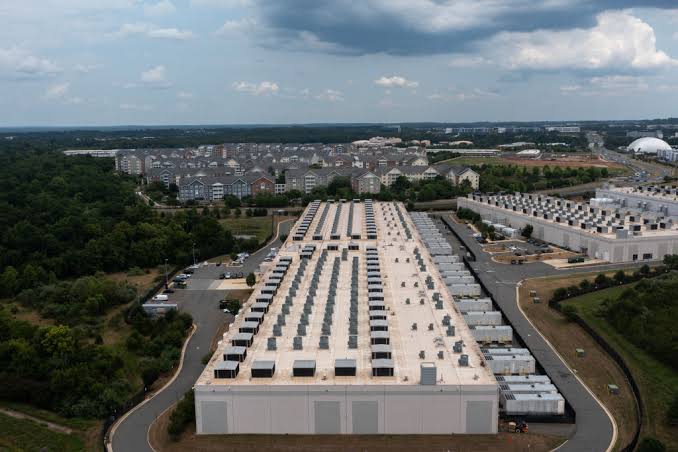
PJM data center plan now moves toward a major power construction programme worth up to $20 billion. The plan targets a 6,831MW reliability shortfall across the largest US electricity market. PJM Interconnection proposed the Reliability Backstop Procurement to secure additional generation capacity. The programme responds to accelerating demand from data centers and other large electricity users.
The development comes as federal regulators pause a separate proceeding on large-load connections. FERC placed the proceeding in abeyance until November 16, 2026. The pause gives PJM time to develop tariff changes through its stakeholder process.
PJM Data Center Plan Targets New Power Construction
The planned procurement addresses a 6.8GW capacity deficit from PJM’s 2028/2029 capacity auction. The auction cleared 138.3GW but fell short of its reliability requirement. Prices also reached the $325/MW-day auction price cap.
PJM therefore proposed a one-time Reliability Backstop Procurement for qualifying new power resources. The programme could procure contracts lasting up to 15 years. PJM set a maximum weighted-average payment of $555/MW-day.
The initial procurement target stands at 6,831MW. However, PJM will reduce that requirement when bilateral agreements secure qualifying capacity. New resources can also offset the amount requiring central procurement.
The construction programme could support new generation, plant upgrades and other eligible resources. Developers must demonstrate sufficient project readiness before participating. The framework also creates incentives for projects capable of delivering capacity within the required timeframe.
PJM plans to run the central procurement from September 30 through October 21. It expects to release procurement results in early December.
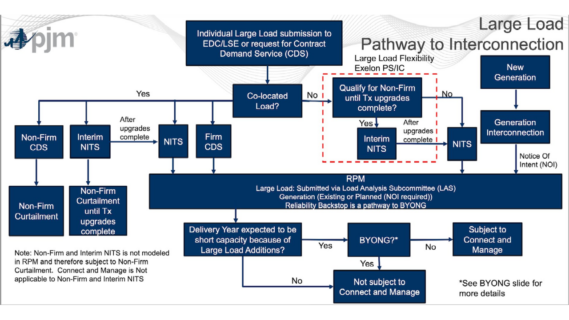
Meanwhile, PJM has developed a parallel bilateral matchmaking process. That process connects large electricity users with generation developers seeking long-term contracts.
PJM Data Center Plan Responds to Surging Demand
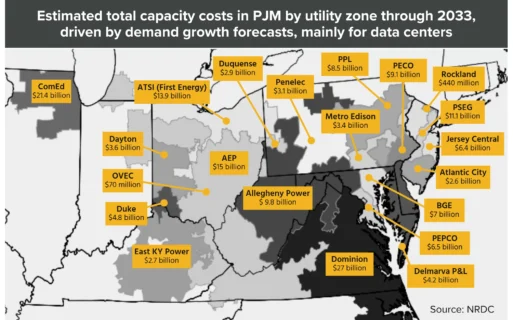
The programme reflects a widening gap between electricity demand and new generation construction. PJM expects large-load growth to reach about 70GW by 2038. Data centers represent a major driver behind that increase.
More than 50GW of generation projects reportedly have grid connection agreements. Another 220GW remains under evaluation within PJM’s interconnection queue.
However, developers face permitting, equipment, financing and construction challenges. Those constraints can delay generation projects even when electricity demand continues rising.
The backstop mechanism therefore provides another route toward securing new capacity. Long-term contracts can improve revenue certainty for qualifying generation projects.
PJM also proposed an Interim Resource Adequacy Service and Large Load Registry. The registry would help track major electricity users and their projected demand.
The proposed framework could also allow PJM to manage certain large loads during severe reliability conditions. Such measures would help protect the wider grid during capacity shortages.
Five-Month Regulatory Pause Shapes Grid Construction
FERC opened a show-cause proceeding in June over PJM’s rules for connecting large loads. The proceeding covers data centers, manufacturing facilities and other major electricity users.
PJM and its transmission owners initially faced an August compliance deadline. FERC later granted a 90-day abeyance period. The revised deadline now falls on November 16, 2026.
The pause allows PJM to continue stakeholder discussions before filing potential tariff revisions. PJM expects those discussions to inform changes addressing large-load interconnection.
At the same time, PJM has begun reviewing proposed large-load adjustments for its 2027 long-term forecast. The review uses new criteria to assess whether proposed projects will actually materialize.
That assessment could influence future infrastructure planning across the PJM footprint. It could also affect how utilities prepare transmission and generation projects for data-center demand.
The immediate construction challenge remains substantial. PJM must attract new generation while data centers continue seeking large amounts of electricity.
The Reliability Backstop Procurement provides one mechanism for closing that gap. Its success will depend on whether developers can convert procurement commitments into operating power projects.
The wider US data-center construction market faces similar power-supply challenges in Illinois. The proposed $20 billion PowerHouse Hillwood data center has already entered a regulatory dispute over its planned electricity supply. That case highlights why PJM’s new reliability measures could become important for major data-center developments seeking large-scale grid connections.
Project fact sheet
Project: PJM Reliability Backstop Procurement
Focus: New generation and capacity construction for growing large-load demand
Grid territory: PJM Interconnection footprint across 13 US states and Washington, D.C.
Target capacity: 6,831MW
Capacity shortfall: Approximately 6.8GW
Potential programme value: Up to approximately $20 billion
Maximum contract duration: 15 years
Maximum weighted-average payment: $555/MW-day
Procurement period: September 30 to October 21, 2026
Expected results: Early December 2026
Primary demand driver: Data centers and other large electricity users
Related demand forecast: Approximately 70GW of large-load growth by 2038
Procurement structure: Bilateral contracting and central procurement
Bilateral process: Matches large electricity users with generation developers
Regulatory authority: Federal Energy Regulatory Commission
Related FERC proceeding: Docket EL26-67-000
FERC pause: Proceeding held in abeyance until November 16, 2026
Construction objective: Bring additional reliable generation capacity onto the PJM system
Project team
Grid operator: PJM Interconnection, L.L.C.
Federal regulator: Federal Energy Regulatory Commission (FERC)
Generation developers: Eligible new power-resource developers
Large-load participants: Data centers, hyperscalers and other major electricity users
Load-serving entities: PJM-member electricity suppliers responsible for serving demand
Transmission owners: PJM transmission-owning utilities
Electric distribution companies: Utilities responsible for local electricity distribution
Bilateral contracting participants: Large loads and generation developers
Procurement administrator: PJM
Stakeholder participants: PJM members, state authorities and market participants
Engineering and construction contractors: No programme-wide EPC contractor has been appointed
Financing parties: Individual generation developers, utilities and contracted large-load customers




Leave a Reply