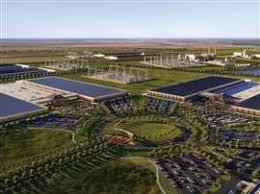
Project Matador stalls as the $60 billion Trump-branded AI data center megaproject in Texas loses executive leadership and momentum. The hyperscale campus, planned in the Texas Panhandle near Amarillo, targets up to 17 gigawatts of integrated AI computing and power generation. Developed by Fermi America, the project combines large-scale data center infrastructure with on-site energy production.
However, execution has slowed significantly after CEO Toby Neugebauer abruptly resigned in April 17 2026. Moreover, the project continues without a confirmed anchor hyperscaler tenant, increasing financial uncertainty. Investors have reacted sharply as funding visibility weakened and timelines slipped. Consequently, early construction activity remains limited across the proposed campus footprint.
CEO exit disrupts leadership structure at Project Matador
Project Matador stalls after the departure of CEO Toby Neugebauer triggered leadership instability across the development program. He stepped down suddenly in April 17 2026, leaving an interim management structure in place. As a result, coordination between engineering teams, financiers, and contractors weakened. Additionally, market confidence dropped, with Fermi America’s valuation reportedly declining sharply following the announcement.
Furthermore, the project had already been under pressure due to execution complexity. The campus design requires synchronized delivery of energy systems, cooling infrastructure, and hyperscale computing halls. However, leadership transition delayed decision-making on procurement and construction sequencing. Meanwhile, engineering partners paused several long-lead equipment orders. Consequently, momentum across the Texas-based site slowed further.
Importantly, Project Matador was positioned as one of the largest AI infrastructure proposals globally. It spans a planned area roughly half the size of Manhattan. Therefore, leadership continuity remains critical to maintaining coordination across its multi-billion-dollar development scope.
Project Matador stalls amid anchor tenant gap and funding uncertainty
Project Matador stalls further due to the absence of a confirmed anchor hyperscaler tenant. Major cloud providers have not committed publicly to leasing capacity at the site. Therefore, financiers face difficulty validating long-term revenue assumptions. In addition, earlier reports indicate that potential tenant negotiations slowed or fell through during 2025 and early 2026.
Moreover, the project’s estimated cost ranges between $60 billion and $90 billion depending on final build-out scale. However, no full financing package has been secured for the entire 17-gigawatt vision. Consequently, lenders have increased scrutiny over phased funding releases and milestone delivery.
Additionally, the project relies heavily on a hybrid energy model combining natural gas, nuclear, and solar generation. This structure adds complexity to capital planning and regulatory approval. Meanwhile, investors continue reassessing risk exposure following leadership changes and stock volatility. As a result, construction timelines remain uncertain and highly dependent on tenant commitments.
Project Matador stalls as engineering and cooling challenges slow construction
Project Matador stalls also due to major engineering and infrastructure challenges. High-density AI workloads require advanced cooling systems capable of handling extreme heat loads. However, cooling design depends heavily on final tenant specifications, which remain unavailable. Therefore, engineering teams cannot finalize full-scale deployment architecture.
Additionally, the energy integration plan requires coordination between multiple power sources and grid systems. The project aims to deliver up to 17 gigawatts of capacity across phased development. Nevertheless, synchronizing nuclear, gas, and renewable inputs introduces regulatory and technical delays. Consequently, construction sequencing has shifted toward a phased strategy rather than full simultaneous build-out.
Meanwhile, developers continue evaluating revised project timelines. Some early site preparation work continues, although at a reduced pace. Despite setbacks, long-term demand for AI computing infrastructure remains strong across global markets. Therefore, stakeholders still consider potential restructuring or recapitalization options.
However, while Project Matador struggles with leadership gaps and tenant uncertainty, other AI infrastructure developments continue advancing across the United States. For instance, Meta’s $800 million hyperscale facility in Kansas City reached operational phase, forming part of a broader expansion of cloud and data center capacity.
Project Fact Sheet
Project Name: Project Matador (Trump-branded AI Data Center Megaproject / President Donald J. Trump Advanced Energy and Intelligence Campus)
Location: Texas Panhandle, near Amarillo, United States
Project Value: Approx. $60–90 billion (phased development estimate; not fully finalized)
Project Type: Hyperscale AI data center and integrated energy generation campus
Capacity: Up to 17 gigawatts (GW) of combined AI computing and power generation
Contract Structure:
- Private hyperscale infrastructure development model
- Tenant-driven leasing structure (anchor tenant not secured)
- Phased construction and financing framework
Scope of Works:
- Development of hyperscale AI data center campuses
- Construction of high-density computing facilities for GPU workloads
- Build-out of gas, nuclear, and solar power generation systems
- Installation of advanced liquid and air cooling systems
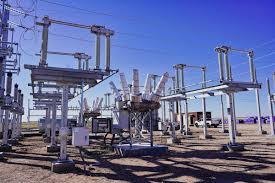
- Development of on-site electrical substations and grid infrastructure
- Fiber-optic networking and AI compute interconnection systems
Status (2026):
- Project stalled following CEO departure
- No confirmed anchor hyperscaler tenant
- Financing structure under reassessment
- Limited ongoing early-stage site activity
Key Features:
- One of the largest proposed AI infrastructure campuses globally
- Hybrid energy integration across multiple generation types
- Designed for hyperscale AI and high-performance computing workloads
- High dependency on tenant commitments for design finalization
- Significant engineering complexity in cooling and power density
Project Team
Project Company / Developer: Fermi America
Co-Founders / Promoters:
- Rick Perry (former Texas Governor and former U.S. Energy Secretary)
- Fermi America founding consortium
Executive Leadership:
- Toby Neugebauer (former CEO, resigned April 2026)
- Interim leadership team (post-resignation management structure)
Engineering & Construction Partners:
- EPC contractors for civil, mechanical, and electrical infrastructure works
- Data center design consultants specializing in hyperscale AI facilities
Technology Partners:
- AI hardware vendors (GPU, server, and compute infrastructure suppliers)
- Cloud ecosystem partners (pending anchor tenant agreements)
Energy & Power Advisors:
- Natural gas generation developers
- Nuclear energy consultants and planners
- Renewable energy integration specialists
Financial Institutions:
- IPO investors (post-2025 public listing)
- Private equity infrastructure funds
- Debt financing institutions reassessing exposure due to project delays
Operations Strategy (Planned):
- Integrated data center and energy campus operations model
- Yet to finalize long-term operations and maintenance contractor structure

Leave a Reply