
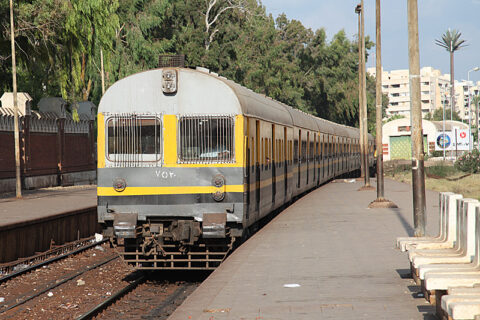
Cairo-Alexandria rail projects are advancing Egypt’s largest freight and passenger corridor modernization program as contractors secure three major signaling and infrastructure contracts worth about $666.7 million. The awards form part of the Cairo–Alexandria Trade Logistics Development Project (CATLDP), which Egyptian National Railways manages with World Bank support. The program targets the modernization of the roughly 370-kilometer corridor linking Cairo with Alexandria, Egypt’s largest seaport and commercial center. Consequently, authorities aim to improve railway safety, freight efficiency, passenger mobility, and trade logistics while reducing congestion on parallel highways.
The three packages cover the design, supply, installation, testing, and commissioning of advanced railway signaling systems across separate sections of the corridor. In addition, contractors will upgrade track-related systems, telecommunications infrastructure, power supply networks, and centralized train control systems. Egyptian National Railways completed technical and financial evaluations before the World Bank issued its “No Objection” approval in December 2025. Contract signing and implementation activities are expected to proceed in phases during 2026.
The Cairo-Alexandria corridor remains one of Egypt’s busiest rail and logistics routes. Therefore, officials consider the modernization program essential for increasing freight capacity and improving operational reliability. The project also supports Egypt’s wider economic strategy by strengthening transport links between industrial zones, inland logistics hubs, and Mediterranean ports.
Cairo-Alexandria Rail Projects Modernization Signals Infrastructure Development
The three Cairo-Alexandria rail projects focus heavily on replacing outdated mechanical signaling systems with computerized railway technologies. As a result, the upgraded corridor should support higher train frequencies, improved safety standards, and more efficient traffic management. The modernization program could also include advanced train-control systems comparable to the European Train Control System (ETCS).
The projects were structured for concurrent implementation across different railway sections. Consequently, Egyptian National Railways expects faster delivery timelines and reduced operational disruptions during construction. Contractors will coordinate closely with civil works teams and transport authorities because the line remains operational throughout the upgrade program.
The signaling works follow earlier milestones under the CATLDP initiative. In late 2025, a French-Egyptian consortium led by Alstom secured a €540 million contract, valued at more than $580 million, for freight railway modernization works. Partners included Rowad Modern Engineering and Concrete Plus. That package covered signaling systems, communications infrastructure, centralized controls, and a freight railway line connecting the 6th of October dry port with Beni Salama in Qalyubia governorate.
Authorities expect the combined investments to improve traffic flow and reduce dependence on road freight transportation. Moreover, the upgraded rail systems should lower logistics costs and improve trade competitiveness for Egyptian industries.
Cairo-Alexandria Rail Projects Support Egypt’s Wider Rail Construction Strategy
The Cairo-Alexandria rail projects align with Egypt’s broader railway expansion and urban mobility strategy. The government continues investing heavily in metro systems, tram rehabilitation projects, and high-speed rail infrastructure nationwide. Therefore, the corridor modernization project complements several ongoing transport developments across the country.
Egypt recently advanced construction on the Siemens Mobility-led high-speed rail network linking Ain Sokhna, Cairo, Alexandria, and Marsa Matrouh. In parallel, Alexandria continues developing the Abu Qir metro project, while tram modernization works are progressing on the Raml line. Together, these projects demonstrate Egypt’s push toward integrated rail-based transportation systems.
However, project execution still faces operational and engineering challenges. Contractors must coordinate carefully with the General Authority for Roads and Bridges and other agencies handling associated civil works. Site readiness, utility relocations, and maintaining rail operations during construction could also affect implementation schedules. Nevertheless, Egyptian transport authorities continue prioritizing rail modernization as part of the country’s long-term infrastructure development strategy.
The Cairo-Alexandria modernization program should significantly improve passenger and freight movement once completed. Additionally, officials expect the project to enhance railway safety, strengthen logistics performance, and support sustainable transport objectives across northern Egypt.
The Cairo-Alexandria rail packages under Egypt’s CATLDP align with broader regional rail modernization efforts, including Morocco’s $10 billion Kenitra–Marrakech high-speed rail project, which is set to become Africa’s longest high-speed rail line. Both initiatives highlight North Africa’s accelerating shift toward advanced rail infrastructure to strengthen trade, passenger mobility, and economic integration across major urban and port corridors.
Project Fact Sheet
Project name: Cairo–Alexandria Trade Logistics Development Project (CATLDP)
Location: Cairo–Alexandria railway corridor, Egypt
Corridor length: Approximately 370 kilometers
Total value of three signaling packages: Approximately $666.7 million
Previous related contract value: €540 million (more than $580 million)
Project client: Egyptian National Railways (ENR)
Funding support: World Bank
Main scope:
- Railway signaling modernization
- Telecommunications upgrades
- Track-related infrastructure improvements
- Power supply systems
- Centralized railway control systems
- Testing and commissioning works
Main objective:
- Improve freight logistics
- Increase railway capacity
- Enhance passenger mobility
- Improve safety and operational reliability
- Reduce road congestion
Implementation approach: Concurrent execution across multiple railway sections
Approval milestone: World Bank “No Objection” issued in December 2025
Expected implementation period: Beginning from 2026 onward
Strategic importance:
- Connects Egypt’s capital with its largest port city
- Supports industrial and logistics development
- Enhances regional trade connectivity
Project Team
Project owner: Egyptian National Railways (ENR)
Funding institution: World Bank
Lead modernization contractor: Alstom
Engineering partner: Rowad Modern Engineering
Infrastructure partner: Concrete Plus
Previous signaling contractor on corridor sections: Thales
High-speed rail partner: Siemens Mobility
Associated civil works authority: General Authority for Roads and Bridges
Logistics infrastructure stakeholders:
- 6th of October Dry Port
- Qalyubia freight corridor authorities
Supporting transport agencies:
- Egyptian Ministry of Transport
- National transport and rail modernization authorities

Leave a Reply