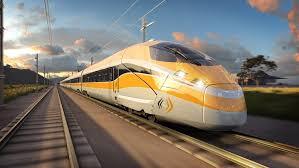
Sydney-Newcastle High Speed Rail project stands at the center of Australia’s most ambitious transport construction push, yet major engineering, cost, and demand challenges continue to threaten its viability. The proposed $90 billion rail corridor aims to reduce travel time between Sydney and Newcastle to one hour; however, experts warn the project could struggle to proceed due to terrain complexity, funding uncertainty, and long-standing feasibility concerns.
Sydney-Newcastle High Speed Rail project faces complex terrain and engineering barriers
The Sydney-Newcastle High Speed Rail project must navigate one of Australia’s most difficult rail corridors, significantly increasing construction complexity. Existing rail infrastructure between the two cities dates back to the 19th century, with steep gradients and tight curves limiting operational speeds.
Therefore, project planners must develop a new dedicated high-speed alignment capable of supporting speeds above 300km/h. However, the corridor’s topography requires extensive tunneling, with at least 70km of tunnels expected along the route. Consequently, the project could become the most tunnel-intensive high-speed rail development globally.
Moreover, large-scale tunneling introduces geotechnical risks, construction delays, and significant cost escalation pressures. Although tunnel boring technology has advanced, experts emphasize that this scale of underground construction represents a substantial engineering challenge. Additionally, integrating new infrastructure into dense urban environments will further complicate design and execution.
Sydney-Newcastle High Speed Rail project cost and funding pressures intensify
The Sydney-Newcastle High Speed Rail project carries an estimated cost of up to $90 billion, reflecting its engineering scope and long construction timeline. Earlier high-speed rail proposals in Australia failed primarily due to cost concerns and limited economic viability. Now, updated estimates place the project among the most expensive rail developments globally on a per-kilometer basis.
Meanwhile, construction is expected to take more than a decade, increasing exposure to inflation and supply chain volatility. Although the federal government has committed early-stage funding, full financing arrangements remain unresolved. Therefore, authorities are exploring private sector participation, including public-private partnership delivery models. However, investor confidence will depend on clear demand forecasts and long-term revenue certainty. Additionally, Australia’s limited pool of major rail contractors could constrain procurement and delivery capacity.
Sydney-Newcastle High Speed Rail project demand outlook raises delivery risks
The Sydney-Newcastle High Speed Rail project also faces uncertainty regarding long-term passenger demand and economic return. While the project promises to reduce travel time from two-and-a-half hours to one hour, current ridership levels remain relatively modest. Therefore, experts question whether demand will justify the scale of investment without significant population growth. However, project advocates argue that improved connectivity will stimulate regional development, housing supply, and employment growth.
Additionally, the broader high-speed rail vision includes future extensions to Canberra and Melbourne, enhancing national mobility. Yet, these long-term expansions are unlikely to be completed before 2060, delaying full network benefits. Meanwhile, evolving travel patterns, including remote work trends, may further impact projected ridership. As a result, the Australian government is expected to make a final investment decision within the next two years.
The Sydney-Newcastle High Speed Rail project represents a transformative construction initiative; however, unresolved engineering, funding, and demand challenges continue to test whether the project can move from planning to execution. Meanwhile, project aligns with broader rail expansion across Australia, including the Sydney Metro City project, a major urban rail development that advanced large-scale tunneling and new station construction within Sydney’s transport network.
Sydney-Newcastle High-Speed Rail Advances into Active Development Phase
The High Speed Rail Authority has moved the Sydney–Newcastle high-speed rail project into an active development phase, issuing major tenders for tunnel construction and rail systems shortly after May 4, signaling a shift from planning to early delivery work.
Contractors are now engaged in refining designs and directly addressing complex tunneling conditions through early contractor involvement, aimed at reducing downstream construction risks. International engagement has also intensified, with more than 700 stakeholders attending a Newcastle briefing to explore participation opportunities, underscoring strong global industry interest.
Officials continue targeting a roughly one-hour journey between Sydney and Newcastle while managing significant cost pressures estimated around the $90 billion range, alongside efforts to de-risk challenging geology and infrastructure requirements. Despite this momentum, public feedback remains mixed, with ongoing skepticism about final delivery timelines and potential cost overruns, even as the project’s long-term goal of improved regional connectivity remains widely acknowledge
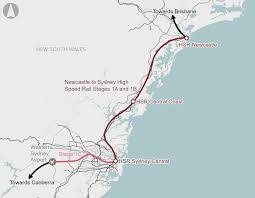
Project Fact Sheet: Sydney-Newcastle High Speed Rail Project
Project Name: Sydney-Newcastle High Speed Rail Project
Estimated Cost: $90 Billion
Project Type: High-speed rail infrastructure construction
Route Length: Approximately 191 km
Key Locations: Sydney, Central Coast, Newcastle, Western Sydney Airport (planned integration)
Design Speed: 300–320 km/h
Current Travel Time: ~2.5 hours
Target Travel Time: ~1 hour
Tunneling Scope: Minimum 70 km
Construction Duration: 10+ years
Development Phase: Planning, feasibility, and design tender stage
Estimated Completion: Initial corridor post-2035; full network by ~2060
Strategic Objective: Regional economic growth, congestion reduction, sustainable transport
Key Risks: Engineering complexity, cost escalation, funding gaps, demand uncertainty
Project Team: Sydney-Newcastle High Speed Rail Project
Project Owner / Sponsor: Government of Australia (Federal Government)
Lead Implementing Authority: High Speed Rail Authority (HSRA)
- Responsible for corridor planning, procurement strategy, and project delivery oversight
Key Public Stakeholders:
- Australian Department of Infrastructure, Transport, Regional Development
- New South Wales State Government
Financiers (Planned / Potential):
- Australian Federal Government (primary early-stage funding)
- Institutional investors (including superannuation funds)
- Multilateral and infrastructure investment funds (potential participation)
- Private sector partners under Public-Private Partnership (PPP) models
Design and Engineering (Procurement Stage):
- International and domestic engineering consultancies (EOIs received from organizations in 17 countries)
- Specialist rail system designers and alignment engineers
Main Contractors (Anticipated – Tier 1):
- Major international EPC and civil construction firms (to be appointed)
- Large-scale tunneling contractors with TBM expertise
- Rail infrastructure construction consortia
Specialist Sub-Contractors (Expected):
- Geotechnical and tunneling specialists
- Rail systems and signaling providers
- Electrification and overhead line contractors
- Rolling stock manufacturers and suppliers
- Environmental and planning consultants
Advisory and Technical Support:
- Academic institutions including University of Sydney (civil engineering expertise)
- Transport economists and infrastructure advisors
- International high-speed rail operators and consultants
Procurement Model:
- Hybrid delivery approach under evaluation
- Potential PPP structure for financing, construction, and operations



Leave a Reply