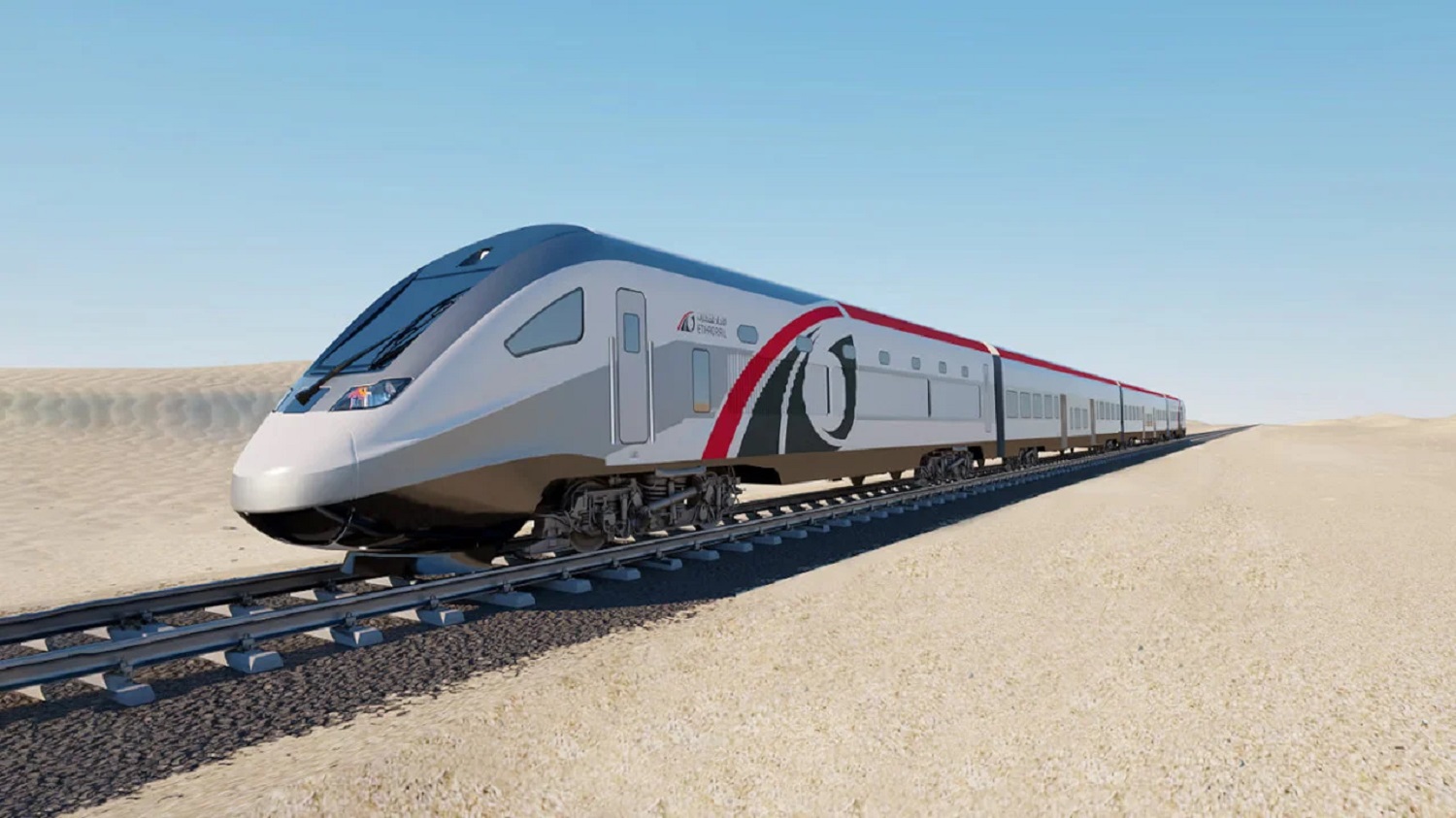
Construction has started on the Abu Dhabi section of the UAE’s first high speed rail line, with contractor Kalyon Construction putting completion in 2031. The 150 kilometre link will cut the journey between the two emirates to 30 minutes at an operating speed of 320 km/h. Etihad Rail’s published position at the February 2026 contract award was 2030.
The 2031 Date Has Not Been Mentioned Before
The most consequential detail in Kalyon’s statement is the year.
When Etihad Rail awarded the civil works and station packages in February 2026, every account of the award put phase one in service by 2030. That was the figure in MEED’s reporting and in our own report on the award. It was also the date carried through the tender stage from early 2025.
Kalyon now gives 2031, while stating that construction activities are proceeding according to schedule. Those two statements are only compatible if the programme baseline itself moved between February and August. Etihad Rail has not publicly confirmed a revision, and the slip is being disclosed by a consortium member rather than by the client. Until the developer restates its own target, 2031 should be read as the contractor’s working date rather than an announced change of policy. It is worth watching, because a year of drift eleven months into a five year build is early.
What Is Actually Under Construction on the Abu Dhabi Side
Kalyon describes the Abu Dhabi scope as 97 kilometres of railway track, 11.2 kilometres of tunnels and four stations.
That 97 kilometre figure reconciles neatly against the section breakdown MEED published in February, which divides the line into four parts: Al Zahiyah to Yas Island at 23.5 kilometres, Yas Island to the Abu Dhabi and Dubai administrative border at 64.2 kilometres, the border to Al Jaddaf in Dubai at 52.1 kilometres, and a 9.2 kilometre branch serving Abu Dhabi International Airport. Add the three Abu Dhabi sections and the total comes to 96.9 kilometres. The Dubai package accounts for the remaining 52.1 kilometres, which is where the second consortium is working.
Six stations are planned across the line: Reem Island, Saadiyat Island and Yas Island in Abu Dhabi, plus stations near Al Maktoum International Airport and in the Al Jaddaf area of Dubai. The alignment runs from Al Zahiyah in Abu Dhabi to Al Jaddaf. Trains are designed for 350 km/h and will operate at 320 km/h, against roughly 200 km/h on the UAE’s existing conventional lines, and the system will run entirely on electric power.
Two Consortiums, Five Designers and a Contract Value Nobody Has Confirmed
The civil works were split geographically.
The Abu Dhabi package went to a consortium of Abu Dhabi’s National Projects Construction as lead, with Trojan Tunnelling, Kalyon of Turkiye and China State Construction Engineering Corporation, with Jacobs as designer. The Dubai package went to a consortium led by India’s Larsen & Toubro, alongside China Harbour Engineering Company and UAE based Wade Adams, with design by Egis of France and Surbana Jurong of Singapore. Spain’s Sener and Ineco hold the general engineering consultancy across the whole project.
The headline value is less settled than it looks. MEED has been reported as putting the scheme at around 6.5 billion US dollars in some accounts and at more than 8 billion in others, ENR described the phase as costing up to 8 billion, and Etihad Rail has not disclosed the contract totals. Any figure quoted for this line is a press estimate rather than a published number, and readers should treat the 8 billion figure that has become standard shorthand accordingly.
Rolling stock remains open. ENR reported in February that Etihad Rail Mobility, the joint venture between Etihad Rail and France’s Keolis that will run the service, was in late stage negotiations with manufacturers including Siemens Mobility. No high speed trainset order has been announced.
Why the 30 Minute Figure Should Not Be Confused With This September
There are two separate Abu Dhabi to Dubai rail services in play, and coverage tends to blur them.
The high speed line described here is the 2031 project, running at 320 km/h and targeting a 30 minute journey. Separately, Etihad Rail’s conventional intercity passenger service is due to connect Abu Dhabi’s Mohamed bin Zayed City station with a new station at Jumeirah Golf Estates in Dubai from September, using the existing 200 km/h network and cutting the trip to around 57 minutes against 90 minutes or more by road. The UAE’s first intercity passenger service opened between Fujairah and Abu Dhabi on 30 June 2026.
The distinction matters commercially. A 57 minute service arriving this year sets the benchmark that the high speed line has to beat by a further 27 minutes five years later, on a corridor where the conventional option will already have built a passenger base.
Where the Line Sits in Etihad Rail’s Wider Programme
The Abu Dhabi to Dubai link is phase one of four. Phase two builds an inner city network of 10 stations within Abu Dhabi, phase three connects Abu Dhabi to Al Ain, and phase four adds an inter emirate link between Dubai and Sharjah. None of the later phases has been contracted.
Etihad Rail is developing a 900 kilometre passenger network valued at 13 billion US dollars, and expects the wider railway to generate more than AED 200 billion in economic benefits by 2050, of which around AED 23 billion is attributed to tourism. Analysts have told AGBI that property near planned stations could appreciate by as much as 25 percent.
The contrast with the group’s other cross border scheme is instructive. Hafeet Rail, the 238 kilometre corridor linking the Port of Sohar in Oman to the UAE network at Al Wathba, is a joint venture of Etihad Rail, Oman Rail and Mubadala, and has passed 40 percent completion and moved into track laying. It runs passengers at 200 km/h rather than 320, carries freight, and is being built through the Hajar Mountains with 57 bridge and viaduct structures. Hafeet is the conventional, freight anchored model of Gulf rail expansion. The Abu Dhabi to Dubai line is the opposite bet: passenger only, high speed, and competing against a 90 minute car journey rather than against shipping.
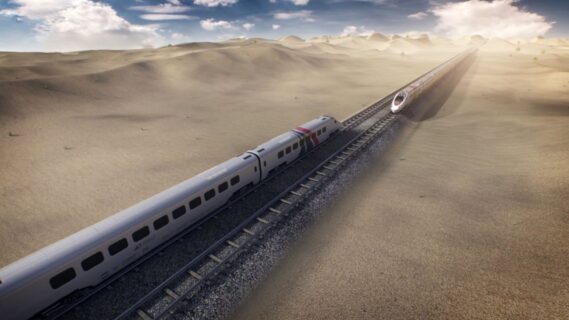
Project Fact Sheet
- Project Name: Abu Dhabi to Dubai High Speed Rail, phase one of the UAE HSR programme
- Location: Al Zahiyah, Abu Dhabi to Al Jaddaf, Dubai, United Arab Emirates
- Length: Approximately 150 kilometres, split into four sections of 23.5 km, 64.2 km, 52.1 km and a 9.2 km airport branch
- Project Value: Not officially disclosed. Press estimates range from around 6.5 billion to more than 8 billion US dollars
- Client and Developer: Etihad Rail, with Etihad Rail Mobility as operator
- Abu Dhabi Scope: 97 kilometres of track, 11.2 kilometres of tunnels and four stations
- Stations: Six, at Reem Island, Saadiyat Island and Yas Island in Abu Dhabi, and near Al Maktoum International Airport and Al Jaddaf in Dubai
- Speed: 350 km/h design, 320 km/h operating
- Journey Time: 30 minutes Abu Dhabi to Dubai
- Procurement Model: Design and build, split into Abu Dhabi and Dubai civil works packages
- Construction Start: Announced as under way in August 2026
- Expected Completion: 2031 per contractor Kalyon. Etihad Rail’s position at the February 2026 award was 2030
- Rolling Stock: Not yet awarded
- Later Phases: Abu Dhabi inner city network, Abu Dhabi to Al Ain, Dubai to Sharjah. None contracted
Project Team
- Client and Developer: Etihad Rail
- Operator: Etihad Rail Mobility, a joint venture of Etihad Rail and Keolis
- Abu Dhabi Civil Works: National Projects Construction, lead, with Trojan Tunnelling, Kalyon and China State Construction Engineering Corporation
- Abu Dhabi Designer: Jacobs
- Dubai Civil Works: Larsen & Toubro, lead, with China Harbour Engineering Company and Wade Adams
- Dubai Designers: Egis and Surbana Jurong
- General Engineering Consultants: Sener and Ineco
- Rolling Stock Supplier: Not yet awarded
Frequently Asked Questions
When will the Abu Dhabi to Dubai high speed rail open? Contractor Kalyon has given a 2031 completion target. Etihad Rail’s stated date at the February 2026 contract award was 2030, and the developer has not publicly confirmed a change.
How long will the Abu Dhabi to Dubai train take? Thirty minutes on the high speed line at 320 km/h. A separate conventional service due from September 2026 will cover a similar corridor in around 57 minutes.
Who is building the Abu Dhabi to Dubai high speed rail? Two consortiums. The Abu Dhabi package is led by National Projects Construction with Trojan Tunnelling, Kalyon and CSCEC. The Dubai package is led by Larsen & Toubro with China Harbour Engineering Company and Wade Adams.
How much does the Abu Dhabi to Dubai high speed rail cost? Etihad Rail has not disclosed the value. Press estimates have ranged from around 6.5 billion to more than 8 billion US dollars for phase one.


Leave a Reply