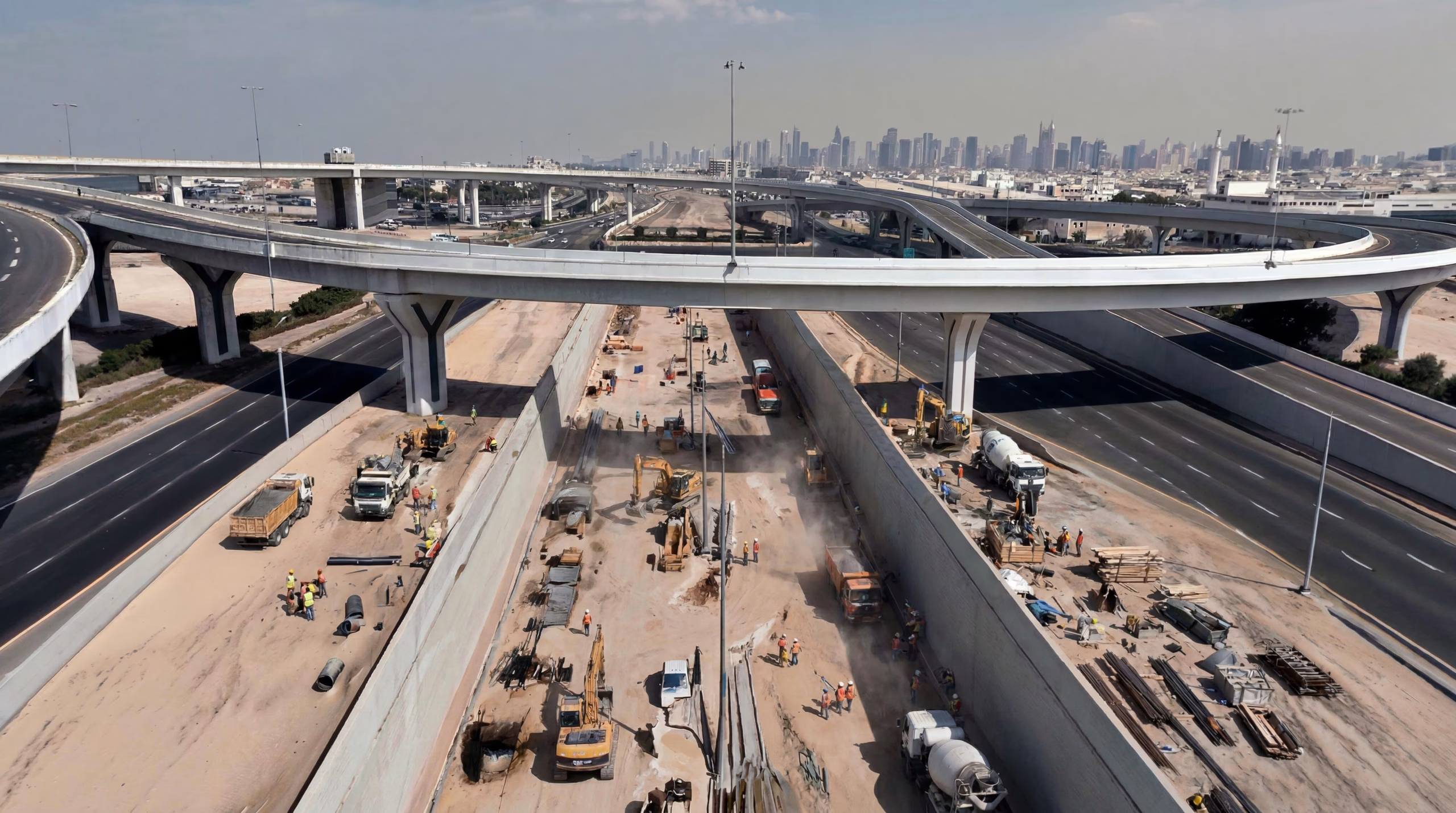
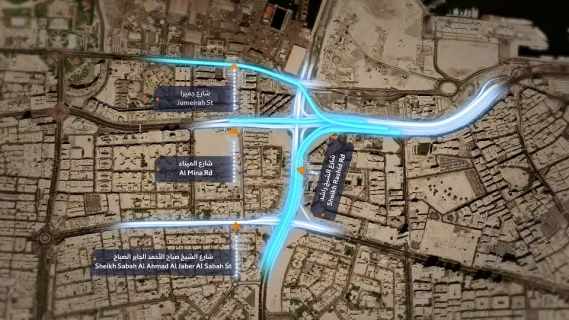
Dubai’s Roads and Transport Authority (RTA) has announced that construction of the Al Khaleej Street Tunnel Project has reached 80% completion, marking a decisive milestone in one of the emirate’s most complex ongoing infrastructure programmes. The tunnel stretches 1,650 metres from the end of the Infinity Bridge ramp in Deira to the intersection of Al Khaleej Street and Al Wuheida Street, carrying three lanes of traffic in each direction and designed to handle up to 12,000 vehicles per hour in both directions combined. The project forms a critical phase of the broader Al Shindagha Corridor Improvement Project, a 13-kilometre arterial upgrade spanning Sheikh Rashid Street, Al Mina Street, Al Khaleej Street and Cairo Street that also encompasses the development of 15 intersections.
RTA Director General and Chairman of the Board of Executive Directors Mattar Al Tayer confirmed the project is on schedule for completion in the fourth quarter of 2026, with the tunnel projected to reduce corridor journey times from 104 minutes to 16 minutes by 2030. Once operational, the tunnel will serve an estimated one million residents and connect key destinations including Dubai Islands, Waterfront Market, Dubai Maritime City, Al Hamriya Port and Port Rashid. Construction momentum is being sustained by 18 active excavation and structural teams working round the clock, supported by 1,591 engineers, technicians and workers alongside 221 pieces of machinery and equipment across active work sites.
Dubai’s Corridor Strategy Sets the Benchmark for Gulf Urban Mobility
The Al Khaleej Street Tunnel sits at the intersection of two pressures that are reshaping Gulf city planning: accelerating population growth in historic urban cores and the need to future-proof road networks for megaproject catchment areas. The Al Shindagha Corridor is not a standalone upgrade; it is the connective spine linking Bur Dubai to Deira and onward to Dubai Islands, a development cluster that is itself expected to attract significant residential and tourism investment over the coming decade. RTA completed the Bur Dubai phases of the corridor in 2025 and has simultaneously commenced a companion bridge project across Dubai Creek, a 1,425-metre structure rising 18.5 metres above water level with a 75-metre navigational channel to accommodate maritime traffic, four lanes in each direction and a dedicated pedestrian and cycling track.
This bridge expansion is detailed in the recently awarded AED 786 million Dubai Islands–Bur Dubai 8-lane bridge contract, reinforcing the scale at which Dubai is investing in new cross-creek connectivity to support long-term urban growth. The scale and sequencing of these works invite comparison with Abu Dhabi’s Etihad Rail urban connectivity investments, which similarly seek to dissolve historical bottlenecks by building beneath and between existing city fabric rather than around it. What distinguishes the Al Khaleej project is its cultural dimension: the interior will be clad in a large-scale mosaic mural by Emirati artist Maryam Hathboor, commissioned through the Dubai Tunnels initiative and designed to render the tunnel itself a piece of the city’s public identity. At a daily excavation output set to reach 8,500 cubic metres in the next phase, this is a project moving with genuine urgency.
Project Fact Sheet
- Project Name: Al Khaleej Street Tunnel Project
- Location: Al Khaleej Street, Deira to Al Wuheida Street intersection, Dubai, UAE
- Project Value: Part of the Al Shindagha Corridor Improvement Project; overall corridor value not individually disclosed; estimated at several billion AED given scale and scope
- Client / Owner: Roads and Transport Authority (RTA), Dubai
- Tunnel Length: 1,650 metres with three lanes in each direction
- Traffic Capacity: Up to 12,000 vehicles per hour in both directions
- Key Components: Tunnel structure, retaining walls using secant and sheet piles, road paving and widening, lighting and traffic signal systems, rainwater drainage and irrigation networks, utility protection works, mosaic tunnel mural artwork
- Broader Corridor Scope: 13 km covering Sheikh Rashid Street, Al Mina Street, Al Khaleej Street and Cairo Street; 15 intersections upgraded
- Construction Progress: 80% overall; first structural phase of 890 metres (65% of tunnel) complete
- Expected Completion: Q4 2026
- Strategic Impact: Journey time reduction from 104 minutes to 16 minutes by 2030; estimated to serve one million people; connects Dubai Islands, Dubai Maritime City, Port Rashid, Waterfront Market and Al Hamriya Port
- Workforce: 1,591 engineers, technicians and workers; 221 machinery and equipment units; 8 million work hours logged with zero lost-time injuries
Project Team
- Client / Owner: Roads and Transport Authority (RTA), Government of Dubai
- Director General: His Excellency Mattar Al Tayer, RTA
- Regulatory Authority: Government of Dubai / Dubai Media Office (official communications)
- Main Contractor: Not publicly disclosed; likely a major regional civil contractor given project scale (firms such as Consolidated Contractors Company, Alec, or a joint venture with international tunnelling specialists would be expected)
- Artwork Commission: Maryam Hathboor (Emirati artist), commissioned under the Dubai Tunnels initiative
- Financing: Government of Dubai (public infrastructure budget)

Leave a Reply