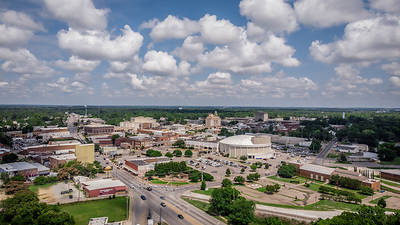
Alabama is positioning itself to become a major player in a strategically important part of the global manufacturing supply chain: permanent magnets.
Niron Magnetics plans to invest $1.8 billion in a manufacturing campus at the Westgate Super Site in Dothan, where it intends to produce rare-earth-free permanent magnets using iron and nitrogen. The proposed facility would cover 1.6 million square feet across 446 acres, create 700 jobs within five years and eventually reach an annual production capacity of 10,000 tons.
The project matters beyond Alabama. Permanent magnets are essential in electric motors, automotive systems, industrial equipment, consumer electronics and other technologies. The United States has been trying to reduce exposure to a supply chain in which China holds a dominant position.
But the announcement also raises a harder question: can a company move a new magnet technology from development into reliable, large-scale commercial production? Dothan is a major bet on that possibility, not proof it has already been solved.
A supply chain concentrated in China
The strategic case is clear. Permanent magnets sit inside products modern economies depend on, from electric vehicles and industrial motors to wind turbines, electronics and artificial intelligence infrastructure.
Yet the supply chain remains heavily concentrated in China. The International Energy Agency puts China’s share of global mined production of magnet rare earths at 60% in 2024. Its share rises to 91% at refining and 94% in production of sintered permanent magnets. Together, those figures show why manufacturers and governments are seeking alternatives.
The vulnerability is not theoretical. The IEA reports that China’s export controls introduced in April 2025 sharply reduced shipments of certain rare earth elements and permanent magnets in April and May. Automakers in the United States, Europe and elsewhere struggled to secure supplies, and some were forced to reduce production or temporarily shut down operations.
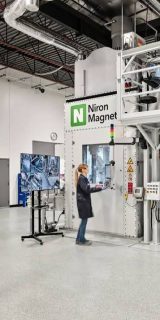
Niron’s approach differs from developing more mines and refining capacity for rare-earth materials. Its Iron Nitride technology aims to make permanent magnets without rare earth elements at all, using iron and nitrogen, two comparatively abundant materials.
If the technology can deliver the required performance, cost and manufacturing consistency at scale, it could give manufacturers another way to reduce exposure to a concentrated supply chain. Niron is not proposing to replace the entire rare-earth industry overnight. It is attempting to commercialize a different magnet chemistry that could reduce demand for rare-earth magnets in some applications.
The biggest manufacturing test is still ahead
The central question is no longer whether Iron Nitride magnets can be produced. It is whether Niron can manufacture them consistently, economically and in sufficient quantities.
Dothan will not be Niron’s first plant. The company is developing its first commercial-scale plant in Sartell, Minnesota, with announced capacity of up to 1,500 tons a year. It expects that plant to become operational in 2027.
Dothan would have roughly 6.7 times Sartell’s announced capacity. That illustrates the scale of the expansion Niron is pursuing; it does not establish that either plant has reached its production target.
In September 2026, Niron also disclosed loan commitments of $150 million each from the U.S. Department of War’s Office of Strategic Capital and the Shakopee Mdewakanton Sioux Community to advance Sartell, plus a strategic investment from Honda Motor Co., amount undisclosed.
That support shows growing financial and industrial backing. It does not by itself settle whether the magnets can compete on performance, reliability, durability and cost across different markets. Niron must also demonstrate consistent quality at much higher volumes.
The company describes its technology as a scalable, cost-competitive alternative to conventional neodymium-based magnets. That is the commercial proposition. Its success will depend on manufacturing results and customer adoption, not the size of the announced campus.
Why Alabama won
Niron considered locations in 22 states before selecting Dothan, according to CEO Jonathan Rowntree.
“Every step of the way, Alabama treated our success as its own,” Rowntree said. “We considered sites in 22 states, and Alabama stood out from the very first conversation.”
The company ran that search with Savills as its site-selection advisor.
Westgate is a 446-acre property developed by the City of Dothan, Houston County, the Dothan Industrial Development Board and the Dothan Area Chamber of Commerce. Alabama supported preparation through the SEEDS program in 2024, followed by allocations through the Growing Alabama Tax Credit program. Those programs helped prepare Westgate to compete. They do not establish the full incentive package for Niron, or disclose total project-specific public assistance.
Westgate also has access to a CSX rail line and received CSX Select Site Platinum designation on Nov. 12, 2025 — eight days before the Niron announcement.
Platinum is CSX’s highest tier. It means the site had already cleared infrastructure and utility checks, environmental reviews, zoning, air-quality permitting, rail serviceability and highway access. Westgate is only the fifth site in Alabama to earn it since 2012, and one of 33 across CSX’s territory.
In other words, Dothan didn’t just offer land. It offered a site where Niron can start building faster. Niron has not said how much it expects to ship by rail, but for a plant that would ship 10,000 tons a year, rail access is a logistics advantage, not a detail.
What remains undisclosed
Niron expects construction in 2028 and production in 2029. Those are future targets, not completed milestones.
The announcement does not provide a detailed construction schedule, name contractors, or explain how the investment splits between buildings, equipment and infrastructure. It also does not disclose expected electricity demand, water requirements, wastewater arrangements or utility upgrades needed for a campus of this size.
The public funding question also needs scrutiny. Without a full breakdown of incentives and tax benefits, taxpayers cannot yet assess the full public cost against expected employment and economic benefits.
The same applies to production. A planned 10,000-ton annual capacity is not the same as 10,000 tons produced and sold each year. That distinction will matter as Niron moves from construction to commissioning, customer qualification and commercial production.
A strategic opportunity, not a guaranteed outcome
Niron’s proposed campus offers a different route: magnets that do not depend on rare-earth elements in the first place. That could become an important addition to U.S. manufacturing if the technology meets industrial requirements at competitive prices and at scale.
But Dothan will not prove that case by completing construction. The first major test will come at Sartell. Its performance will provide a more meaningful indication of Niron’s ability to deliver the much larger Alabama expansion.
For Dothan, a city long known for agriculture, peanuts and regional healthcare, the stakes are personal.
“It means families can build their futures here,” Mayor Mark Saliba said.
The $1.8 billion announcement is significant. The more important story will be whether Niron can turn its rare-earth-free technology into a dependable, commercially competitive product — and whether Dothan can deliver at the scale promised.
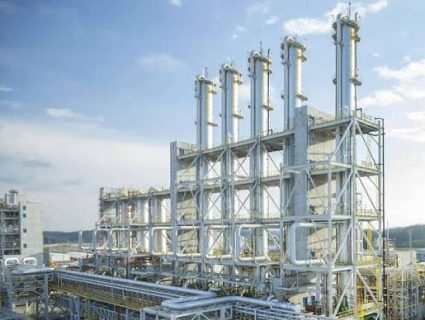
The proposed Dothan facility is not the only effort to rebuild America’s domestic rare-earth supply chain. In Rochester, New York, Phoenix Tailings plans to invest $375 million in a rare-earth processing plant, adding another project to the country’s push to reduce dependence on China for strategically important materials. But the two investments pursue different approaches: Niron Magnetics aims to manufacture permanent magnets without rare-earth elements, while Phoenix Tailings is focused on processing rare earths themselves. Together, the projects highlight two distinct strategies for addressing the same vulnerability: developing alternative magnet technologies while rebuilding the domestic capacity to produce the materials that modern manufacturing still depends on.


Leave a Reply