
The Royal Commission for AlUla has officially launched a major $6.8 billion public-private partnership infrastructure pipeline to accelerate sustainable regional development across northwestern Saudi Arabia.
Public sector leaders continue to expand private sector participation in municipal services, mirroring the commercial strategies observed in the 500 Million Saudi Wastewater Treatment Project Awarded to Local Based Marafiq and Lamar Holding.
Commission officials confirmed that core engineering works will target critical environmental utilities, water security networks, and aviation facilities.
Meanwhile, project stakeholders emphasize that leveraging private capital will streamline complex delivery timelines.
Engineering consultants are reviewing preliminary tender documents to fast-track upcoming procurement milestones across the heritage region.
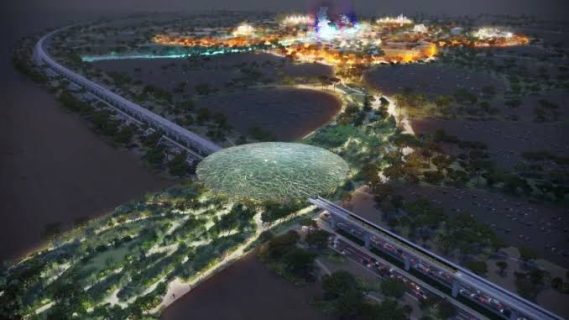
Regional authorities note that modernizing public services while preserving archaeological sites remains central to the masterplan framework.
Furthermore, strict environmental standards and local employment generation will be prioritized throughout the multi-year construction lifecycle.
Strategic Scope of the AlUla PPP Projects
The multi-billion-dollar investment focuses on transforming essential public services into modern, high-efficiency utilities equipped for long-term tourism growth.
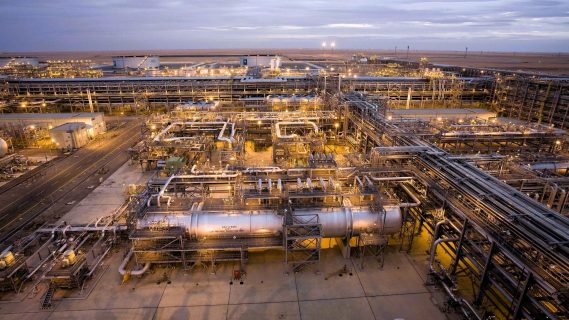
Planners have structured the initiative to incorporate advanced water storage, wastewater treatment, and solid waste management systems.
- Water Storage Expansion: The program includes five strategic potable water storage tanks with a combined capacity of 295,000 cubic meters under a Design-Build-Finance-Operate-Maintain model.
- Wastewater Treatment Upgrades: Facilities will be expanded using Moving Bed Biofilm Reactor technology to reach a total treatment capacity of 62,000 cubic meters per day.
- Solid Waste Management: A new Resource Management Park will handle 76,000 tonnes annually alongside specialized recycling and organic waste treatment plants.
Civic leaders point out that collaborative public-private frameworks are essential for mitigating delivery risks on complex regional sites. Investor roadshows remain embedded in the procurement strategy to ensure competitive international bidding.
Delivery Timelines and Economic Impact for AlUla PPP Projects
Project management teams are establishing rigorous bidding schedules to govern infrastructure deployment and concession awards over the coming years. Regional development agencies anticipate that the massive capital injection will stimulate local supply chains and create thousands of technical jobs.
- Market Sounding and RFPs: Authorities release tender documents and evaluate bidder qualifications across water, waste, and airport sectors.
- Concession Financial Close: Selected private consortia finalize debt financing and secure long-term operational agreements with the Commission.
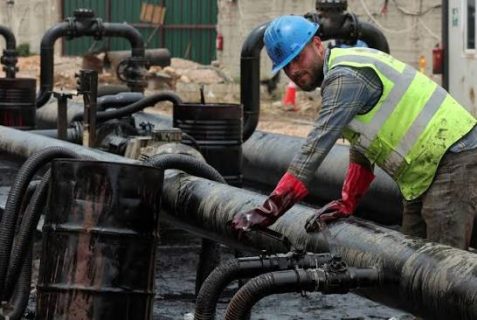
- Phased Construction Rollout: Heavy civil contractors mobilize equipment to install foundational utilities, storage reservoirs, and airport terminal upgrades.
This extensive infrastructure overhaul underscores the Kingdom’s ongoing commitment to sustainable urban growth and economic diversification under Vision 2030. Successful execution will establish a new benchmark for heritage-region development across the Middle East.
Project Fact Sheet
Name: AlUla PPP Projects Infrastructure Pipeline.
Type: Public-Private Partnership (PPP) Municipal Infrastructure, Water Storage, Wastewater Treatment, Waste Management, and Airport Expansion.
Location: AlUla Region, Madinah Province, Kingdom of Saudi Arabia.
Total investment: $6.8 Billion USD ($25.5 Billion SAR).
Developer / Parent Company: Royal Commission for AlUla (RCU) / National Center for Privatization (NCP).
Status: Program Launch and Market Sounding (November 2026); Tenders Rolling Out Through 2027.
Construction employment: Projected to support thousands of direct civil engineering, building trades, and specialist project management jobs.
Permanent employment: Ongoing utility plant operations, facility maintenance, aviation management, and municipal administrative roles.
Timelines and production targets: Program launched November 2026; major RFPs scheduled across 2027; phased completion targeted toward 2031.
Technology integration: Moving Bed Biofilm Reactor (MBBR) wastewater treatment, smart water grid monitoring, and advanced solid waste sorting machinery.
Raw material supply: Structural steel, high-density polyethylene piping, precast concrete reservoirs, and specialized electrical control instrumentation.
Economic impact: Secures long-term municipal water reserves, enhances regional environmental compliance, and supports sustainable luxury tourism expansion.
Key infrastructure needs: Potable water tanks, pumping stations, wastewater treatment plants, waste transfer stations, and airport terminal capacity.
Delivery risks: Complex desert geotechnical conditions, supply chain volatility for specialized water treatment equipment, and tight concession schedule adherence.
Primary target markets: International Infrastructure Operators, Regional Engineering Contractors, Environmental Technology Providers, and Investors.
Project Team
Lead Government Authority: Royal Commission for AlUla (RCU)
Privatization Regulatory Oversight: National Center for Privatization & PPP (NCP)
Chief Executive Officer, RCU: Abeer AlAkel
Executive Director of Innovation, RCU: Ahmed Daoud
Strategic Procurement Director, RCU: Mansour Aldalbahi
National Infrastructure Partner: Ministry of Investment (MISA)

Leave a Reply